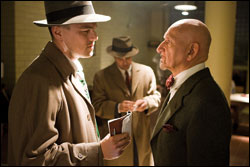
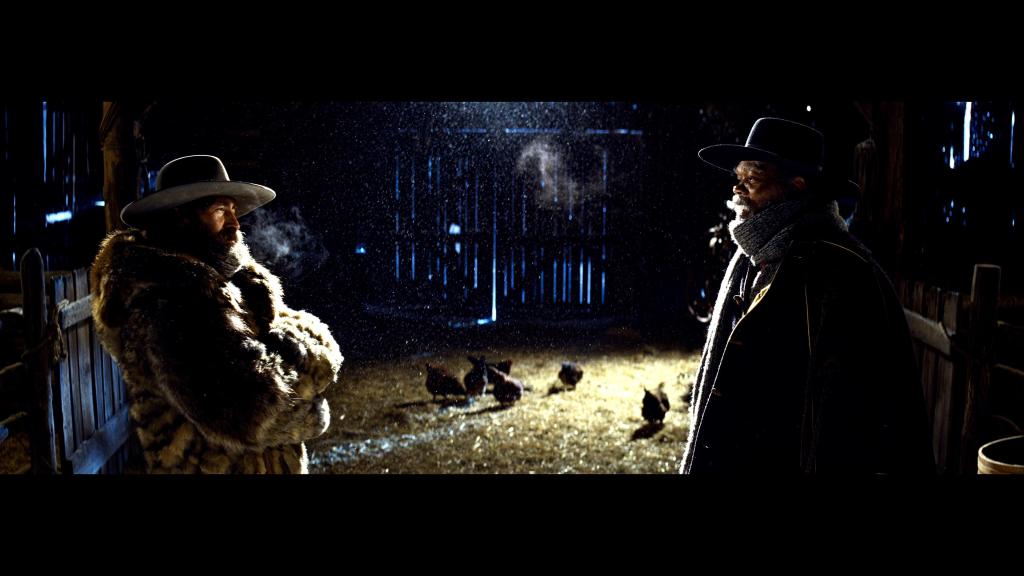
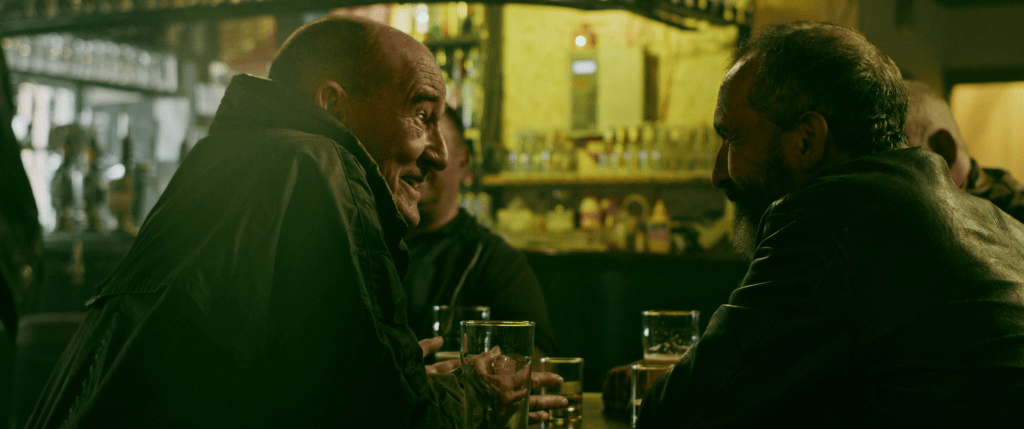
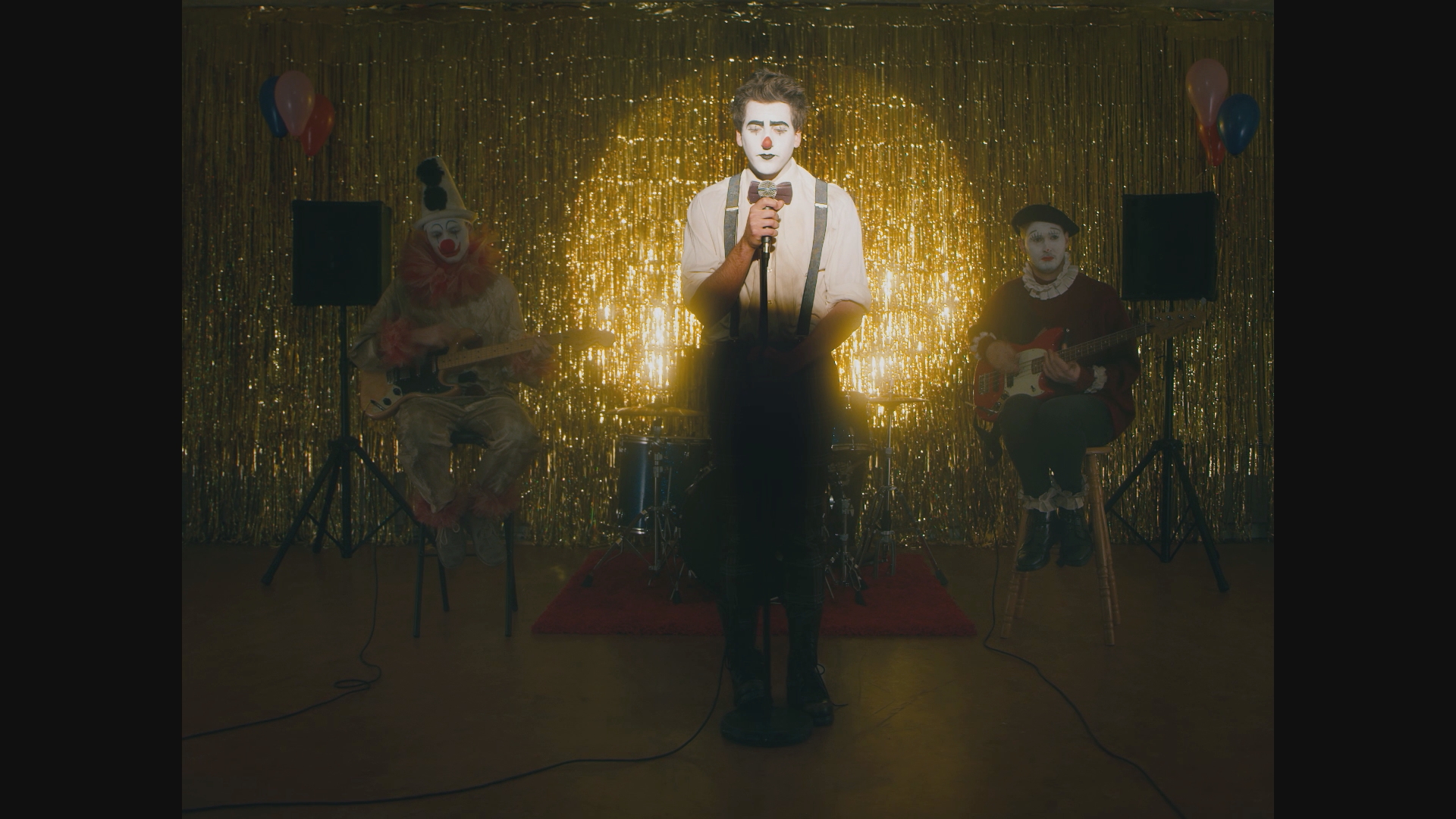
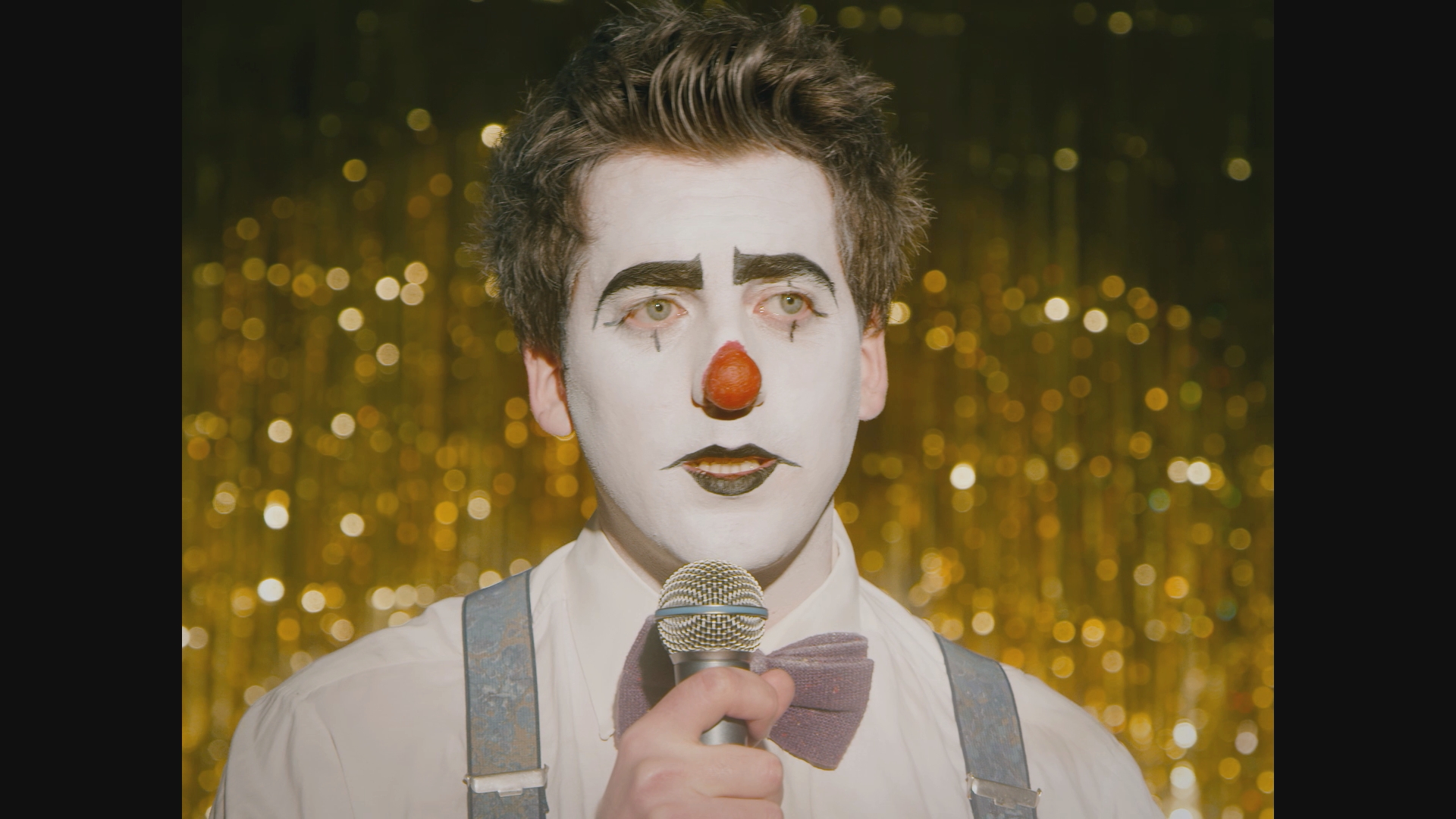
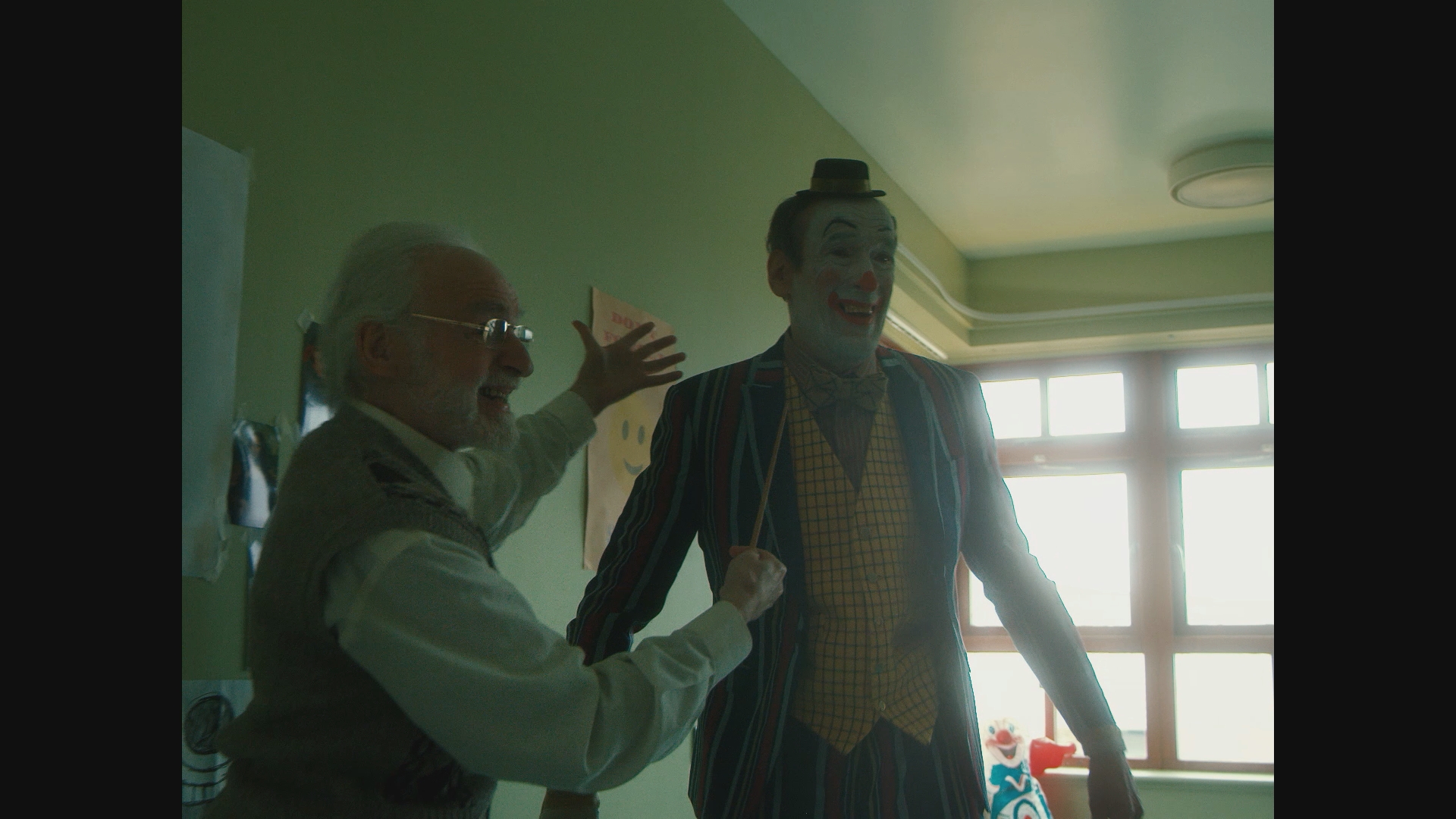
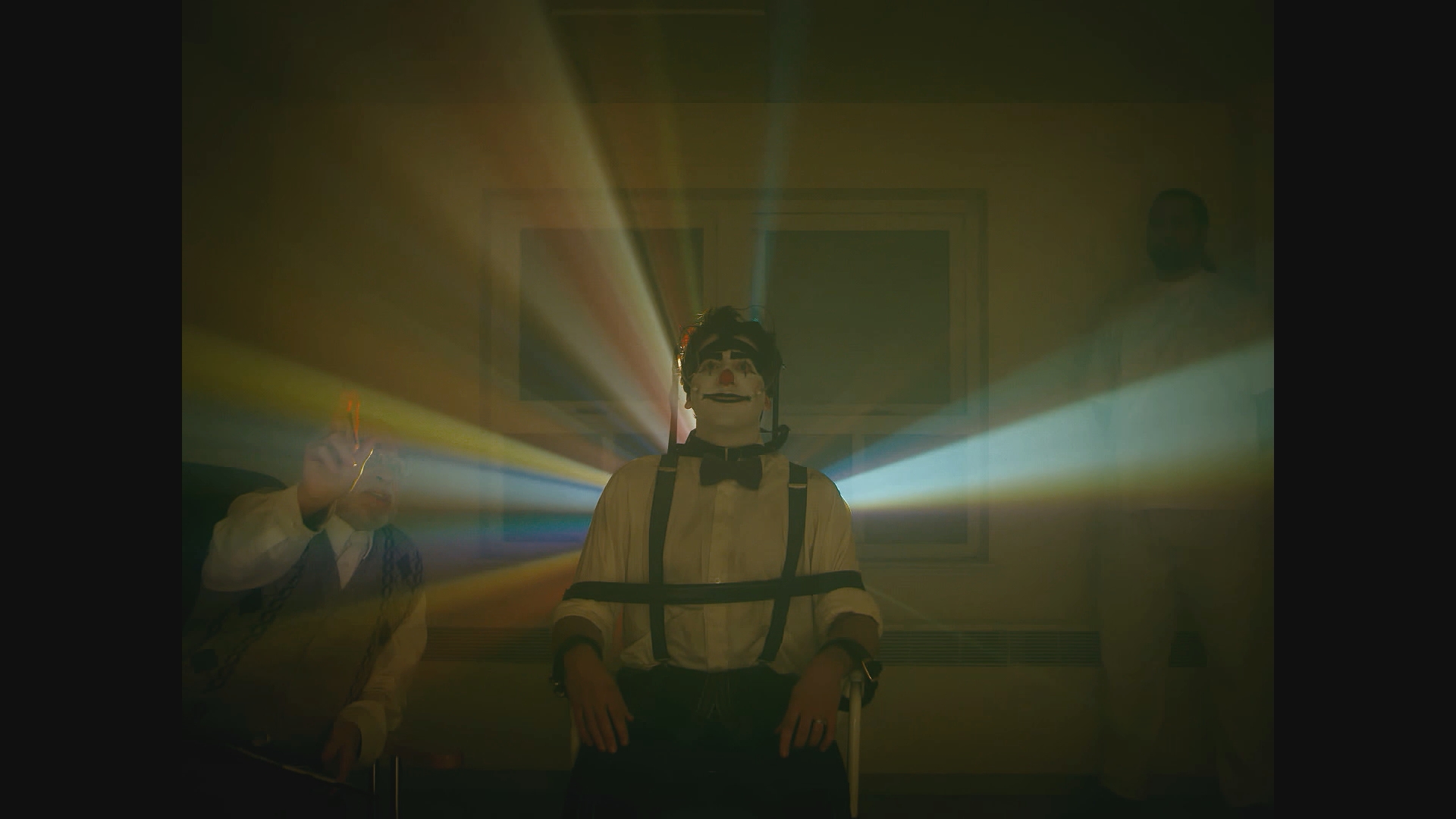
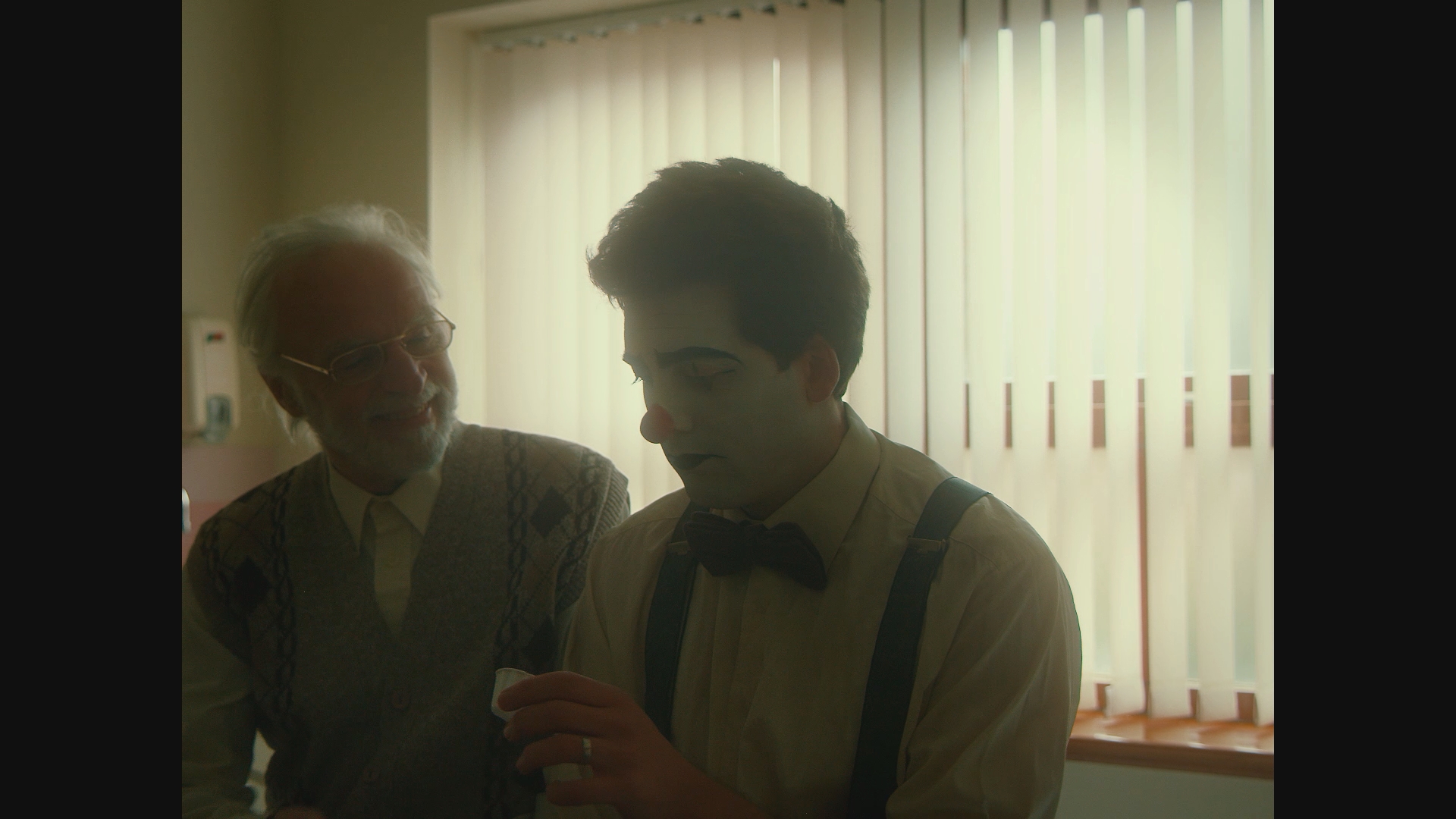
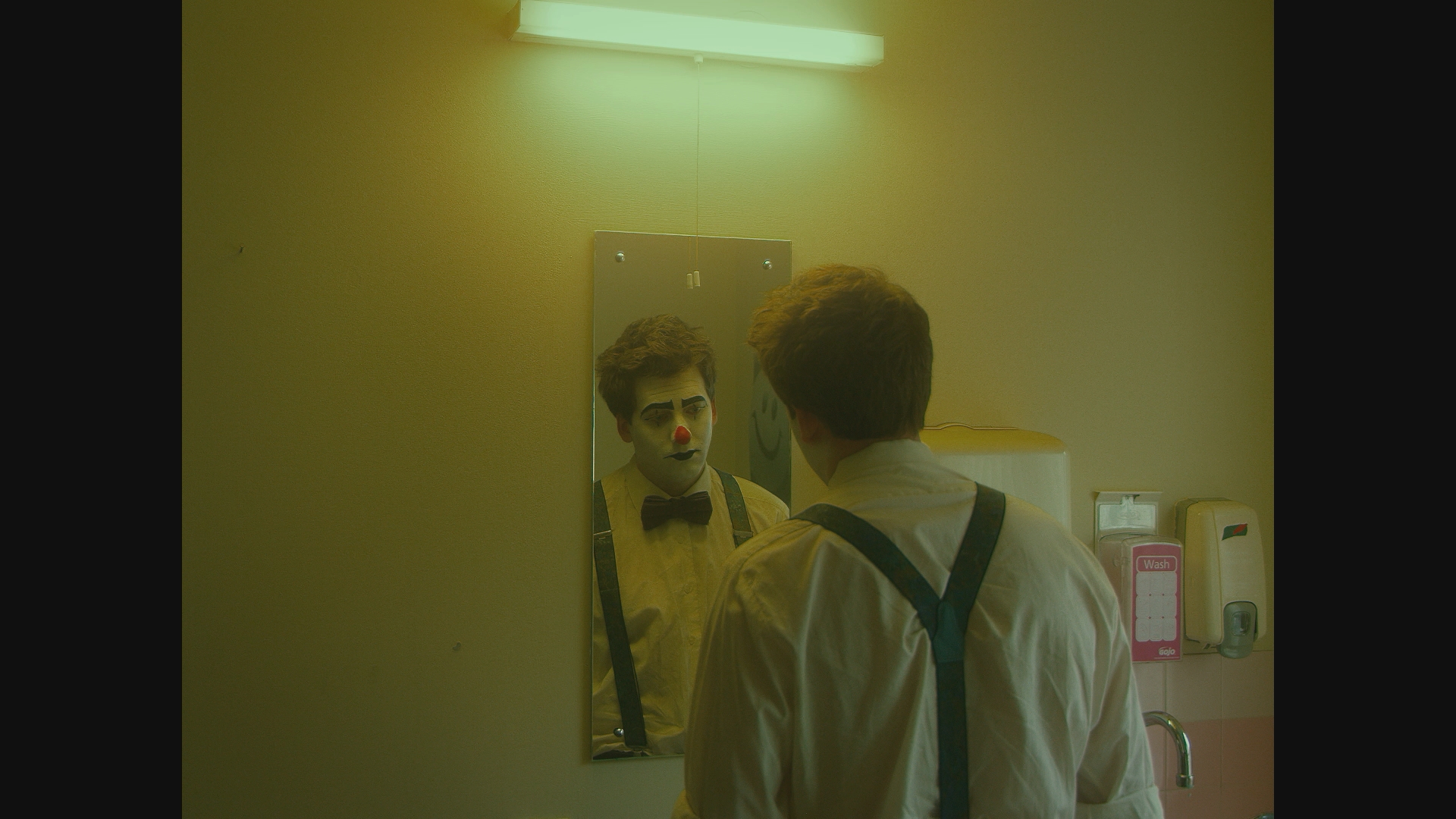
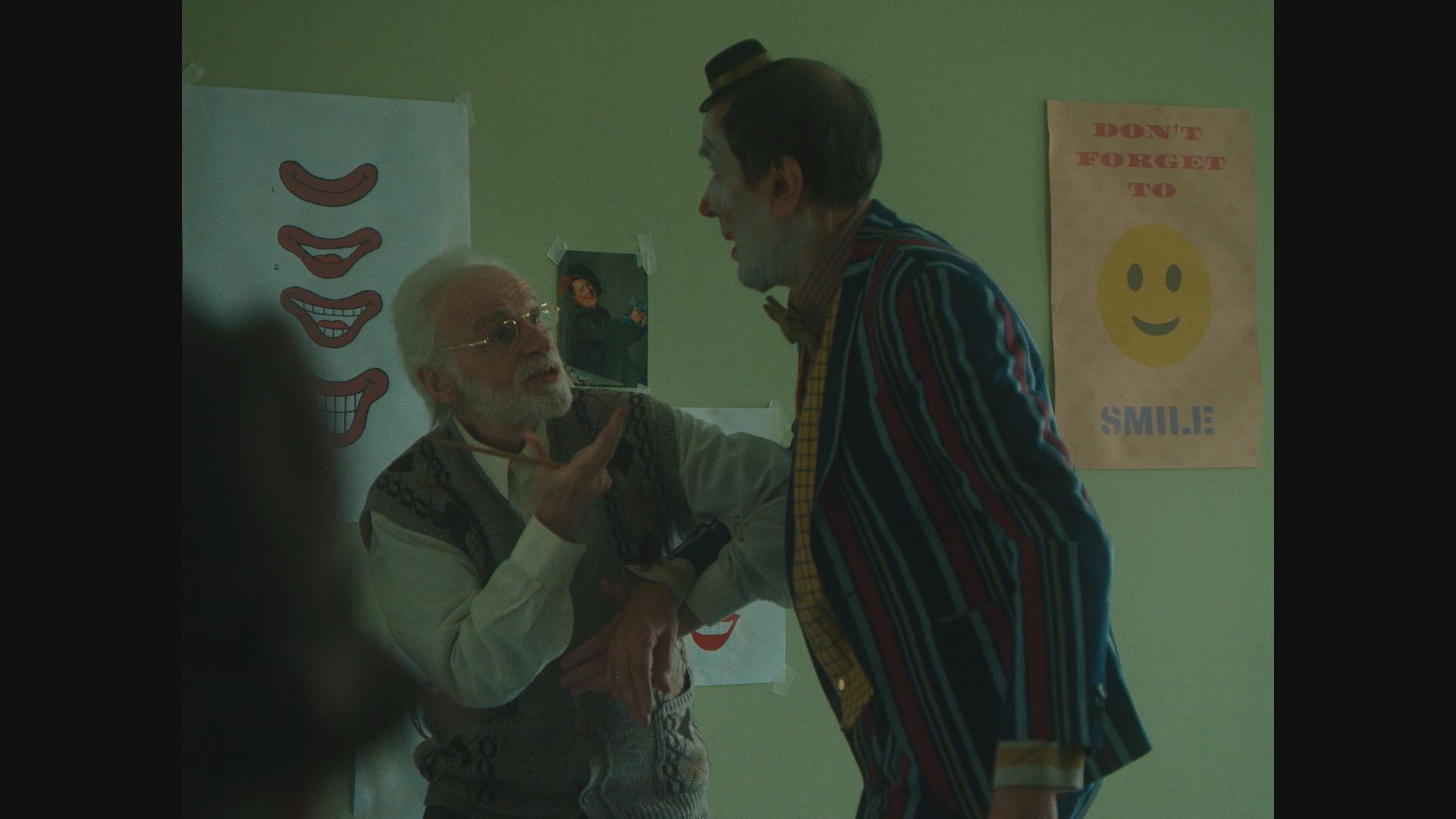
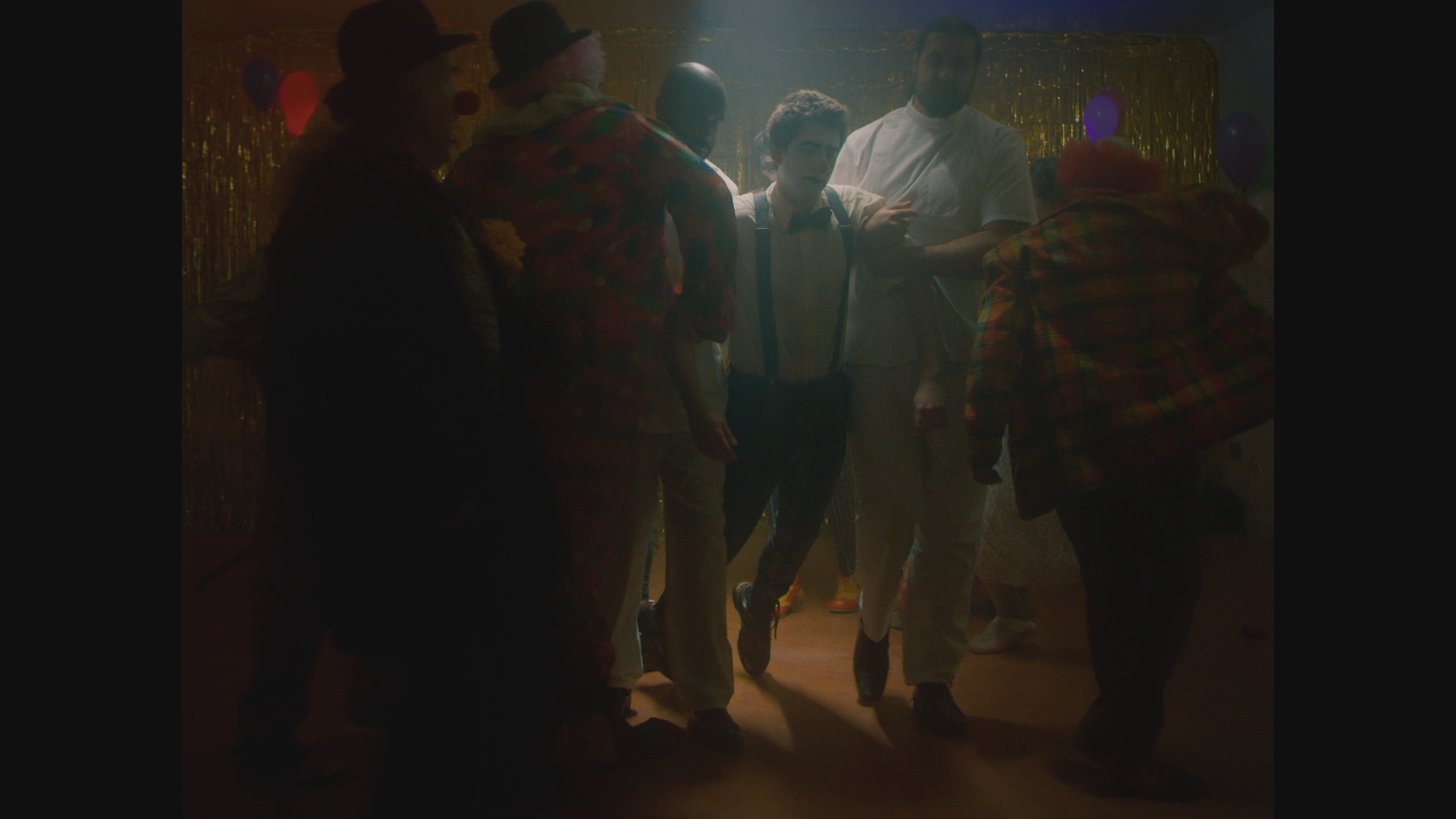
There are cinematographers who are known for a look – like Robert Richardson ASC uses hot spots of light or Vittorio Storaro ASC AIC is known for his scientific approach to the philosophies of use of colour.
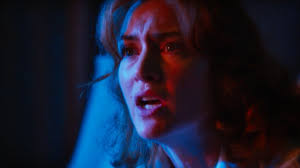
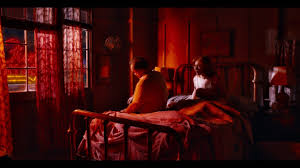
Certainly Robert Richardson is inclined to use a high-contrast lighting style and indeed when I have lit using burnt out spots I have heard people on set saying ‘very Robert Richardson’ so we have to give him ownership of that. Vittorio Storaro’s psychology of colour thesis I suppose is less easy to immediately recognise on screen and if I’m honest with you it leaves me a little cold – or blue. I use colours when it feels right but for me it’s more of a visceral reaction to the location or action rather than a scientific approach.
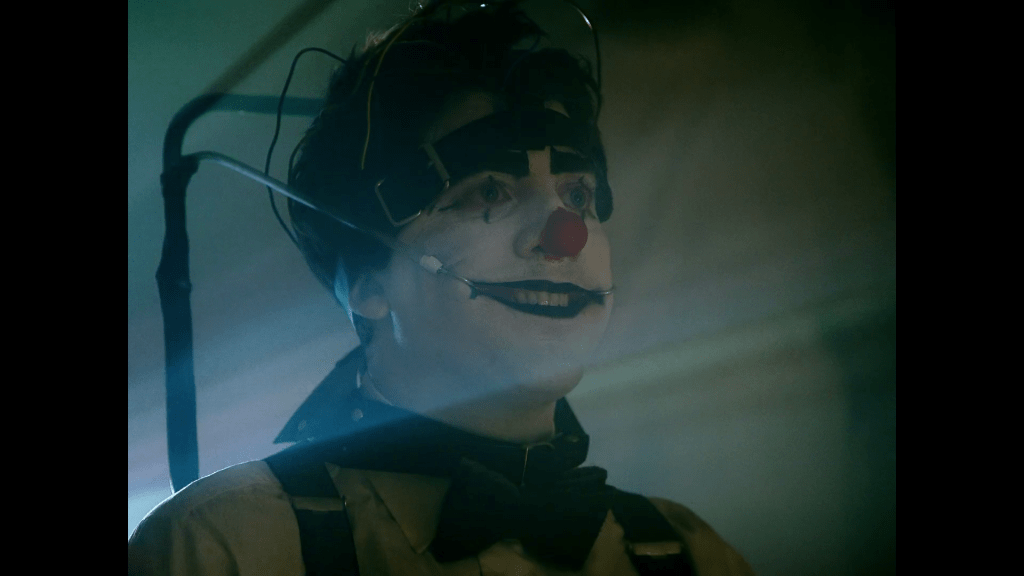
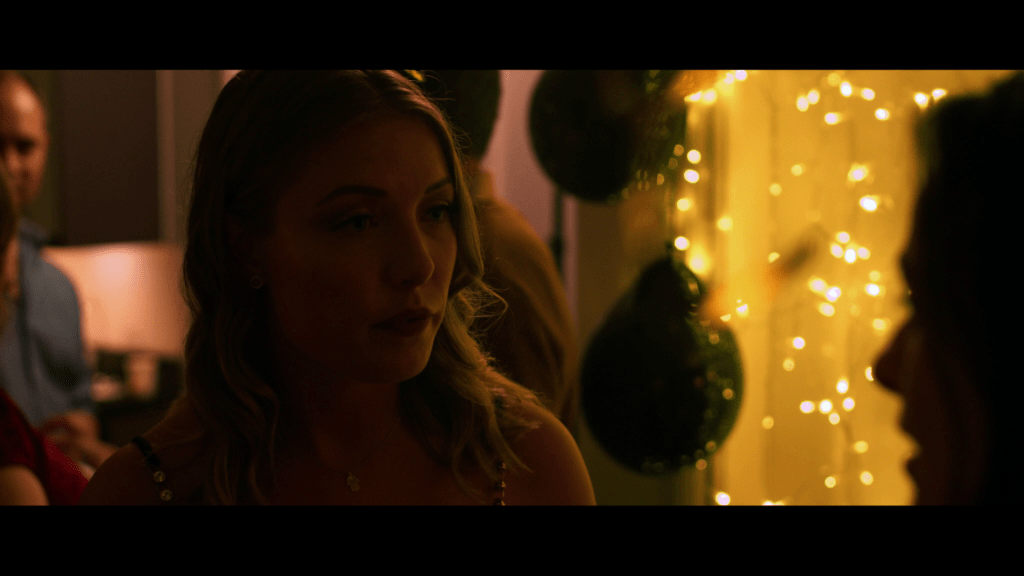
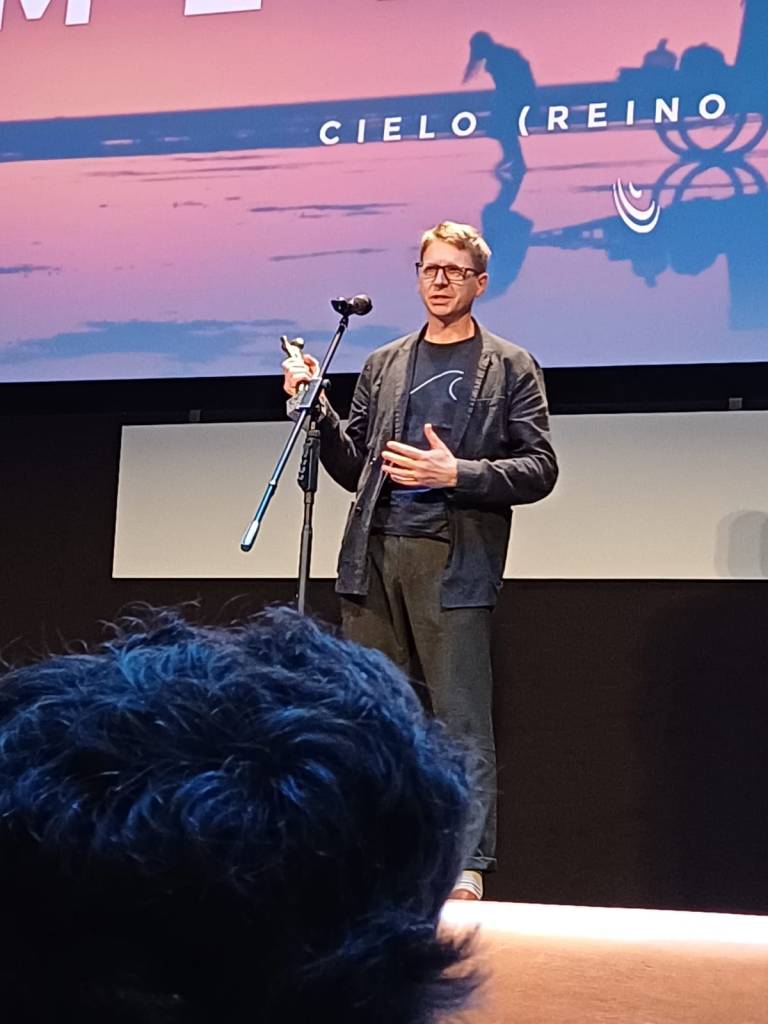
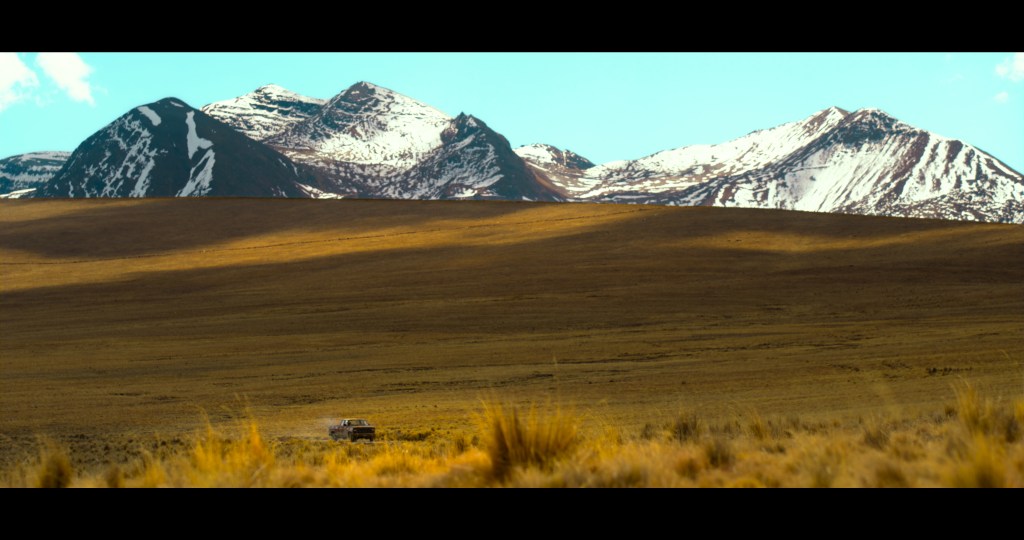
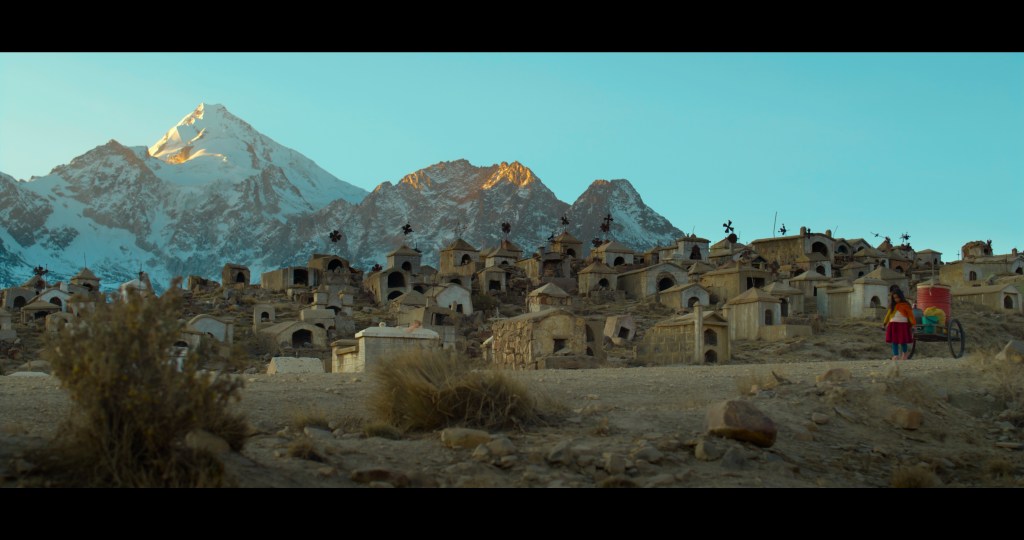
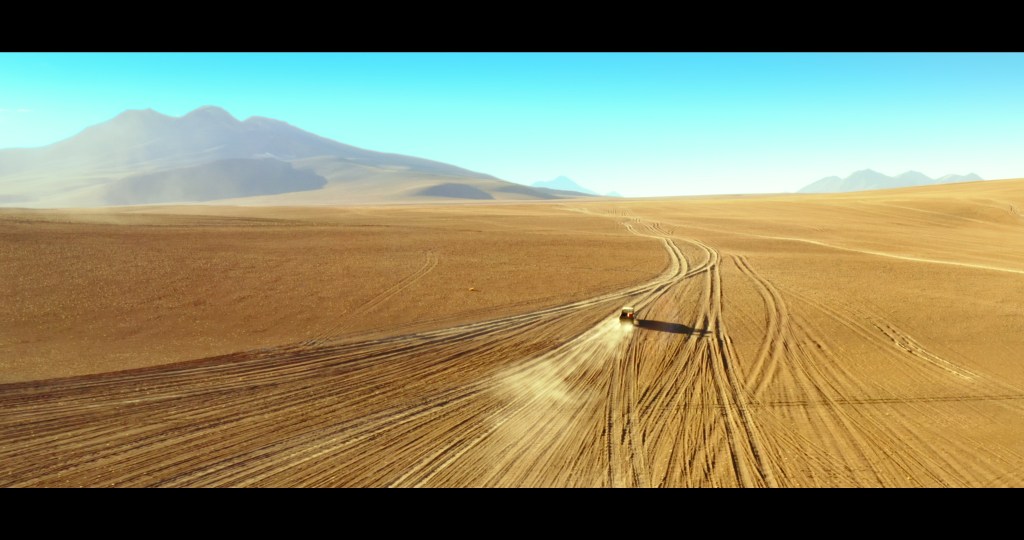
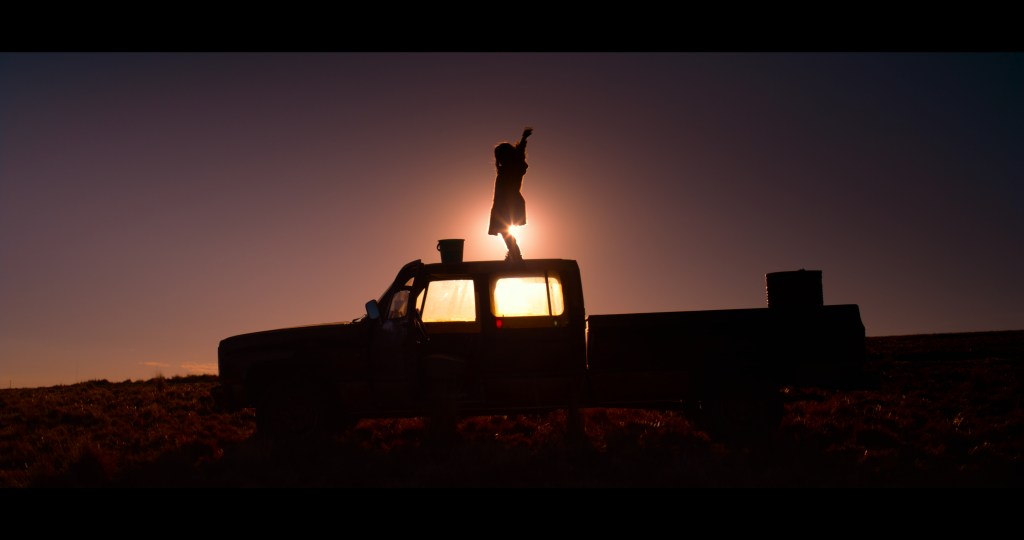
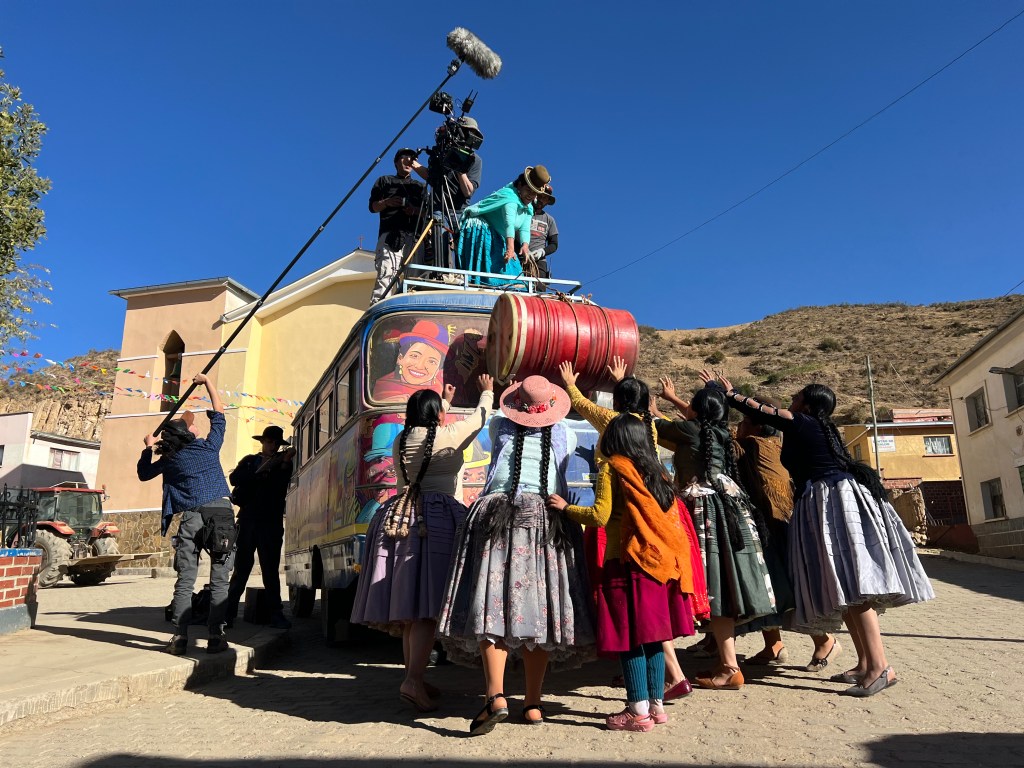
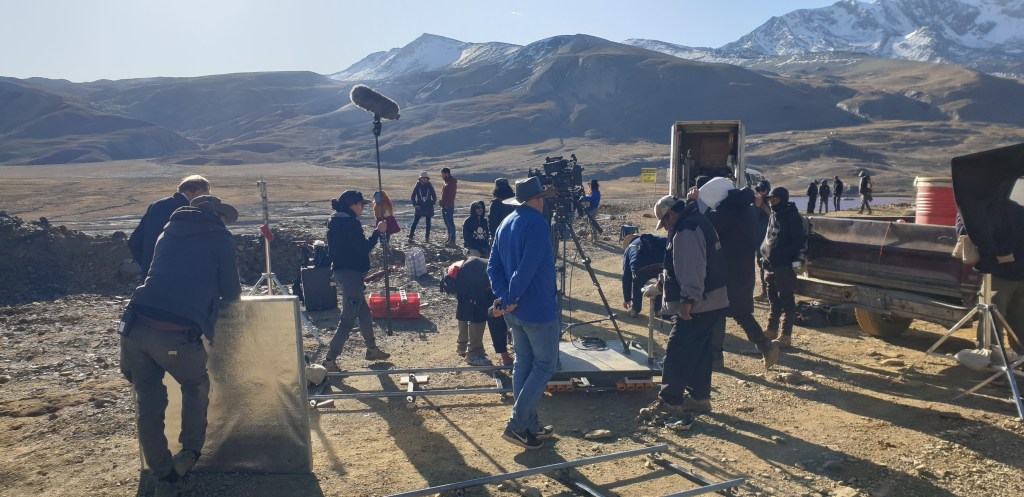
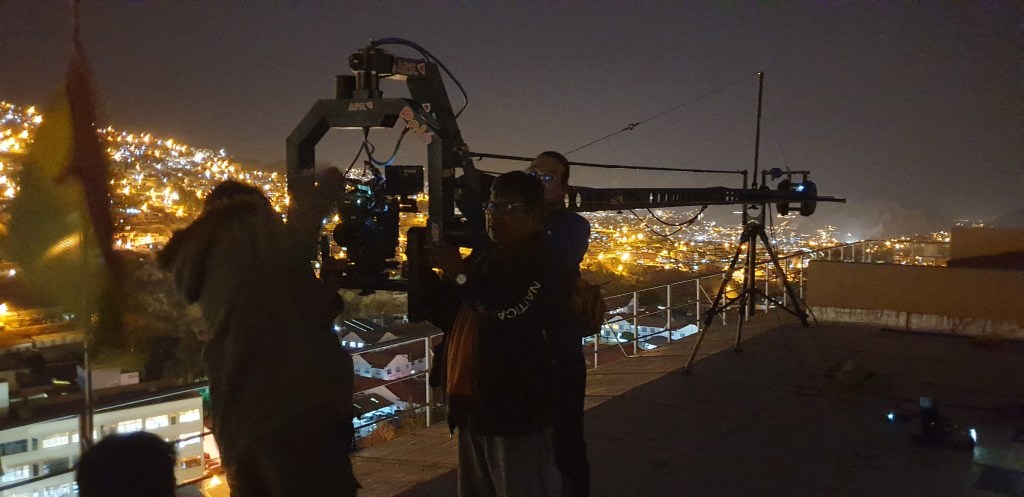
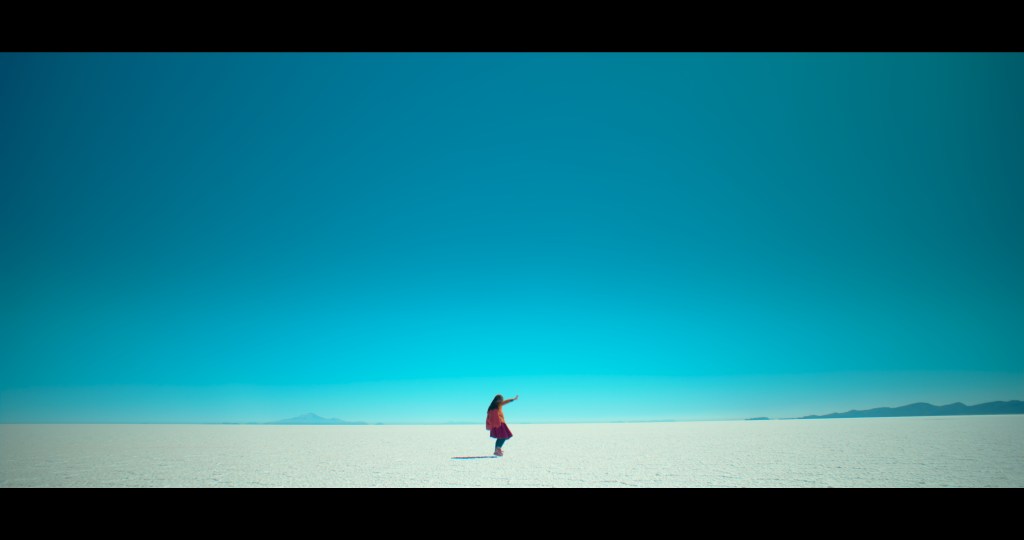
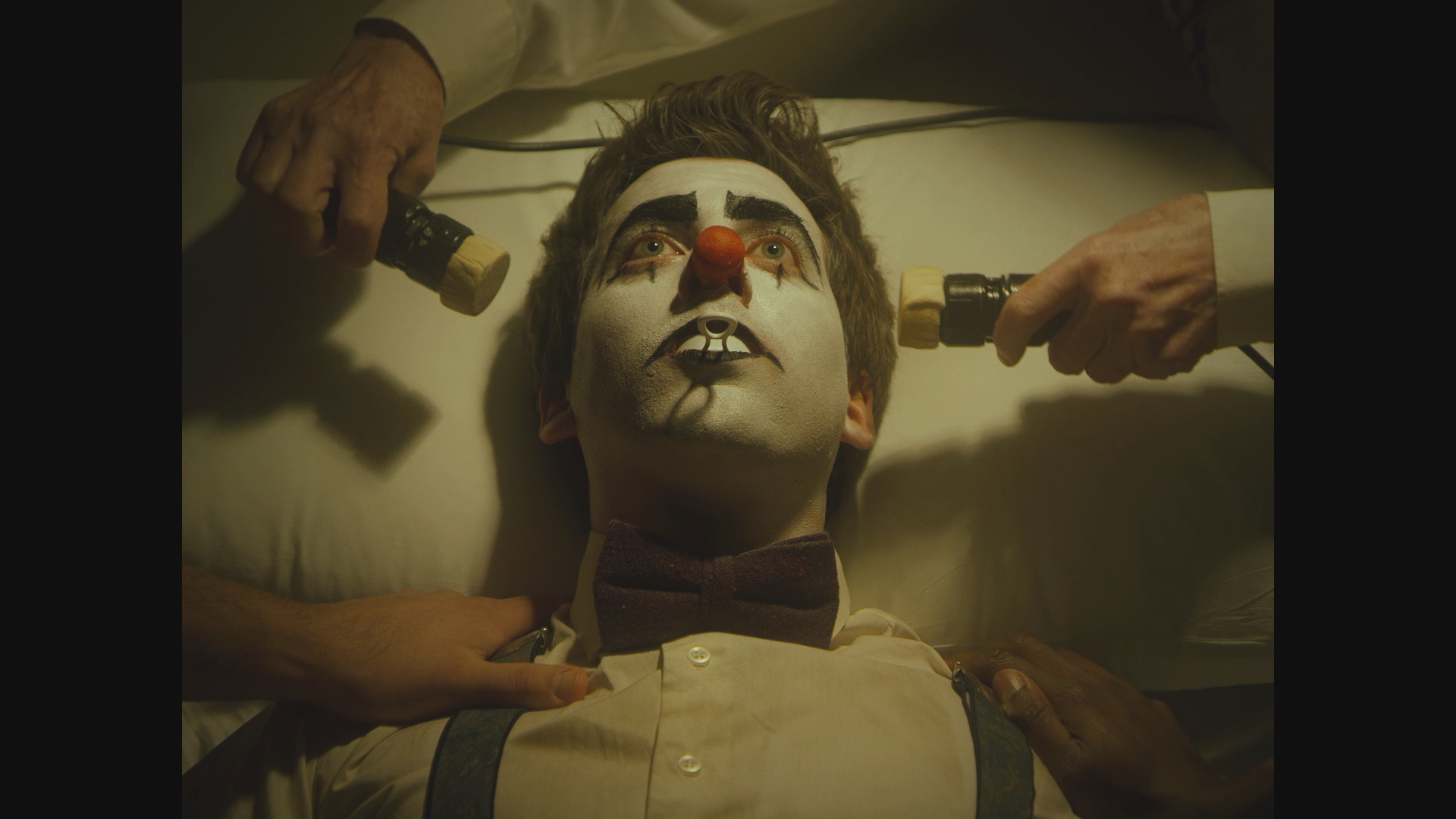
Recently I’ve been thinking about what is the evolution of a ‘look’ as the last film I shot is going around the festival circuit and at the time of writing has won two Best Cinematography awards (Fantasporto and Fantasia). It is my first film with director Alberto Sciamma (Killer Tongue/Jericho Mansions) and is called Cielo (Heaven). It’s a very beautiful film, and by that I mean everything: the script, direction, acting, art, costume, locations, music, sound design, editing, SFX, VFX – the lot! And it touches people in a meaningful way. Here is the trailer for it.
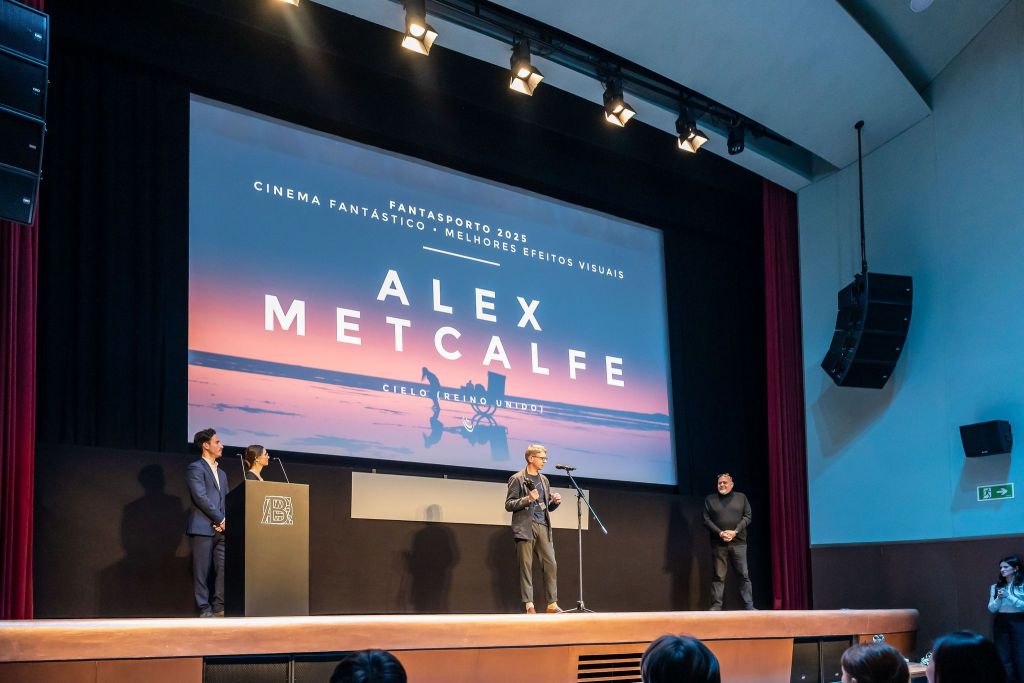
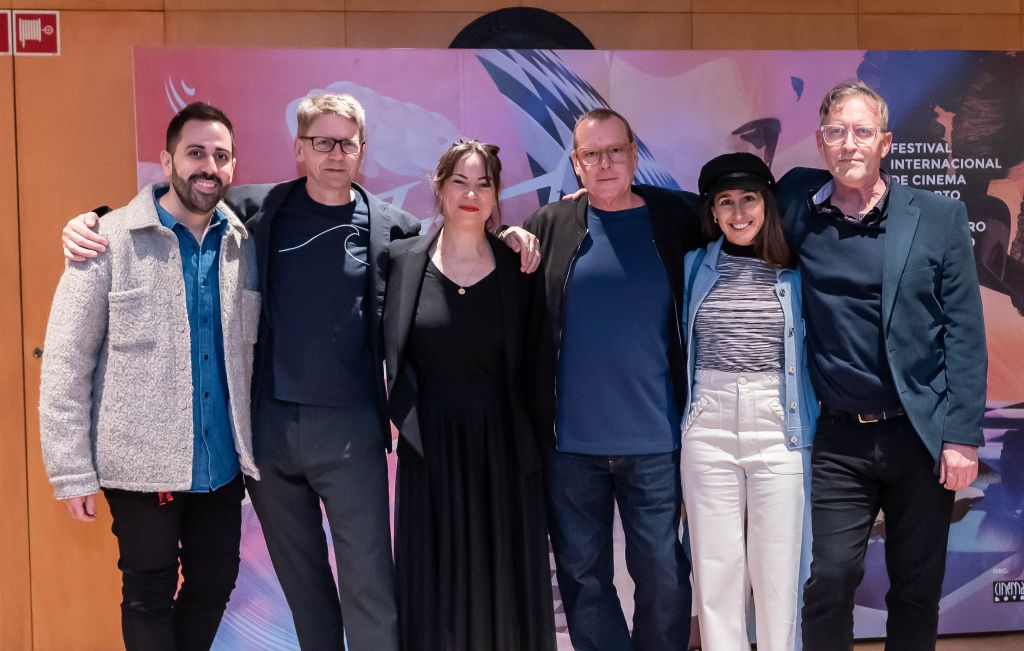
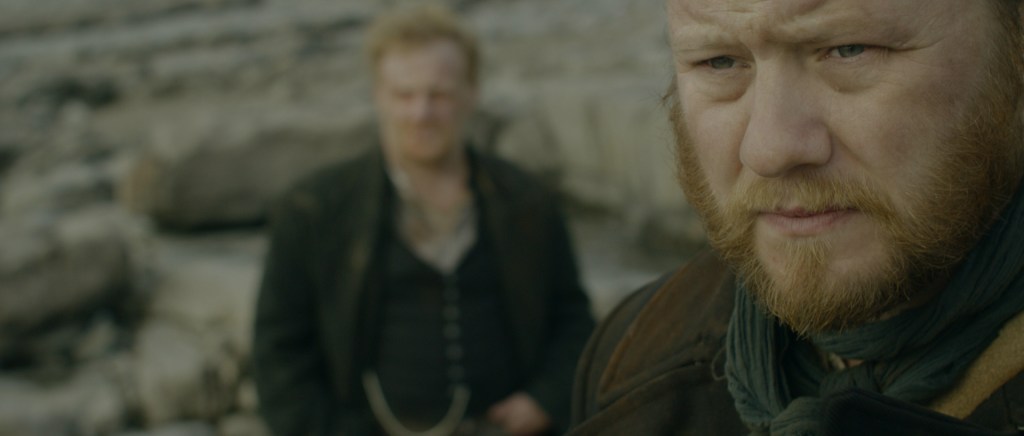
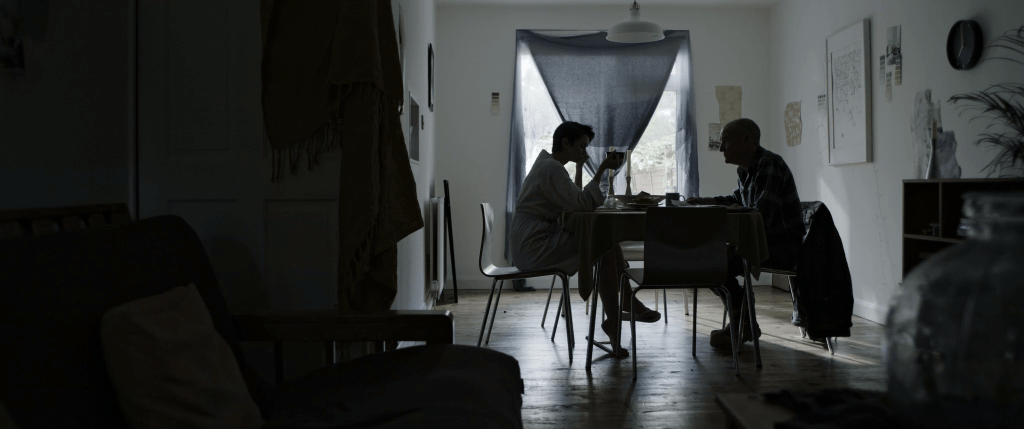
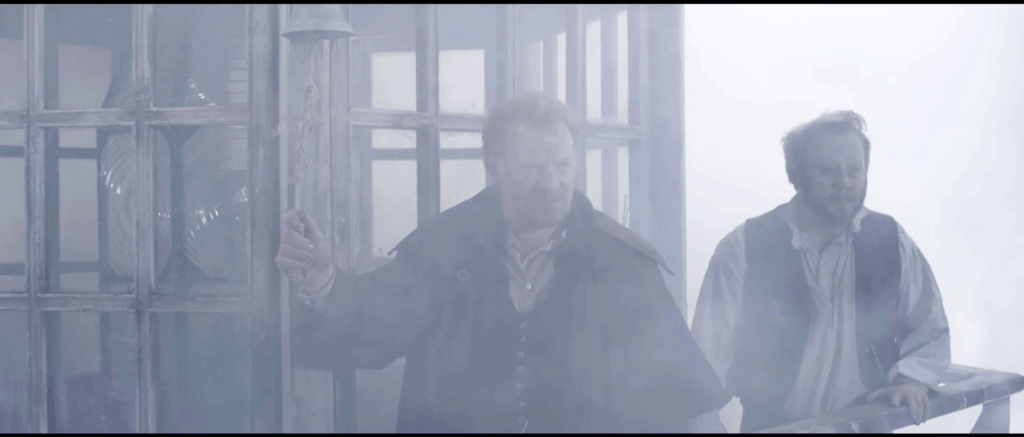
Collecting the awards was obviously a joy and nearly all the reviews mention the look of the film but what I want to explore is what creates that look? Is it my look? Should I be collecting the awards at all? If you look at some of my other films they look very different and so I find myself asking what are the constants, if any? What is my look? And how does it change with the influence of different directors and teams? I’ll spread this over a two-part blog. This part will break down the influences in Cielo as I’m keen to reflect on how the look developed. Part two, coming soon, will talk a little about the work I’ve done with director Chris Crow (Panic button/The Lighthouse) with whom I’ve made three films. Over those films we have found a visual thread that we are both drawn to. It is grimy, dark and messy. Whilst Cielo has those elements it is not how most people would describe the film visually so it seems worthwhile to dig into the genesis of those looks and see where we get to.
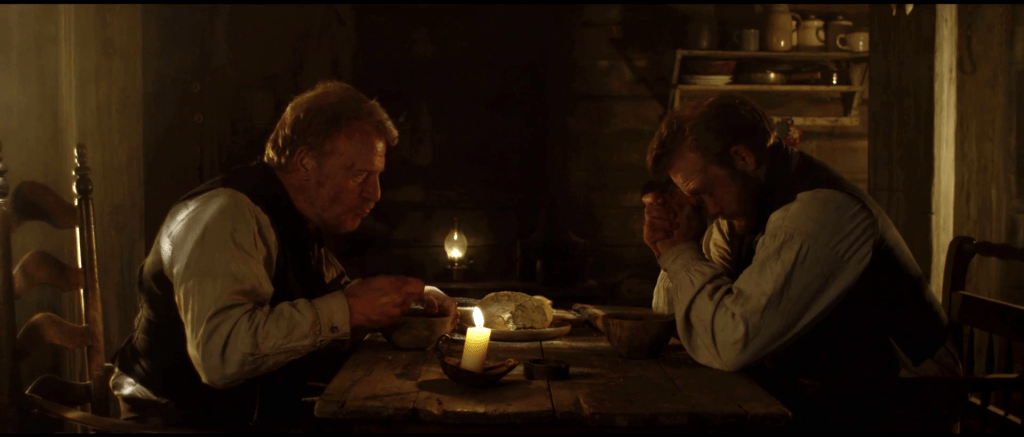
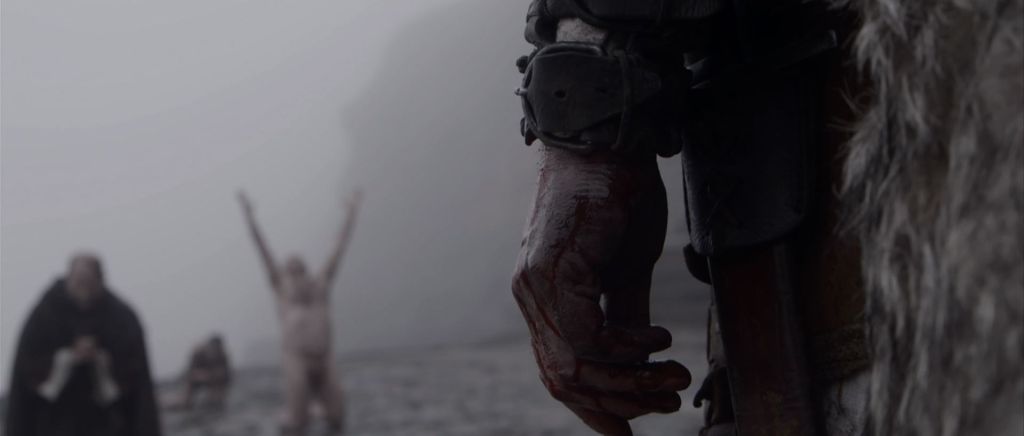
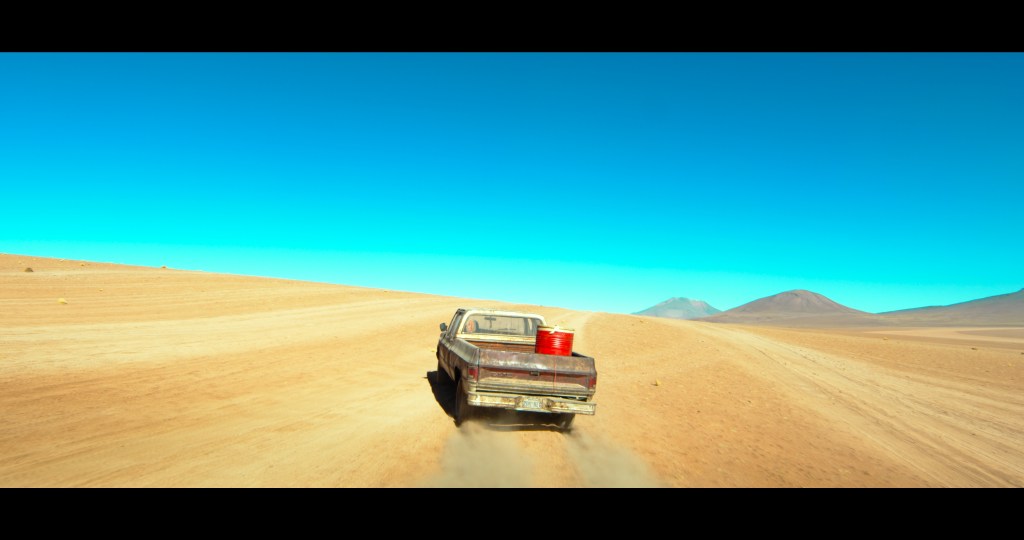
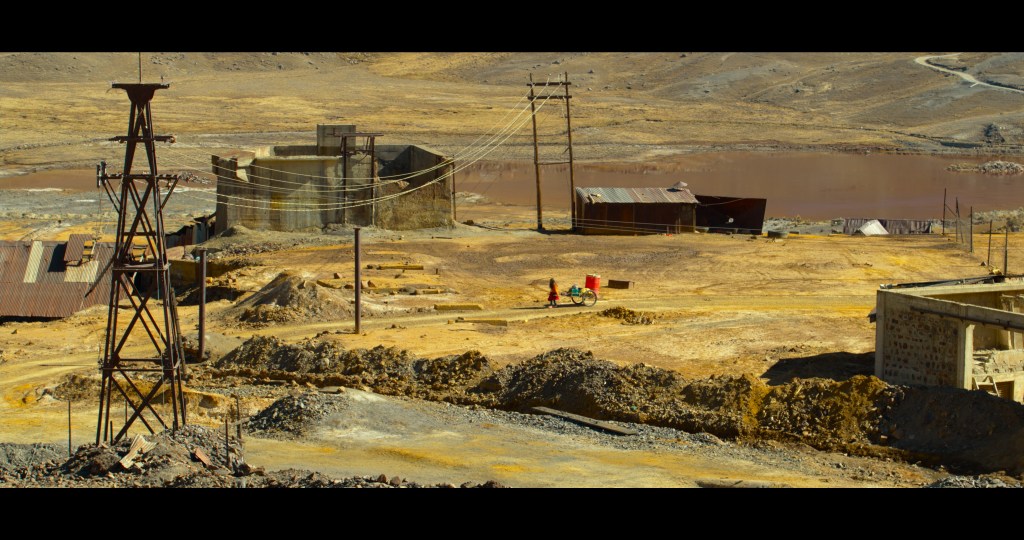
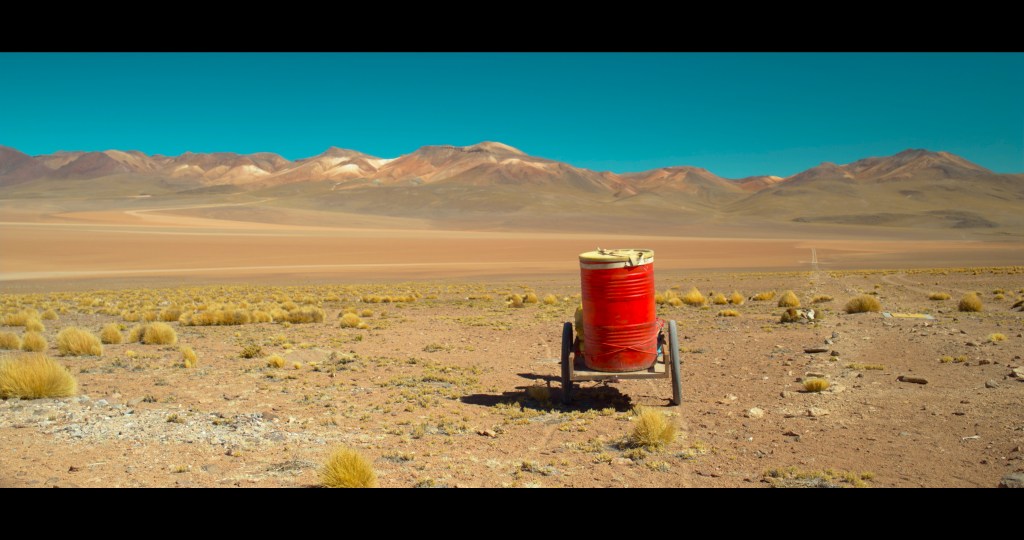
Cielo does have a very distinct look. It has a striking colour palette and a visual sense of purpose that very much charts the journey of our lead character ‘Santa’ (played by
Fernanda Gutiérrez Aranda). The first thing to note is that Alberto and I had been working on Cielo for at least two years before the official prep period started. These talks ranged from practical requirements of the SFX and VFX with the department heads, Rob Goldstone and Alan Tabrett, to a much more esoteric understanding of how Santa would experience her momentous journey. Each conversation gradually connected Alberto and I on a common understanding of guiding principles and I suppose that is always the starting point of a look for me – to digest and respond to the director’s vision of the film
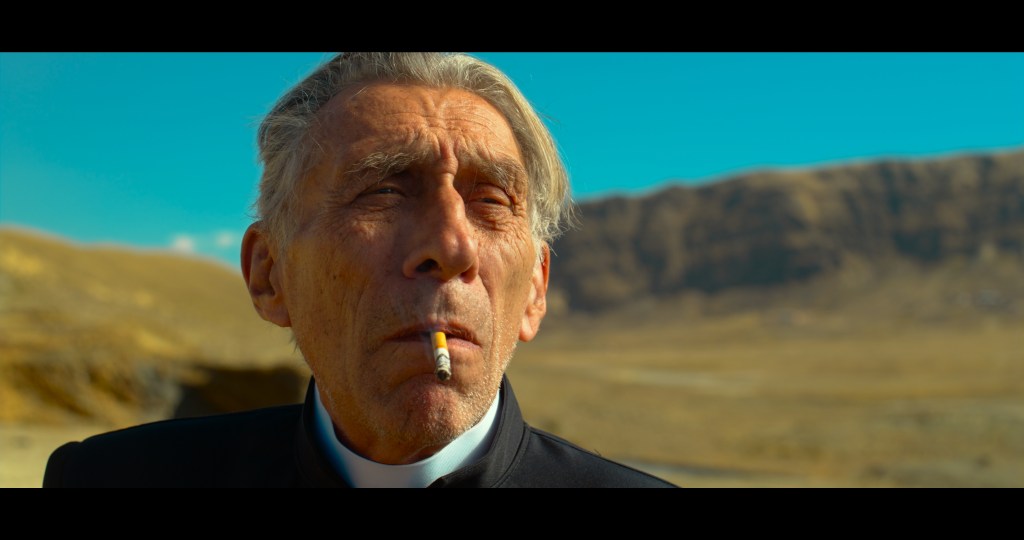
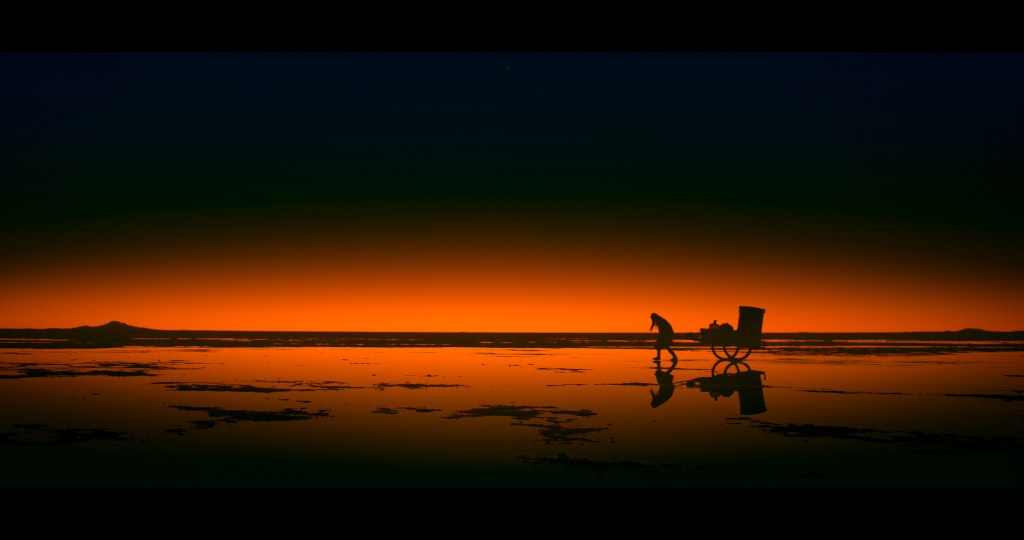
So before we headed to Bolivia to start the prep I had these ‘rules’ in my look-book:

  1. It’s always about Santa and her journey. Camera height should favour her point of view.
  2. The environment is another character. This is also the first time that Santa will have seen this environment and we should reflect her awe and her fears.
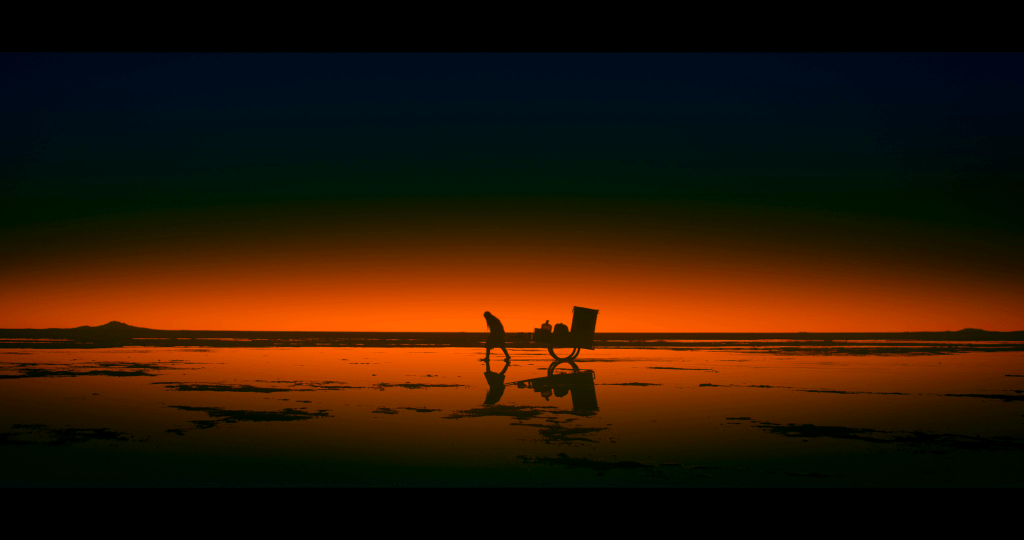
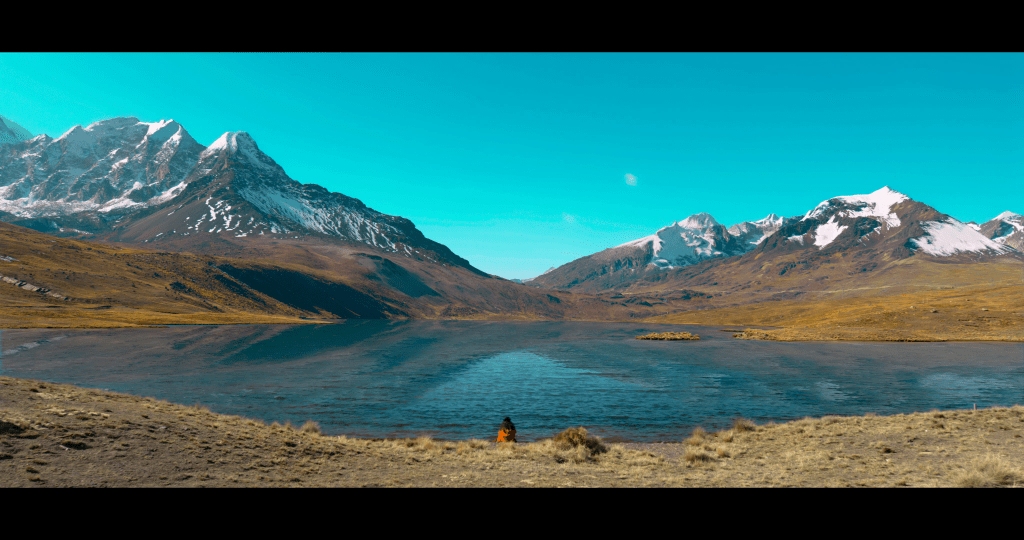
  3. The colour palette will reflect the yellows, blues and whites of the countryside. The barrel will be primary red as both complementary and contrasting.
  4. We need to see the actors’ eyes. No hard shadows sending them into darkness.
  5. The magical realism the film depicts needs to be created ‘in-camera’ as a priority and enhanced in post when required.

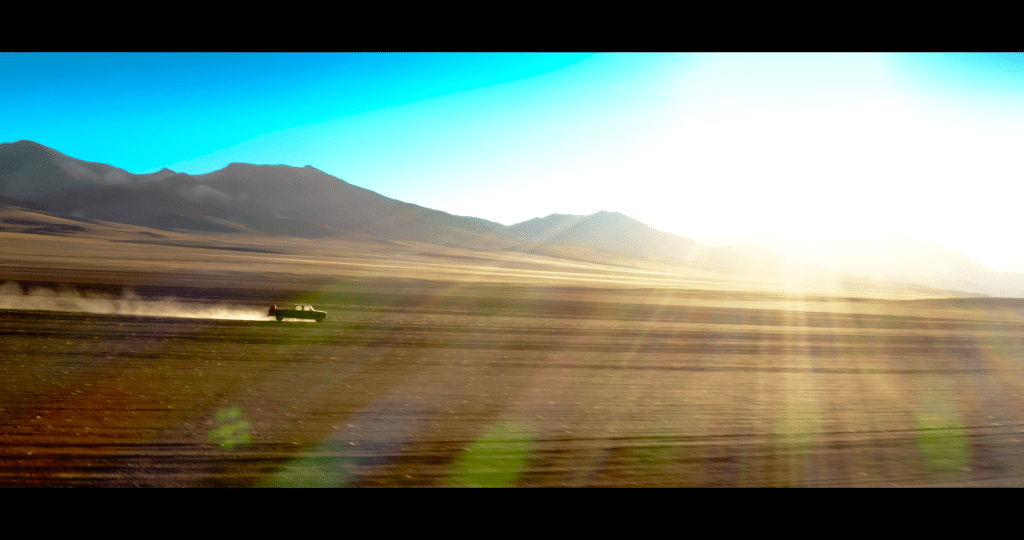
And to be honest this is the foundation of the look which I can definitely not claim ownership of. Alberto would have shared similar goals with all the department heads. I think for me as a cinematographer it’s essential to get to this level of understanding and to know that all the other department heads are working on a common look. What follows from this point is how I run with it, what I put in place to not just achieve it, but to build on it, to reinforce and grow it, and I guess, how to implement it. Some things are just small moments that ‘feel right’ like the heat haze from the clip below. This is a transition shot that joins the first and second scenes and the audience have just witnessed an unusual event. The idea of the heat haze came after we had scouted the locations and was very much an emotional reaction to being in those spaces. It would have been ok without the heat haze but for me the shot is transformed with it. It was created by a heated metal plate that the SFX team put in front of the lens just out of shot.

Some responses to the look-book rules were considered well before seeing the locations but were often tweaked on set. This is especially so with the in-camera SFX requirement. We knew we wanted to create flares to cover some of Santa’s more mystical moments and these were generally created with mirrors reflecting a bright source into the lens. We used mirrors so that we could easily manipulate the flare to come and go on demand. However we also used multiple things in shot to block and reveal flares; the cast, doors, windows –  pretty much anything that could be moved! Below is a montage of some of the flare moments that blurred the audience’s understanding of what is real. For me there is a real beauty to these time-honoured and very simple solutions. Towards the end of the montage is a key scene where Gustavo (Fernando Arze Echalar) and Santa share a moment and I couldn’t imagine this scene now without the heavy flaring, especially the moment when Santa opens a door that floods light down the lens. This was substantially more extreme than I had expected but Alberto nodded his approval so we went with it, enjoying the lucky accident.

We also wanted to create an understanding that sometimes Santa was straddling two worlds. Finding a visual pathway to this was slow as so many solutions just felt like a low-fi video effect. We finally found a solution that felt organic, could be manipulated on set and didn’t dominate the moment. This was a set of broken mirrors that I glued onto a board at different angles. One board was made of a standard 1x broken mirror, the more extreme version was a combination of standard 1x mirror and 2 x magnification mirror (like the ones used for shaving). We then filmed the reflection of the action, rather than the action itself, opening to a stop of T2 to blur the joins in the mirrors.
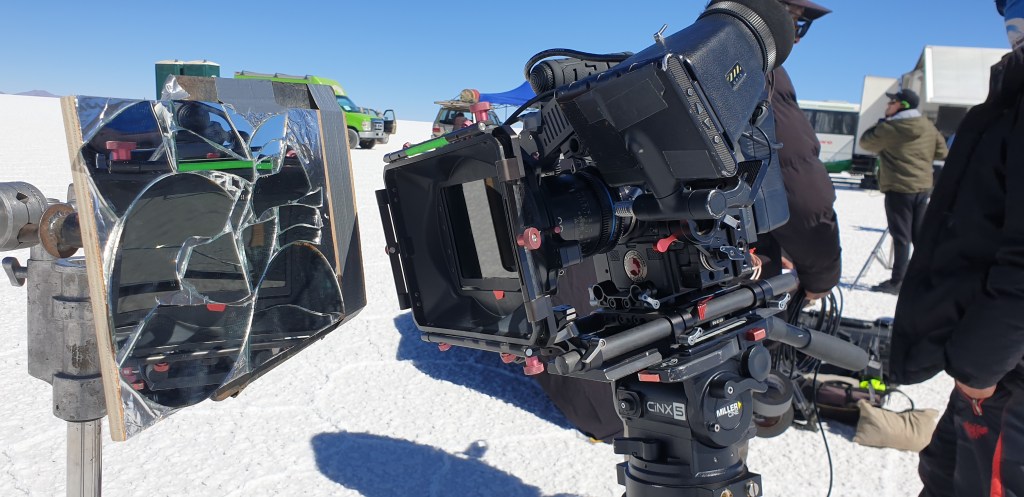
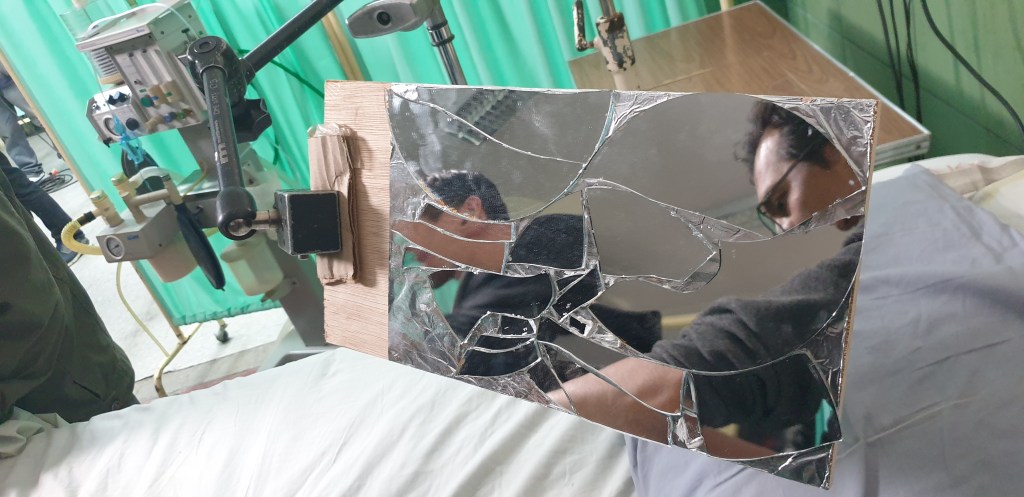
But getting that look was a process. Alberto and I could say that we instinctively knew that this gave the visual feeling we were after, but it took a lot of seeing what we didn’t want before knowing that this is what we did want! And still it ended up not working for some sections that we had expected to use it on. For instance, there is a section where we wanted to visually link Santa on the salt lakes with Santa in the bus. So for that scene there were effectively two Santas and it was a moment where using the broken mirrors was believed to be correct. However both Alberto and I in our hearts felt it wasn’t quite right and we discussed it nearly every day that we were in Bolivia. This continued until the day we were shooting the salt lake element where we just tried a number of strategies until something clicked – Yes I can hear all the 1st Assistant Directors out there taking a collective in-breath of despair as time ticked by! But it was an interesting moment as the look-rules stated one plan but ultimately you have to allow the space to trust instinct over rules, ensuring the look to be a living and breathing thing. However, annoyingly, the look also needs consistency. Surely a look can only be a look if there are common threads running throughout the film? Overwise, visually, it’s just a series of scenes! For me this means consistency of some of the basics. In Cielo they were elements like frame size (predominantly very wide or close without so many mid-shots), shooting stop (T2.8 – 4), camera height (mainly Santa eyeline) and colour palette.
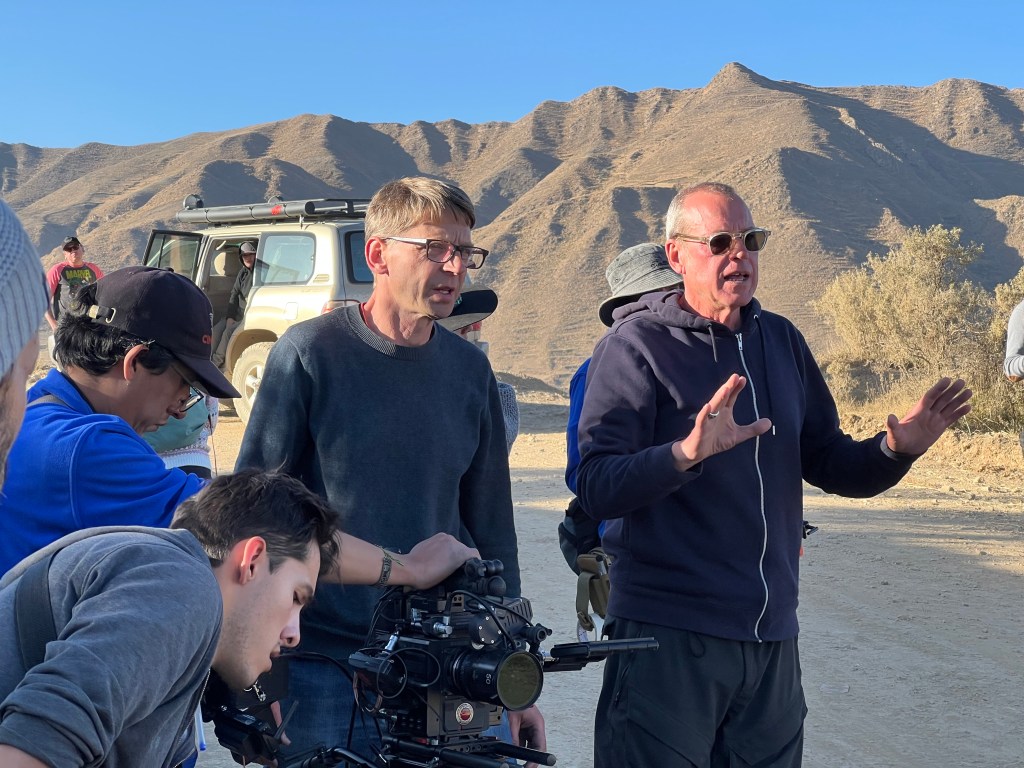
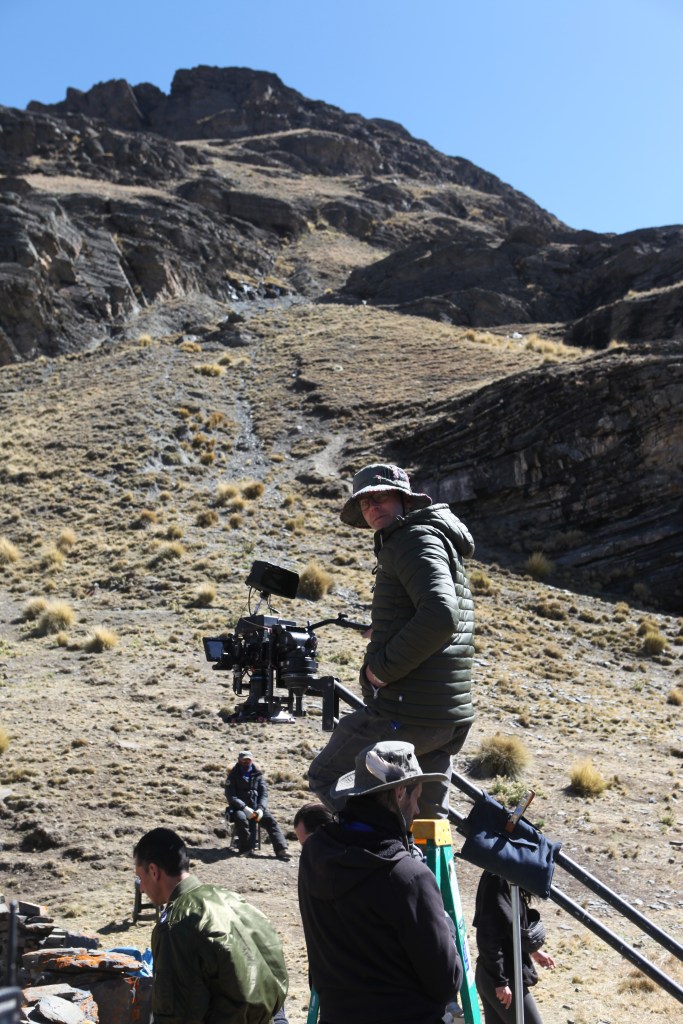
But as the saying goes, rules are there to be broken. And that comes with trust. The more we trusted each other and the look-rules, the more we were able to make bolder choices. There is a scene when Santa and La Reina (Mariela Salaverry) start to build their relationship. We were shooting it at dusk outside of a small restaurant in the mountains. The plan was to create the feeling that the sun had just gone down as the following scene in the film was the bus at night. We started setting up the scene and the sun was streaming in over the top of a mountain range. I worked out we probably had about 20 minutes of sun left and it looked so beautiful and would flare like mad which of course would fit with our visual themes. I asked Alberto what he thought and said if we shoot this right now we have 20 minutes to complete the scene. He saw the first frame and we went with the flaring option and it’s a lovely moment. I think had we been faced with this decision in the first week of shooting we would have waited for dusk which would have worked well still but not been anywhere near as impactful as the scene ended up being. Here it is.

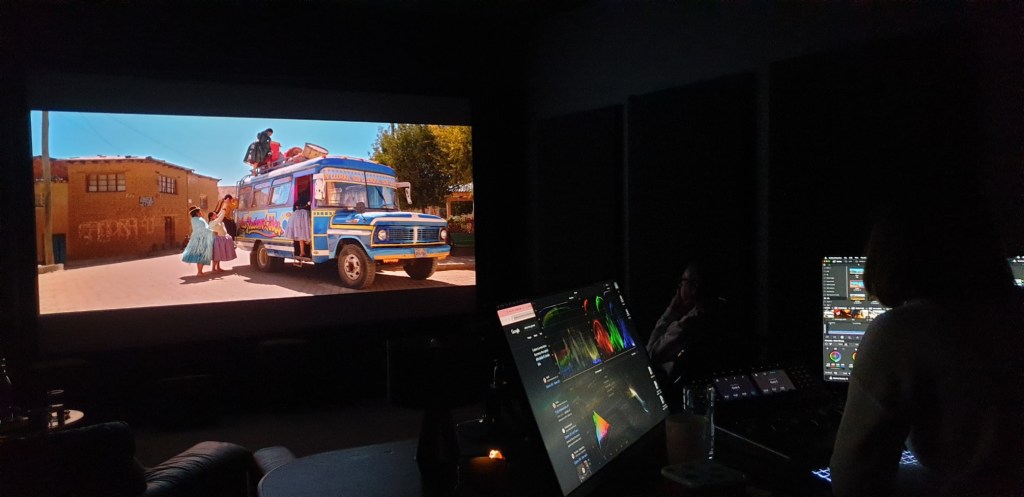
The final stage of the ‘look’ is of course the grade, the moment where you choose how strong the look should be. We graded at Onsight with a fabulous colourist called Emily Russul Saib. I did some test grades on frame-grabs at home and Alberto sent through his inspiration that came in the form of gem stones and then we sat down for 2 weeks to fight it out! Complete confession here – the end grade is more extreme than I had ever imagined. Alberto pushed it further than I expected and Emily took those themes and pushed them again. Naturally as I saw the scenes develop I was like the recently converted and jumped in with both feet but it took their influence to make me see how far the colours could be pushed.
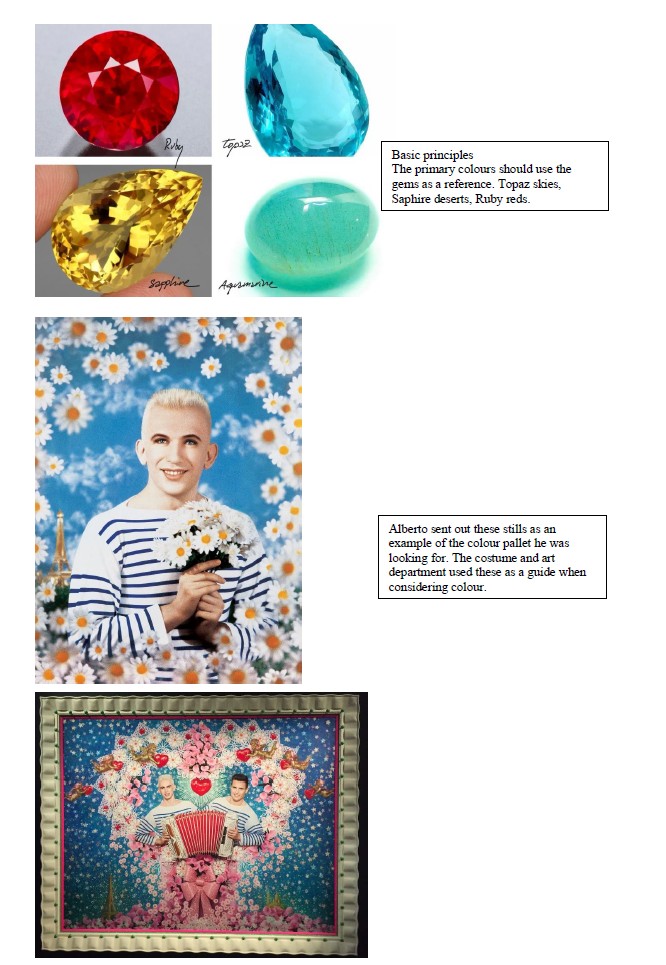
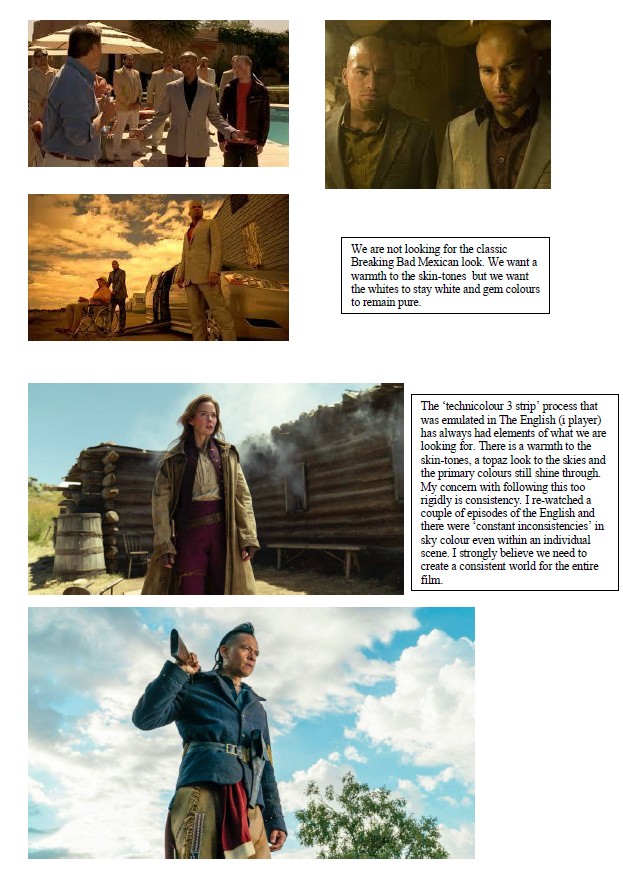
And this is a truth; Cielo has ended up looking different to how it would have if it had just been left up to me. That truth has made me question why I am the one clutching the gong, standing on stage, thanking the judges and taking the glory. My camera, grip and lighting teams all made suggestions that were taken up at times. Every other department gave as much thought to the film’s look as I did. Of course standing at the centre of all this is the director and this is the person who guides us all in a common direction. We build on that direction and show possible alternatives but the central vortex that sucks in these ideas, spins them around and sends them back out in a single stream is the director. This is why my films can look so different. I’ve realised the common theme to the films look that I shoot is me and my team. It’s not just the process I use to find the look, the way I listen and respond to the director, my framing or lighting preferances, the pleasure of being instinctive when appropriate. It is also the type of person I am, the atmosphere I encourage on set, the calmness that I tend to have. I’m not saying that this is better or worse than other ways of being and in fact I did hear one director complain to a friend that he wished I was more aggressive. Horses for courses. But there has to be something that is the core to the body of someone’s work. For Robert Richardson ASC it might be his approach to lighting that is the core that sets the look, for Vittorio Storaro ASC AIC it could be his philosophical understandings. For me, I think, it is my approach and my openness that guides the look. The oddest thing is that it has taken eight films for me to realise it!

Part two of this blog will explore this further by looking at how director Chris Crow and I have come to find a path over the course of three films. If you got this far in the blog, thank you for bearing with me and tune in for more ramblings soon.
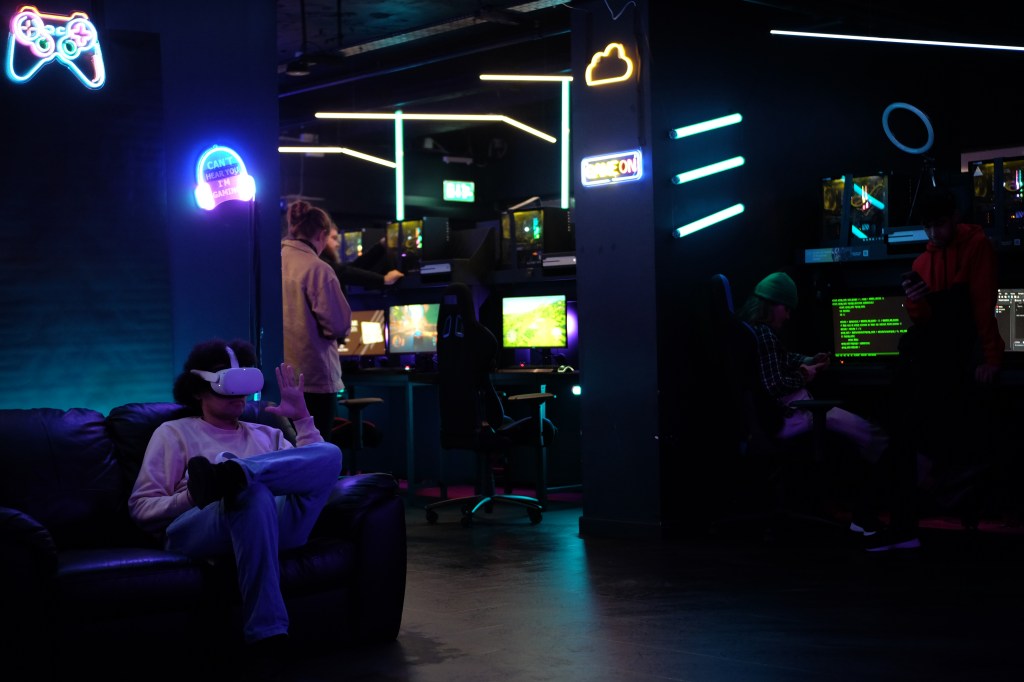
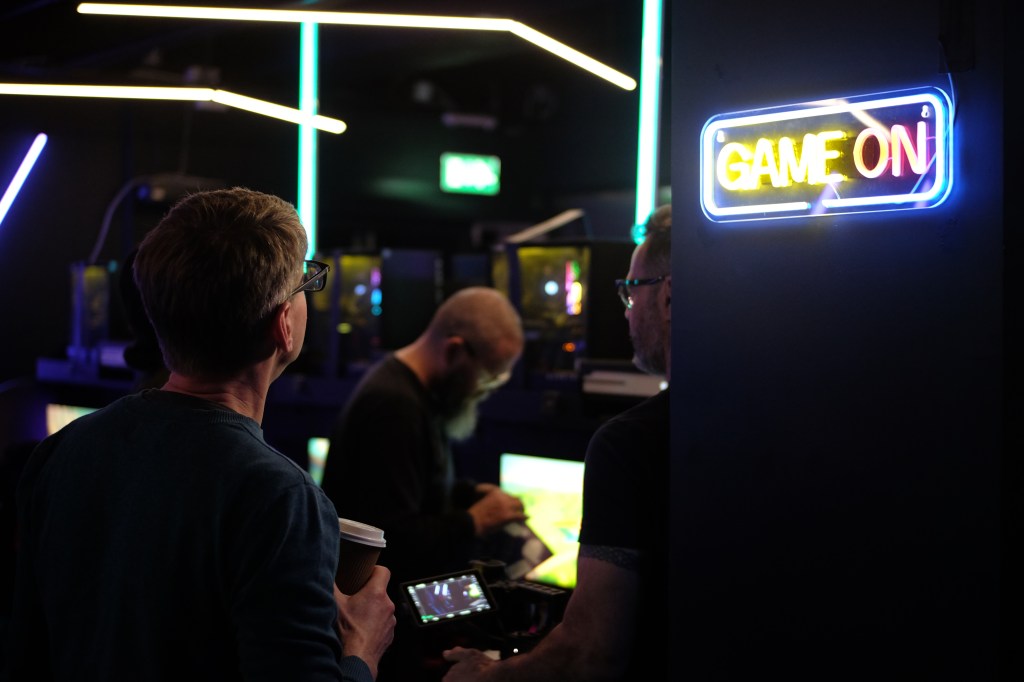
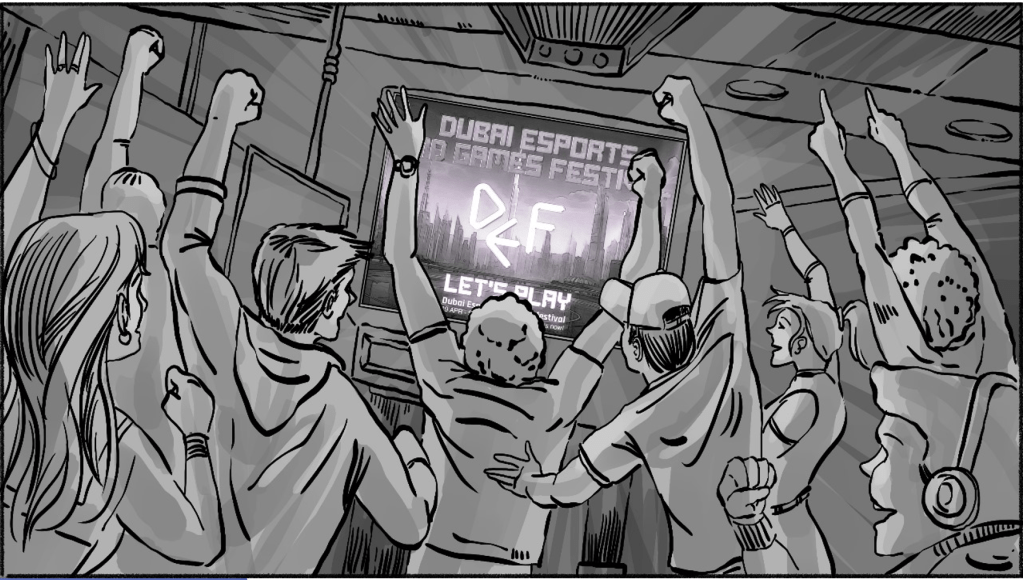
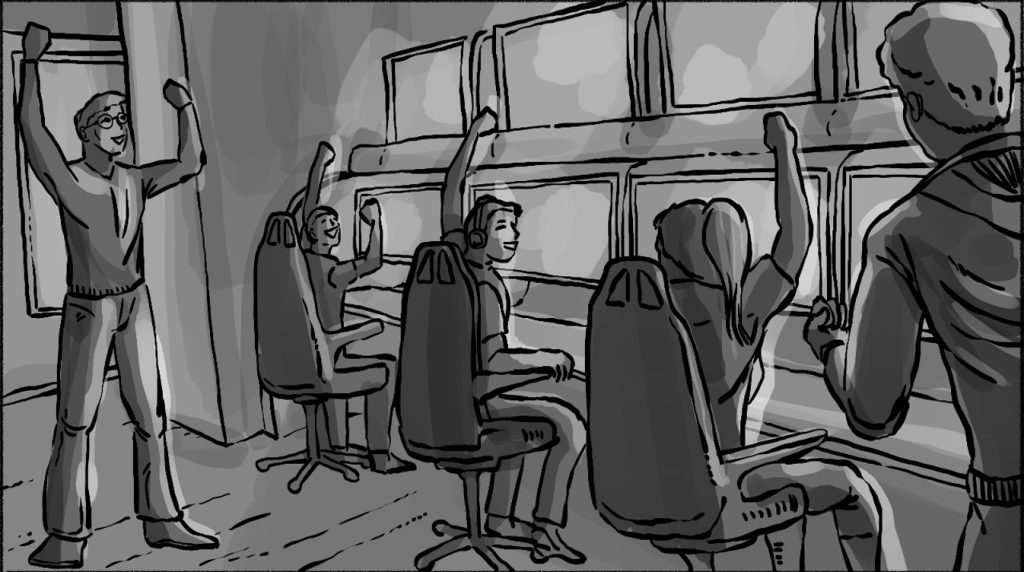
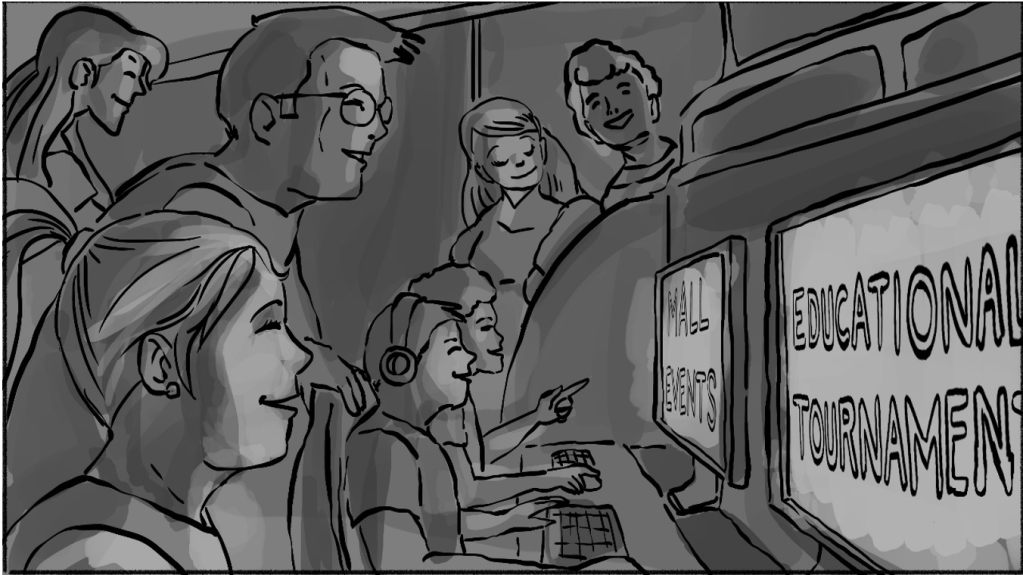
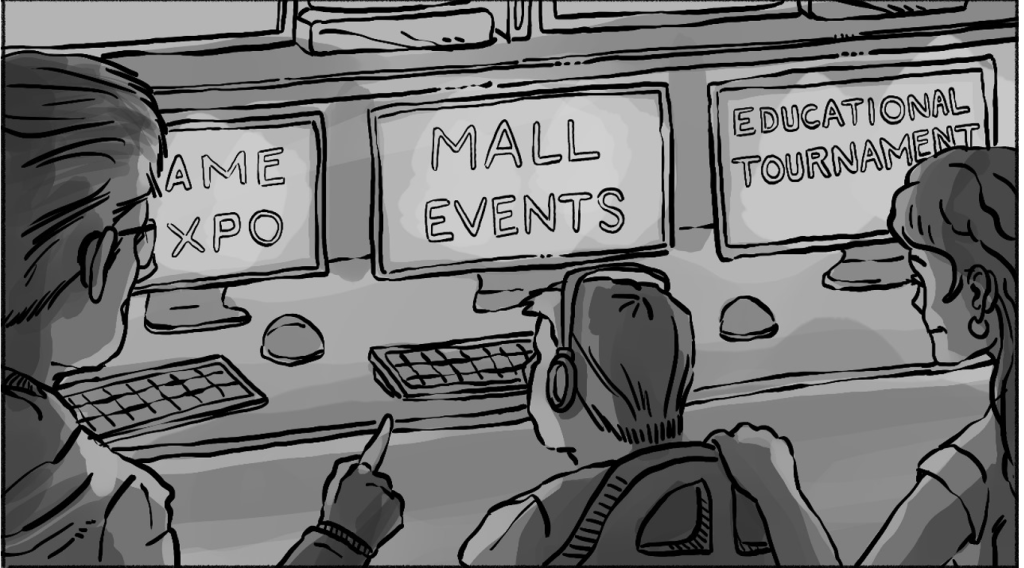
We were lining up a shot recently and I heard myself saying “we should probably tighten up a bit, most people will view this on a phone.” It was a promo for a gaming Expo in Dubai and whilst I was correct, most people will watch it on a phone, it will also be projected, be seen on laptops, tablets and Tv’s. It reminded me that the visual choices we make for a film can become skewed towards the most common way it will be viewed, as opposed to the best representation of the subject. When I suggested tightening up the shot, it wasn’t because the shot size was incorrect from a storytelling point of view, it was because the shot wasn’t impactful enough when viewed on a phone screen. But maybe this isn’t a bad thing? Maybe as DoP’s we need to keep the end viewing platform as central to our decision making on frame size. Surely that is serving the story better? Even if when projected we lose some of the location context that we would have liked to see, we are making choices about framing for what ‘most’ people will see. Great, problem solved, time for a cup of tea, shortest blog so far, bye…..oh wait… what else could we change if we are optimising for a phone? I mean if we are a little out of focus is that ok? No one will see it on a small screen, what about digital noise, unpleasant lens artifacts or reflections, a bit of cabling on the floor maybe? No one will spot those things on the phone but they will be blindingly obvious on the big screen. And yes, I can see the flaw in my argument, these later things are objectively wrong and should be avoided on all formats but I sort of feel that it could be a slippery slope. What if production say tidying those cables means we go into overtime and most people won’t see them anyway? Is that ok? Are we still serving the story as the story won’t be negatively affected when most people view it, which will be on their phone, and production go away happy as there is no overtime. It’s a balance that I am finding myself being asked to negotiate more and more regularly.

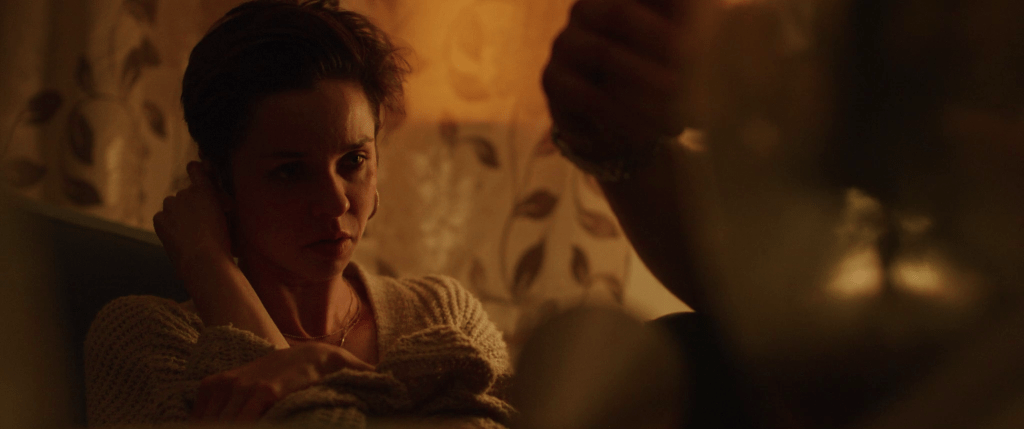
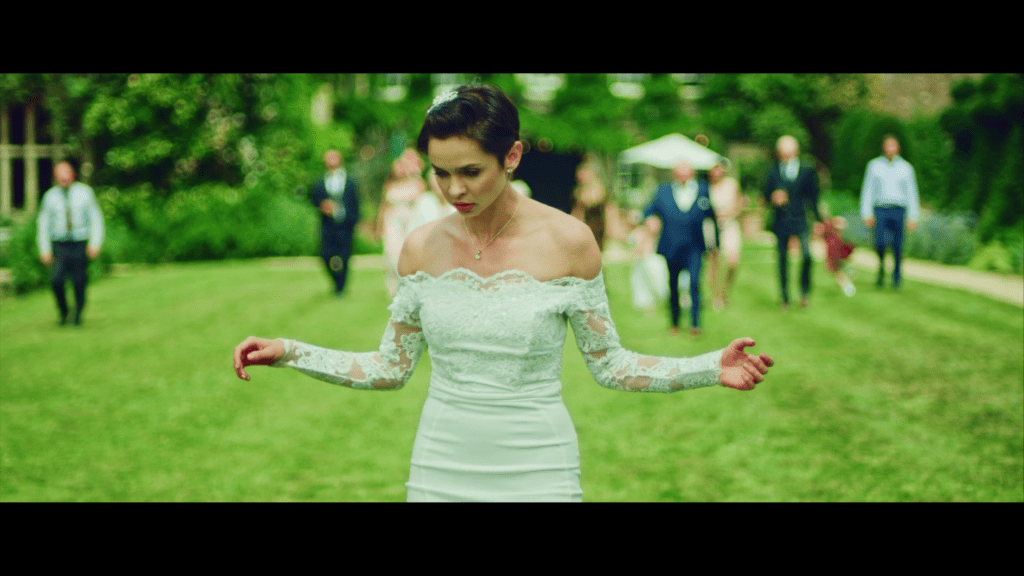
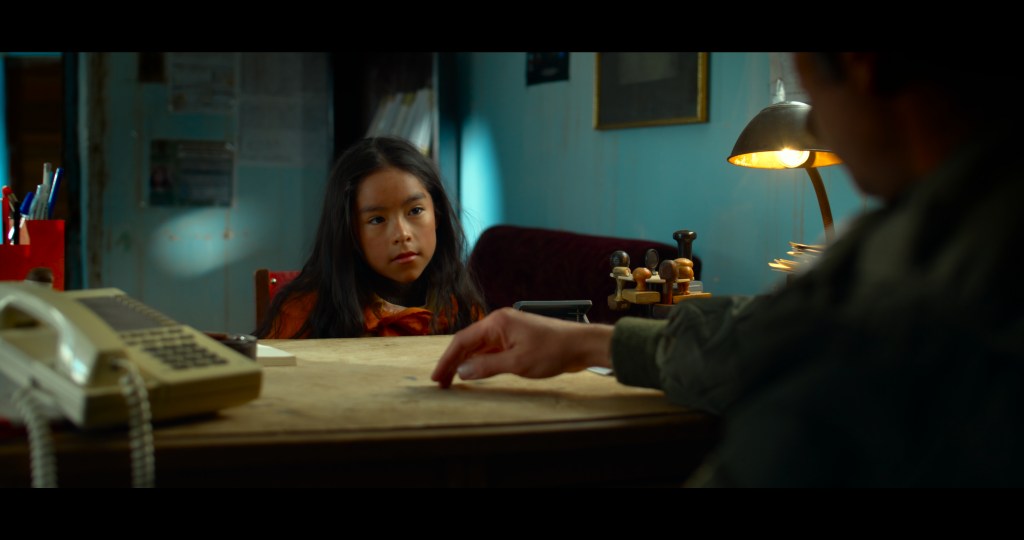
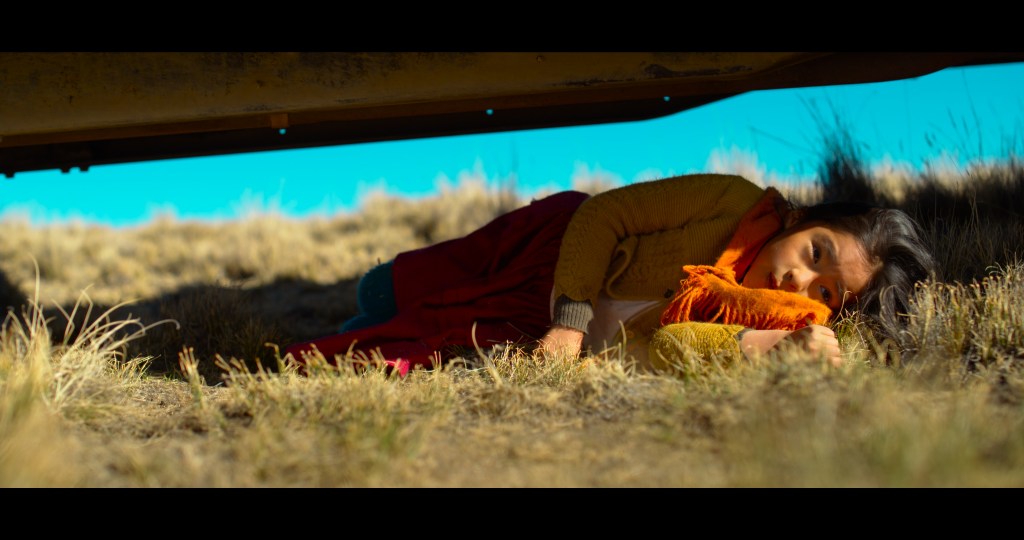
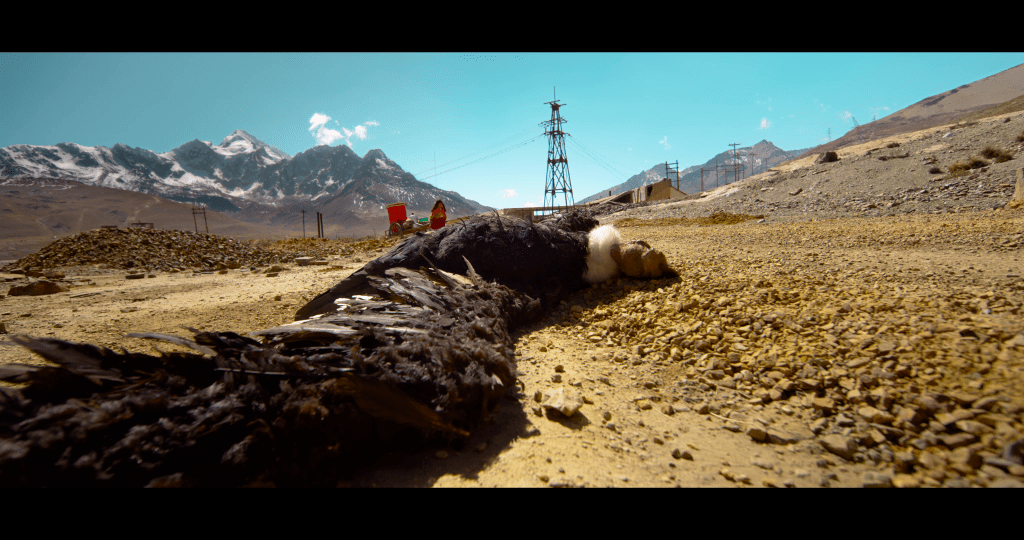
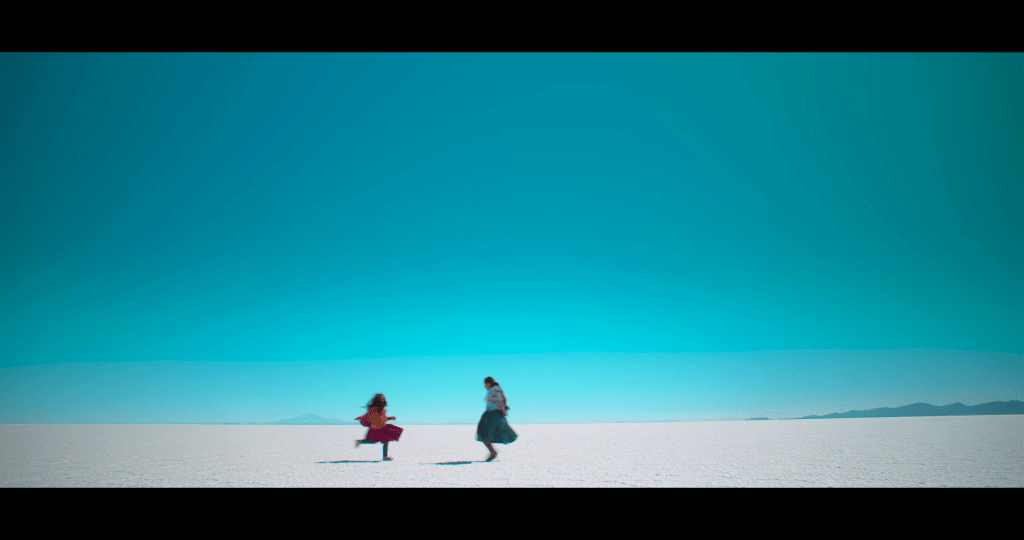
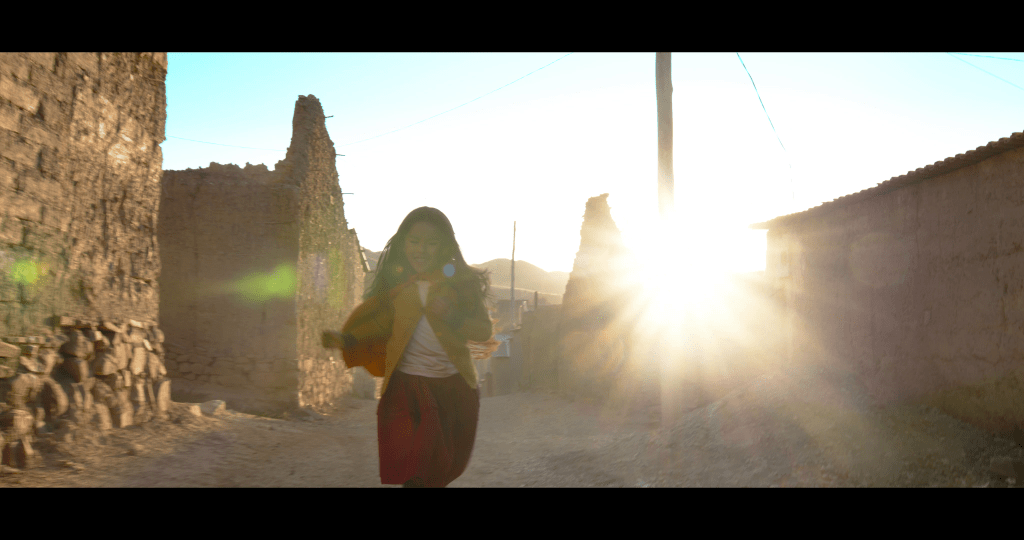
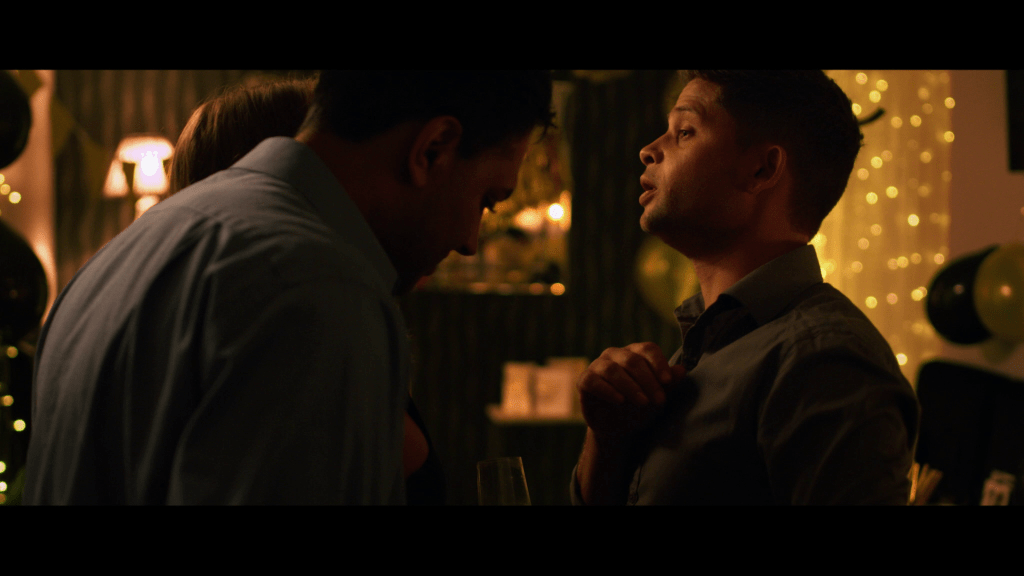
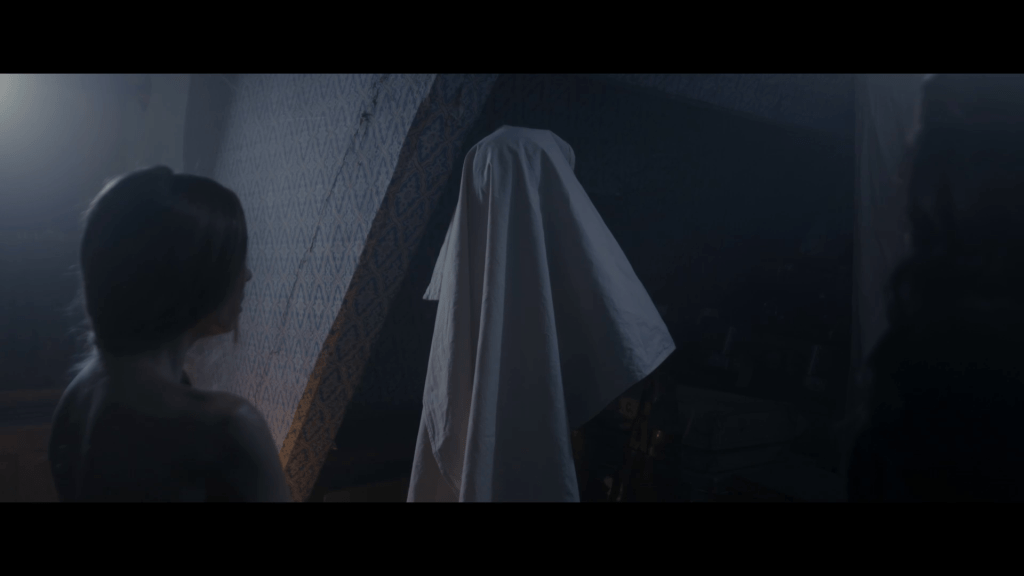
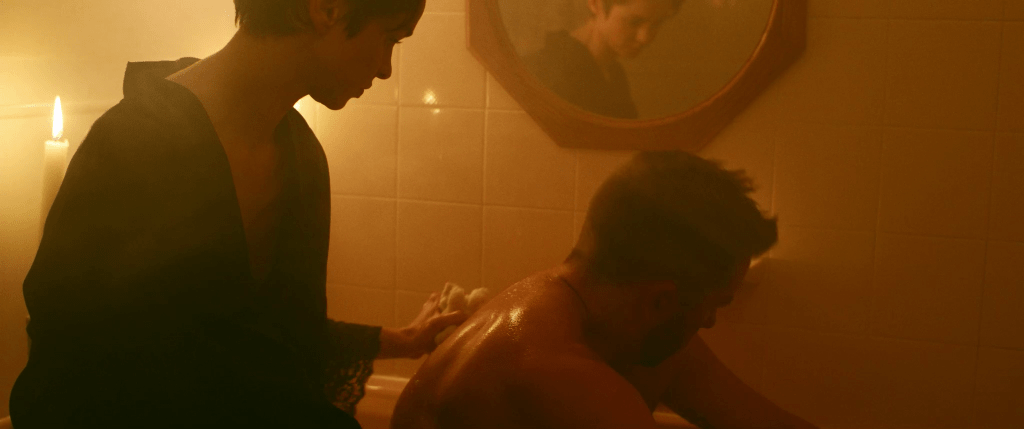
I’m going to talk about two projects that have had very distinct discussions on scale. This blog will focus on the games expo promo and I will write another blog focusing on an indie feature shot in Bolivia called Cielo. Cielo (director Alberto Sciamma) is very much a cinema film and so the discussion around scale was very closely linked to the narrative, rather than the form of presentation. Just as a taster here are some framegrabs.
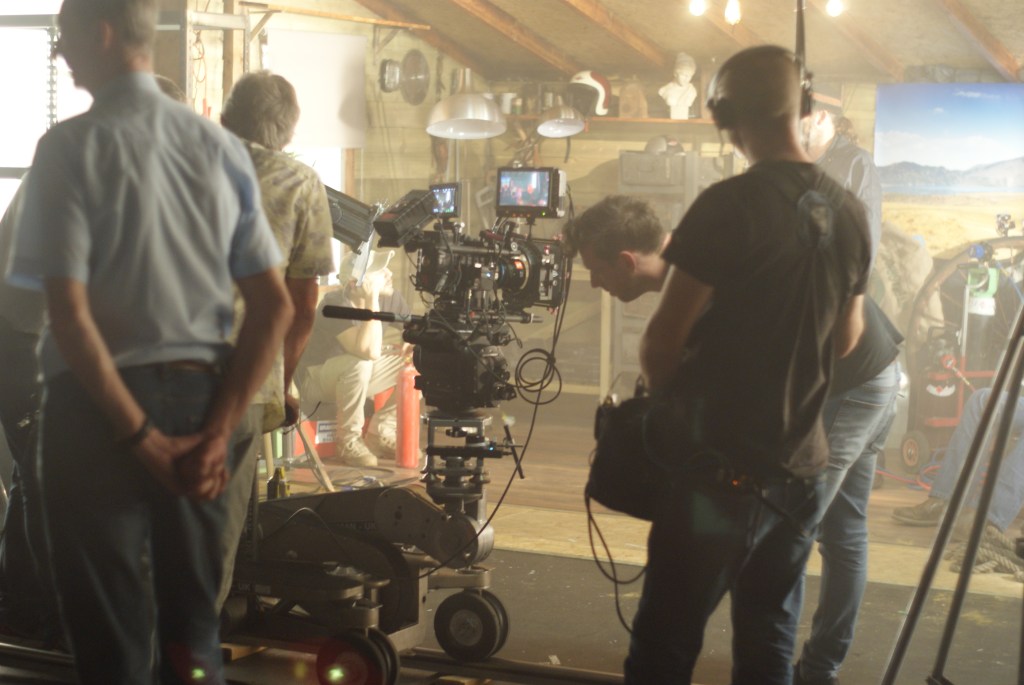
The Expo promo came to us through the agency FGreat, headed by Conrado Galves. I’ve been lucky enough to work with them on many projects and it’s always a pleasure as their quality-filter is so high. Here is the finished promo

Nic Cornwall from Little Big Fish Films, a long-time friend and collaborator, directed and produced the UK side of things.

The brief was to shoot the live action scenes to bridge the gaming footage that formed the centre of the promo. Delivery was 4K with aspect ratios of 16:9 and 9:16. Primary viewing platform was smartphone, followed by larger screen devices but the client also wanted the promo to feel cinematic when projected on a cinema screen. Historically you would shoot everything for the projected distribution and accept that some people would choose to watch it on a smaller screen but that is no longer the case as viewing patterns have shifted so much now.
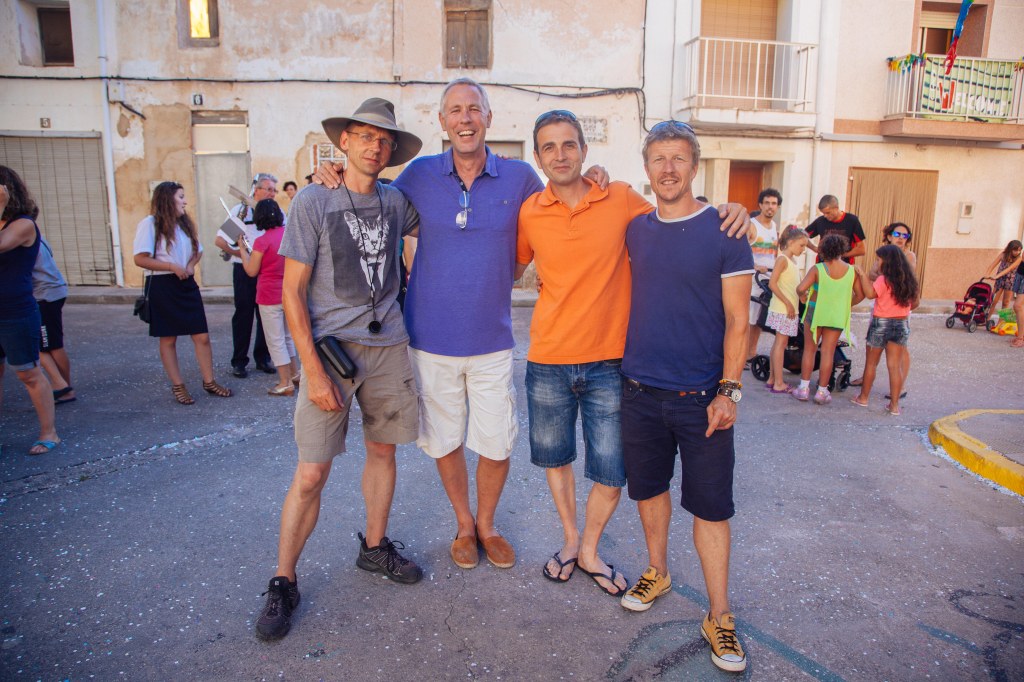
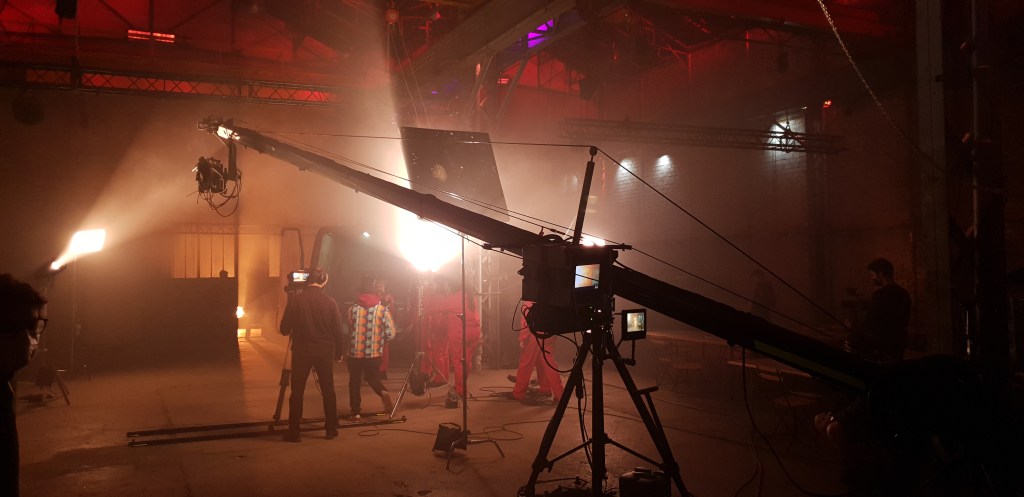
In an ideal world you would shoot each shot 3 times to suit the virtues of each format but that is a difficult argument to win with tight budgets. We had 9 shots to do in the day, with some of the shots requiring multiple passes against green for compositing in post, so doing all that 3 times was definitely not going to fly!

We broke the storyboard down working out shots that we could use the digital latitude, we were shooting 6K for delivery on 4K so had some wiggle room to reframe. Some shots had required information with-in them and these we shot twice, once for 9:16 and once for 16:9. This was 4 shots but none of them had any greenscreen elements so was just about manageable.  The key difference in shot size between the 16:9 version for the phone and the 16:9 version for projection was how tight we were on the cast. We had a great location and wanted to see it on screen but if we were wide enough to enjoy the location then we started losing the cast performances when seen on a small screen. Only being able to shoot these shots once meant we framed more for the projected frame, so wide enough to see the locations, knowing that the post team could push in digitally to highlight the performances if needed for the small screen version.
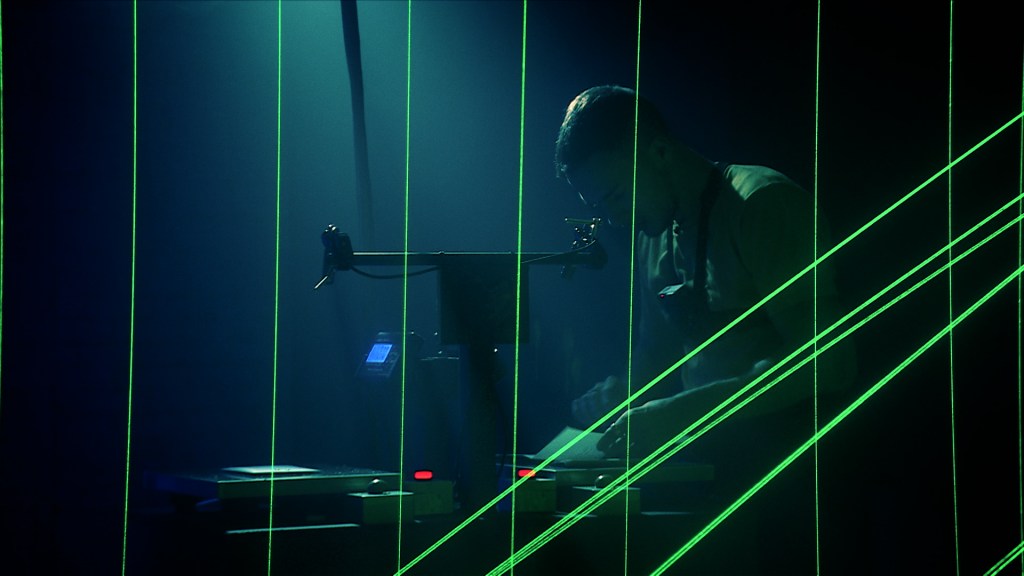
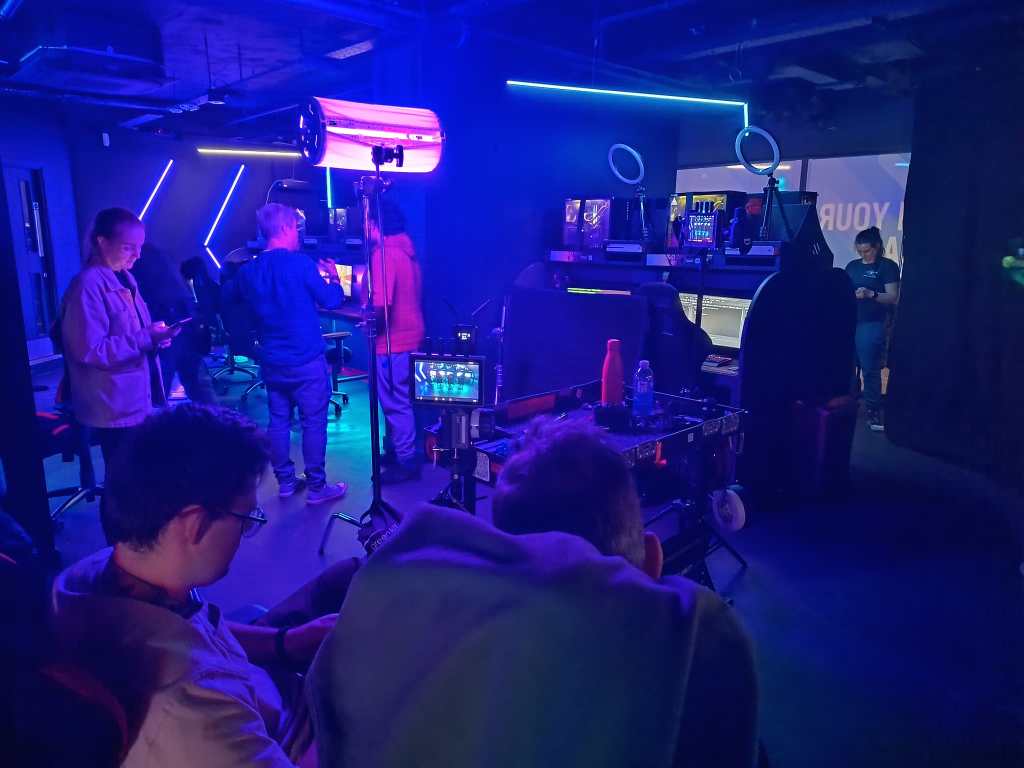
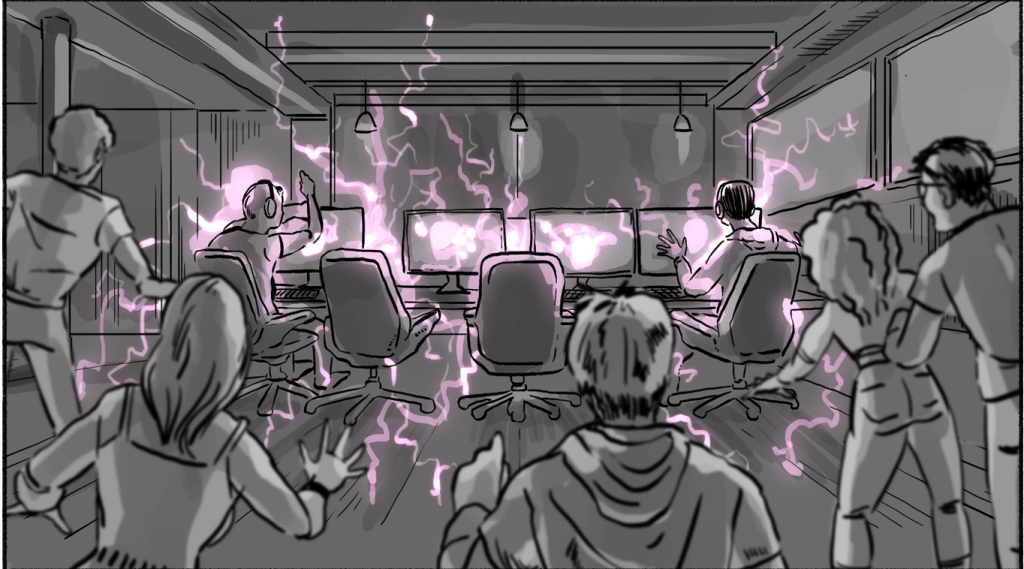
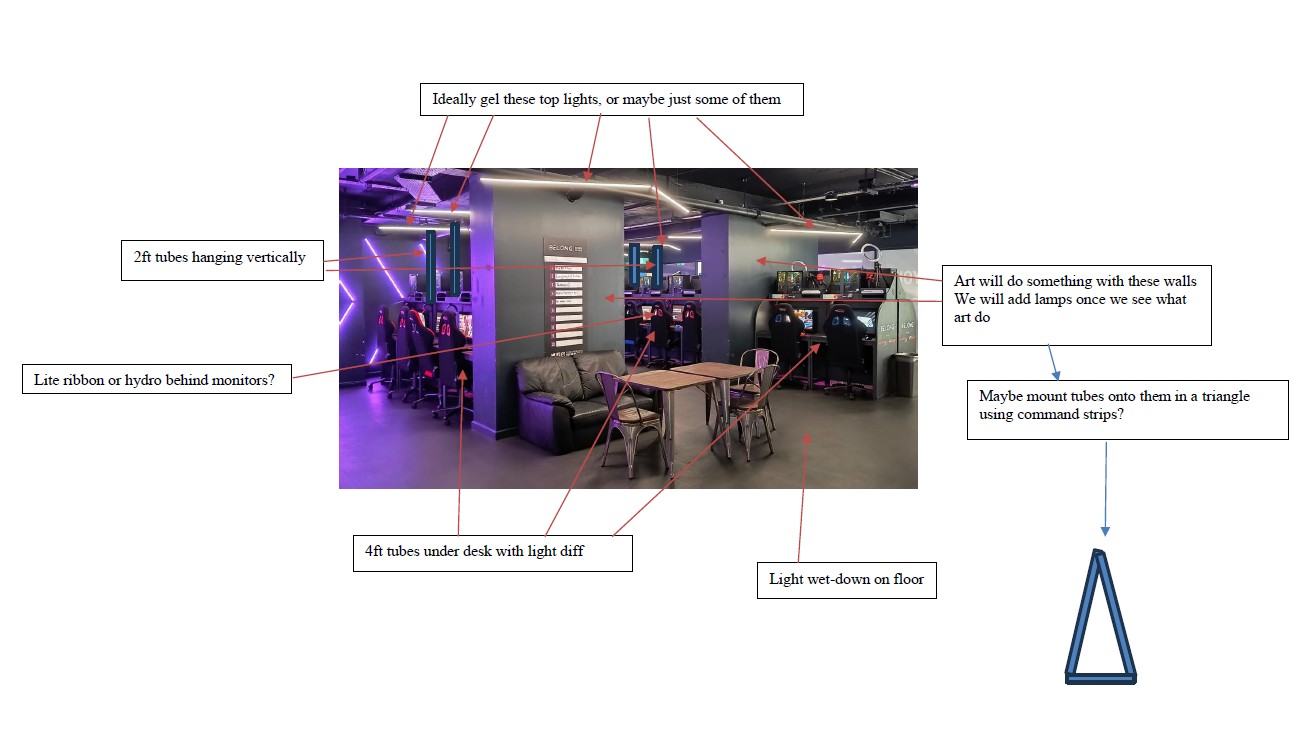
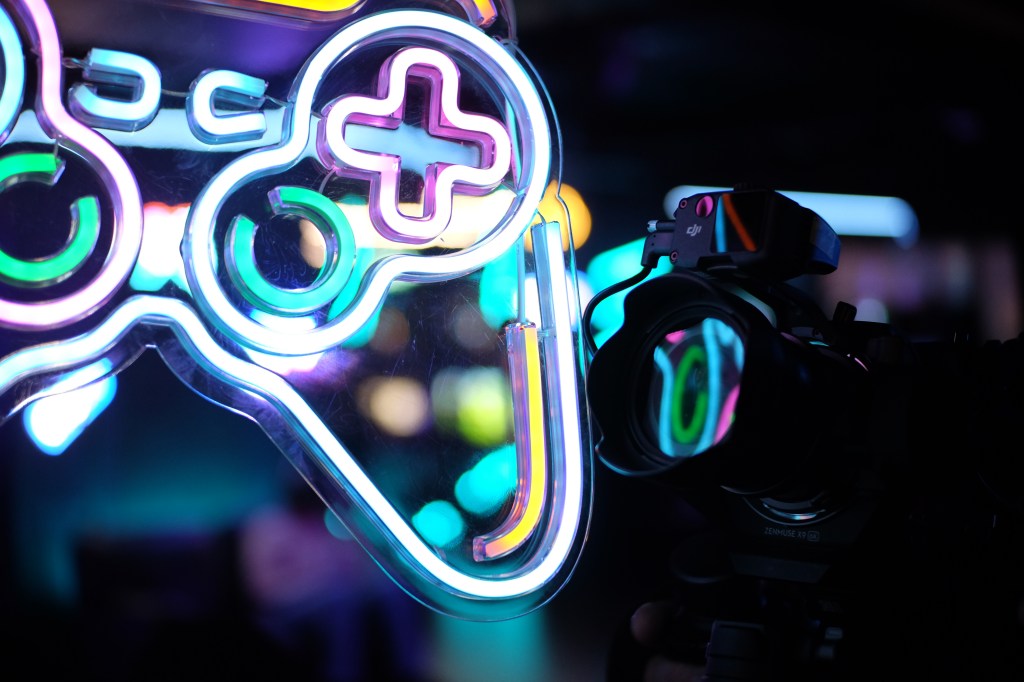
We did know that time would be against us if we wanted to complete all the elements in a day, we also knew that we wanted the visual energy of moving camera and that the post team needed 4:4:4:4 rushes for all the graphics work. There was no time to lay tracks, no space for Steadicam and so we decided on the Ronin 4d – supplied by the lovely Pete Rowe. It’s a full frame camera which helps the focus drop off, edging us towards the cinematic feel the client wanted. We aimed to make the location feel dark but saturated with colour – I know, surely those two aspirations are mutually exclusive? The location was already painted black so we added a lot of Astera tubes and a couple of covered wagons. Paul Choy, our gaffer, and his team did a fantastic job of sprinkling colour throughout and we wet down the floor to bring out the reflections.

Initial lighting thoughts

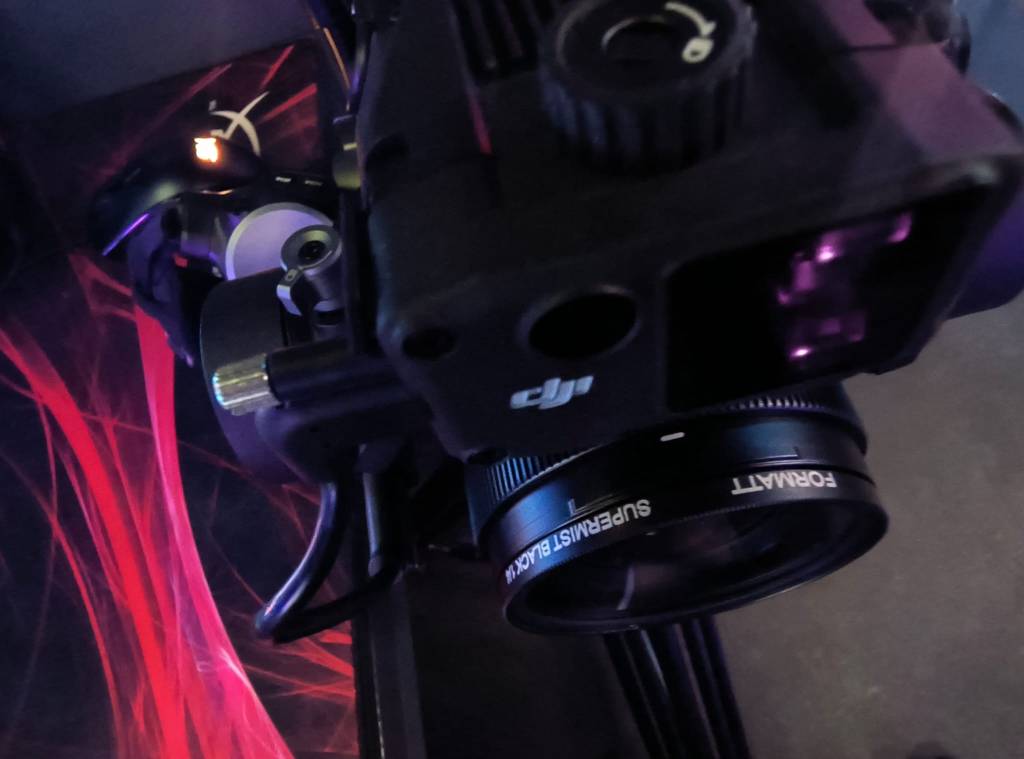
As we had so many practical lamps in shot I wanted to give them a slight softness – it had to feel like a welcoming space which blooming the tubes a little helped to achieve. Formatt Hitech came to our rescue again rushing some circular filters to us in 1/8 and ¼ black supermist. We needed the circulars as the Ronin4d can’t take a matte box.

It all worked a treat and client was very happy with the overall feel. Thanks as always goes to my entire team, Zach Levi-Rodgers, George Bloomfield, Paul Choy, Jenny Dyson and Richard Scott.

in its bluntness but the other day when I said I was a cinematographer the person I was talking to skipped all the dreaded ‘what have I seen that you have made’ or ‘who is the most famous person’ etc and went straight for the jugular with ‘are you successful at it?’. It is actually a much better question. My wife sensing an evening of internalised naval gazing jumped in to save the day with ‘well, it depends on how you define success?’ And that is the question really.
Historically, in these blogs, I have focussed on practical solutions to creative decisions in the hope that it might help someone else at some point. This time I am going to ask something more fundamental, what could success look like? The paths you take as a younger DoP will affect your options in later life so I think this is a question that warrants some time, preferably when you are starting out. The midlife dear-diary question often quoted is ‘would the 20 year me be happy with where I am now?’. I think turning the question around is much more useful and asking at 20 ‘where do I want to be in 15 years time?’

As a general rule people who ask about ‘what I’ve done’ are disappointed as most of my films are not on prime-time and it’s not in my nature to talk about famous people so the conversation swiftly moves on. I have colleagues who I’ve known for many years who work on much bigger projects than me and there is definitely a part of me that grumbles that those shoots have not come my way. We make our choices fairly early on and those choices often dictate how our careers develop. I’ve worked with many commercials directors who lament that they have never made a film, despite being hugely successful in commercials. I know a great DoP, with a good agent, who started doing second unit on TV and is now known as the second unit DoP so struggles to get main unit work. It is easier for producers if they can categorise you. I have become known as someone who does brand films and commercials day to day and indie films when the right stories come along. I can see now that I am unlikely to change this perception and I think that’s fine with me.

What I have lost in terms of budget I have gained in terms of control, less budget tends to equate to less people to need sign off! There can be a real sense of adventure that the directors who I’m lucky enough to work with bring to indie films. There is less of a machine to move, more opportunity to seek out moments that work spontaneously and I do find for me, that is very important. I am fortunate to work with highly skilled big teams and the latest tools but that is on my commercials work – not features.

I remember talking to a highly established news cameraman once who was appalled that I had to speak to a director to agree how we might cover a scene. I couldn’t understand how he could see this process so negatively and I guess there will be people working on huge productions who won’t understand what I see as the ’up sides’ of working with small units. Different things are important to each of us, they help us prioritise and whilst I admit that it would be lovely to be offered bigger budget productions, it is not the main driver for my decision to join a film or not.

One thing that is common to the success of all DoPs, regardless of budget, is the success of the images you make. What constitutes a visually successful picture. What visually excites you? What natural leaning do you have for composition, lighting and camera movement? We all adapt these for each project but there has to be a foundation to the approach and that foundation is the DoPs individual aesthetic preferences. For me the keys are;

Depth – even in tight locations I will always try to get something in the foreground, or an open door through to another space. I want to feel that the frame we are showing is a choice, an extract from a bigger space and I do that by having things break the edge of the frame, things that we know will continue past the edge of the frame if only we were allowed to see them. The stills below are all from films that I have shot.

Contrast – There must always be a brighter area and a darker area otherwise you have no reference. If it’s a night scene the viewer won’t recognise that most of the frame is dark if there is no brighter area to give it reference. You do often see frames that are dark throughout and recognise that they are dark but, unless you are watching in the perfect space, it can lead to a frustrating experience of squinting to find the subject you should be able to see. If you have a bright area the other parts of the shot can still appear dark without losing the information for the viewer.

Framing– If we are seeing an actor in frame then their position is key. If there is a power imbalance between 2 actors in a frame their position in the frame must reflect that. Sloppy framing ruins a shot for me. Framing is also inherently linked to the lens focal length or field of view. It creates the relationship between the cast and the environment and trust me, I always have an opinion on that.

Focus – Such a huge and under-rated tool. How much should be in focus – what T stop to use to give the audience the information they need or to signpost the main point of the shot. I will often decide the stop I’m shooting at before I light the shot as it is such a fundamental decision. One of my favourite films ‘Road to Perdition’ shot by the late Conrad Hall ASC has a beautiful example of focus at work. We track straight into one of the lead actors faces but he is completely out of focus as the focus follows 2 people walking away in the back-gound, only to pull focus to the actor in centre shot once the track has settled. It is very beautiful and poetically sets up the motivation for the rest of the events in the film.

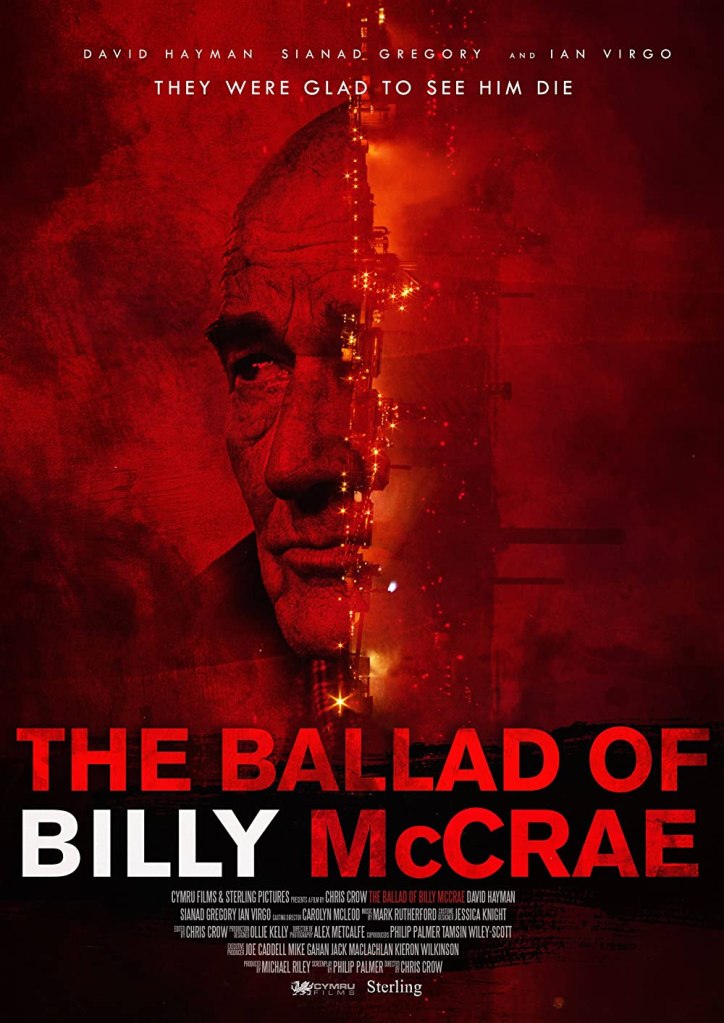
I thought it would be interesting to put a few examples of my work here in case people want to see how these foundations show themselves. The first one is a reel I put together to support an unsuccessful pitch to work on the last series of Craith S4C (or ‘Hidden’ on BBC2). It’s a shame it didn’t come my way but you win some, you lose some! All the films in this montage were directed by Chris Crow and I choose the scenes that I felt would translate best for a television drama.

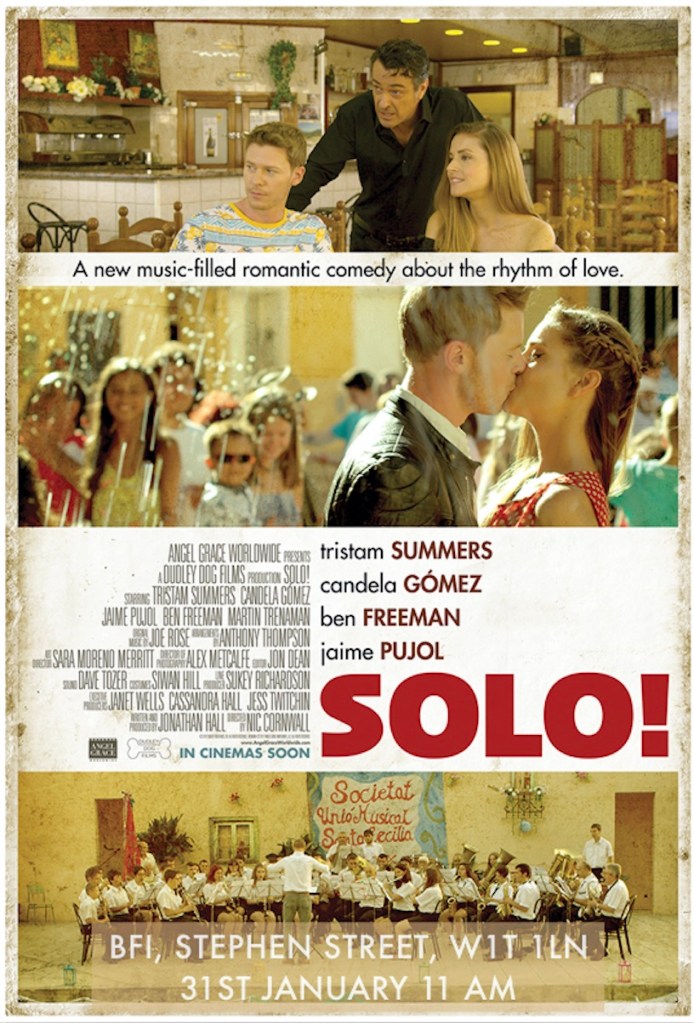
This is completely different, shots from Solo! a coming of age/romantic comedy feature that was produced by Dudley Dog Films and directed by Nic Cornwall

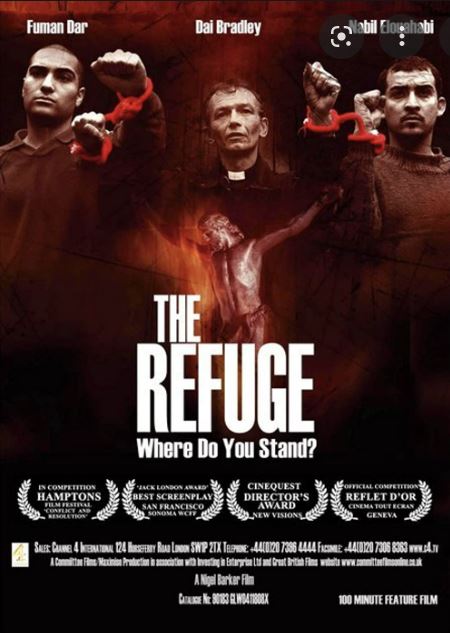
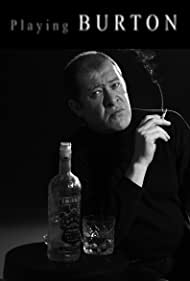
Lastly I thought maybe I could go back a long way. This is a montage from the second feature I shot, but the first one on a cinema style camera. My first (The Refuge, Dir. Nigel Barker) was on a digi-beta camera that we then transferred to film and I’m very proud of it but don’t have any footage from it. This film, Playing Burton (Dir. Wyndham Price, Spinning Head films) was shot on a RED ONE and I learned an enormous amount from it. It also won Best Feature at the 2014 BAFTA Cymru. You can see the basic foundations of ‘how I see’ in this film. What I shoot now is the product of everything I have shot, the result of continual looking, telling stories and learning that started in the 1990’s. I count that as a success!

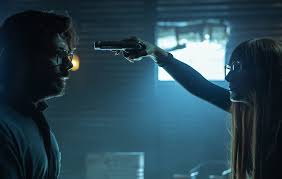
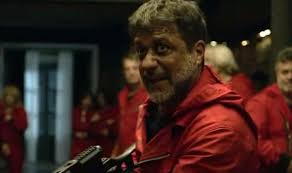
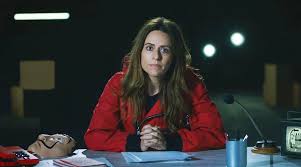
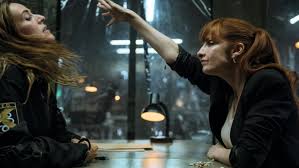
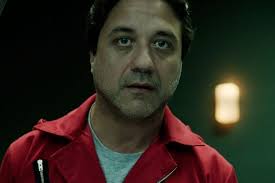
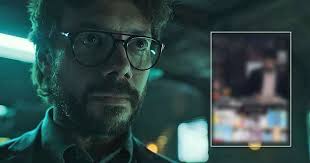
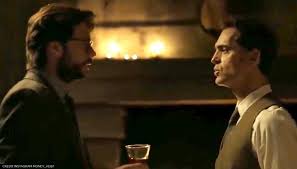
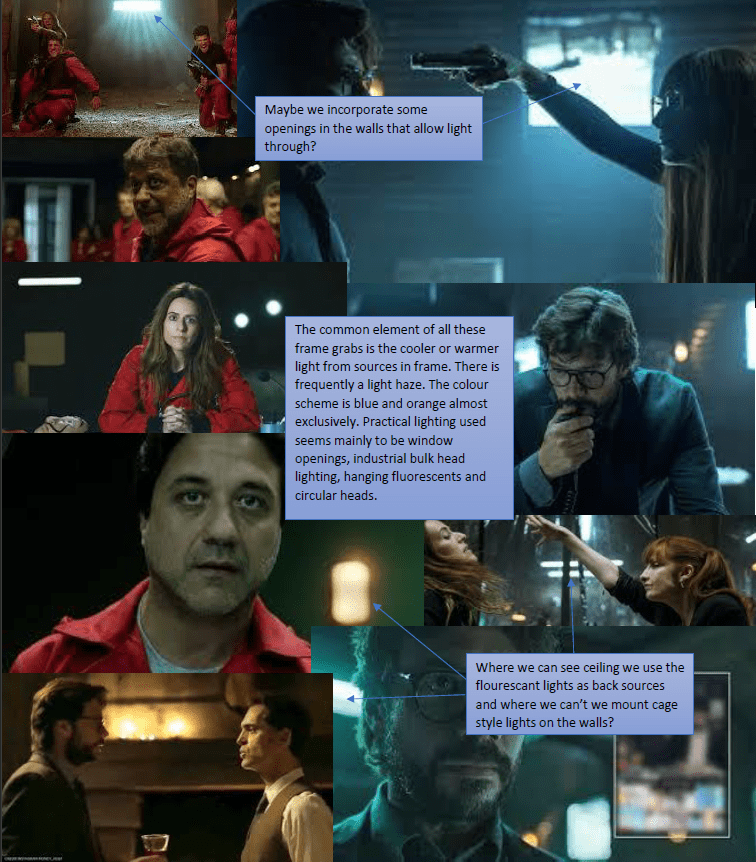
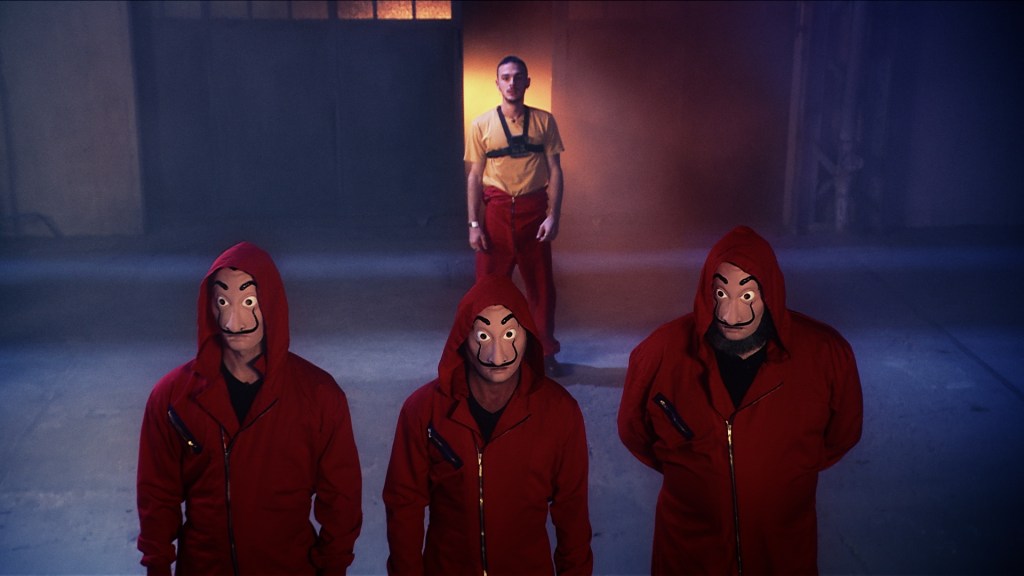
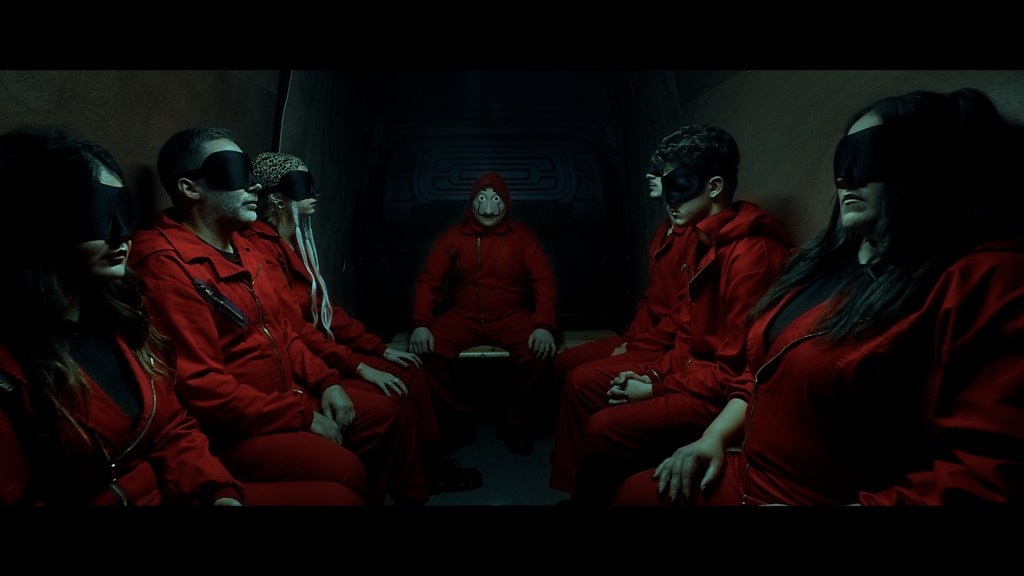
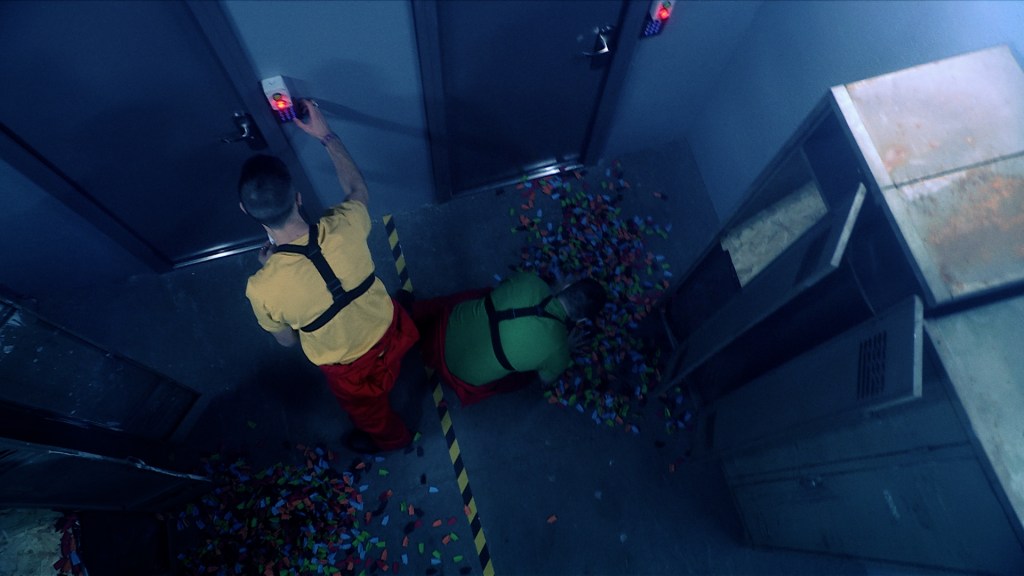
Film and TV are so different? It’s a trope. I hear it all the time. Hmmm, they say, you’ve only done films, TV is so different. I counter that it is very much a state of mind and, on the whole, producers profess to want their TV drama to look cinematic but at that point their eyes glaze over and the battle is lost. Obviously there is a difference between top budget Hollywood and any TV drama, but I work in Indie film with my average shoot days being 21 for a 100 minute film. This is similar to TV, the crew is similar in size and it is often multi location. However I do think the directors on an Indie feature approach the visual storytelling in a different way and that is what I am alluding to with the ‘state of mind’ gambit. I of course did cut my teeth in TV, shooting kids drama and then comedy drama and finally a shed load of documentaries but that was a long time ago. However, the knowledge I gained from that became very useful when I was recently asked to shoot an ‘escape room’ competition for Netflix. This was to promote the final season of La Casa de Papal or Money Heist as it is known in the UK

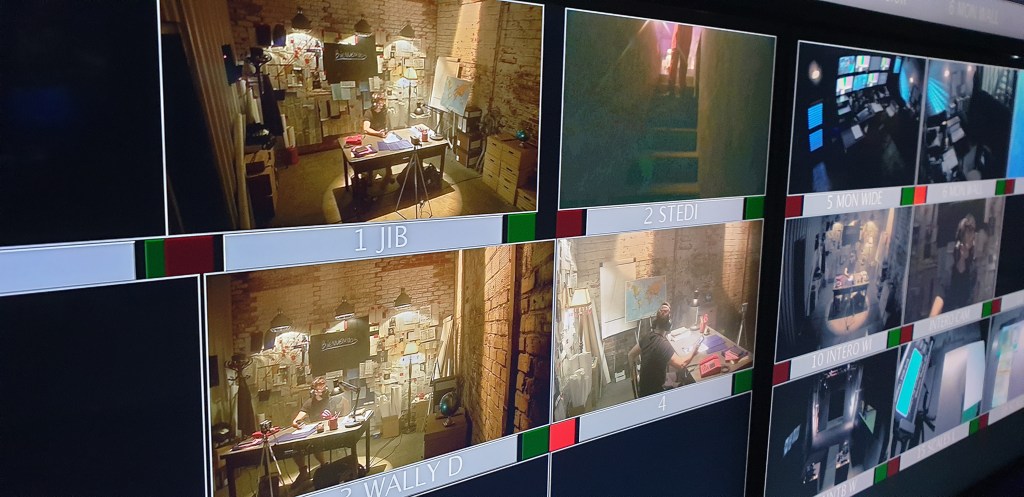
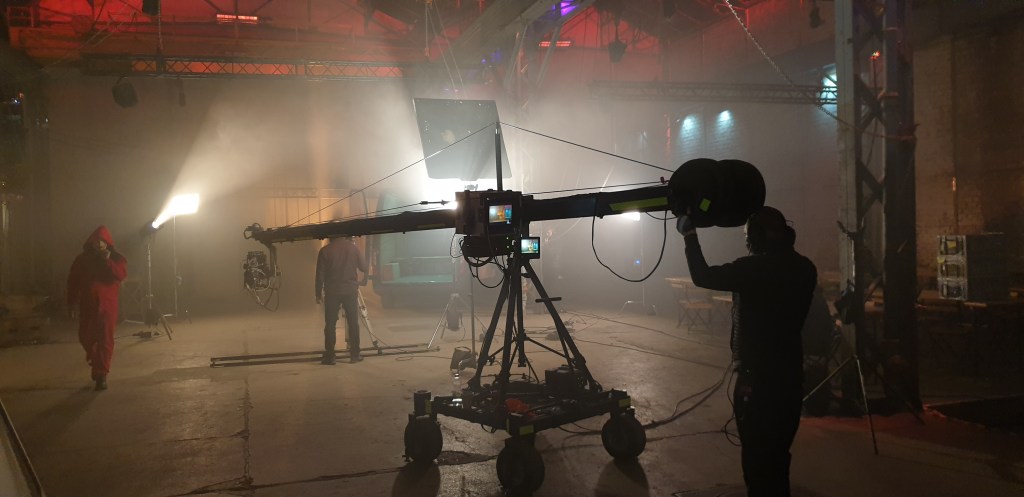
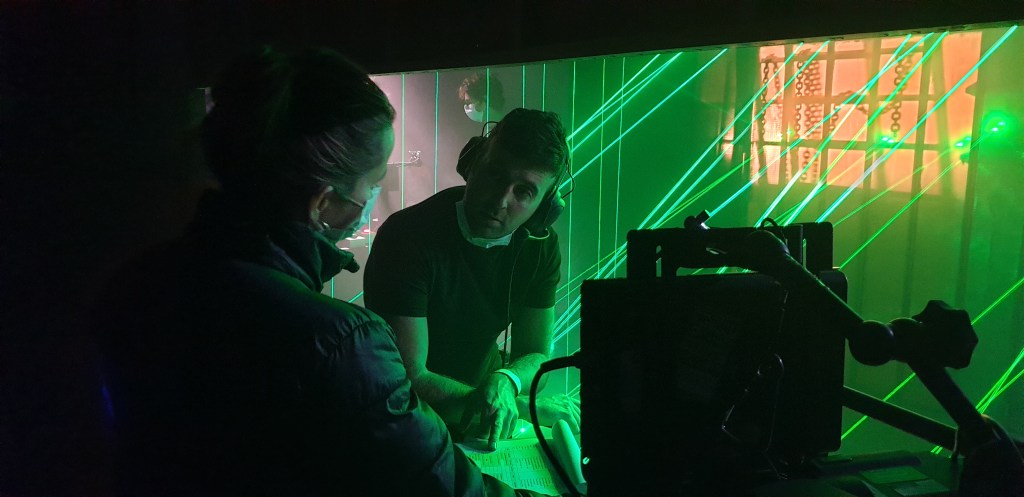
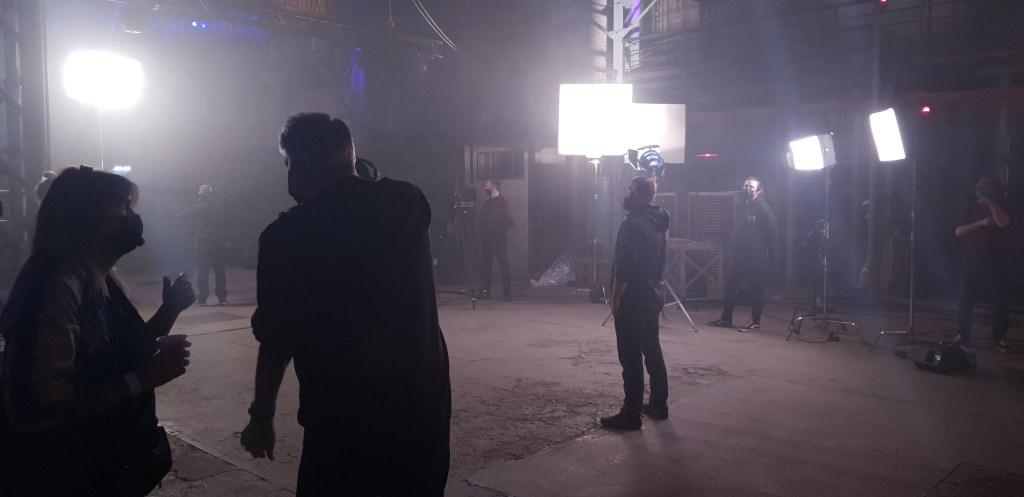
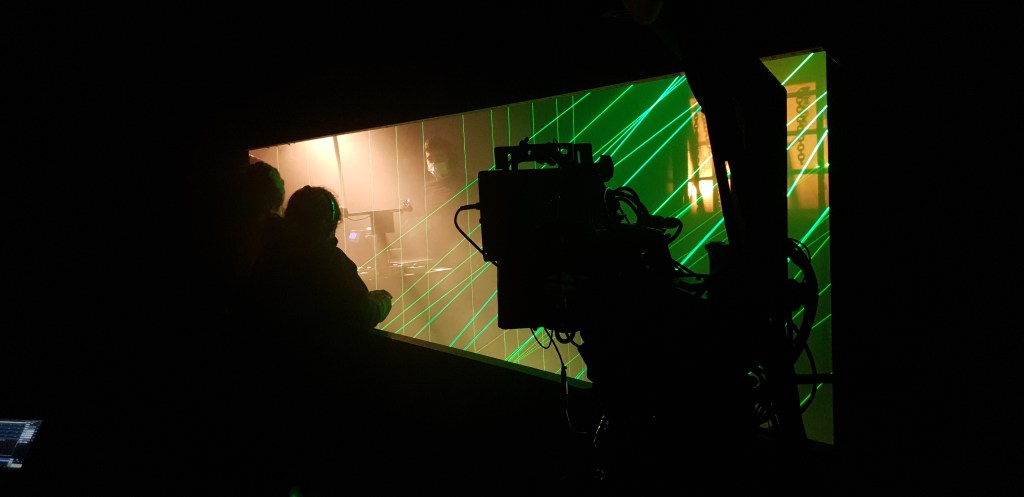
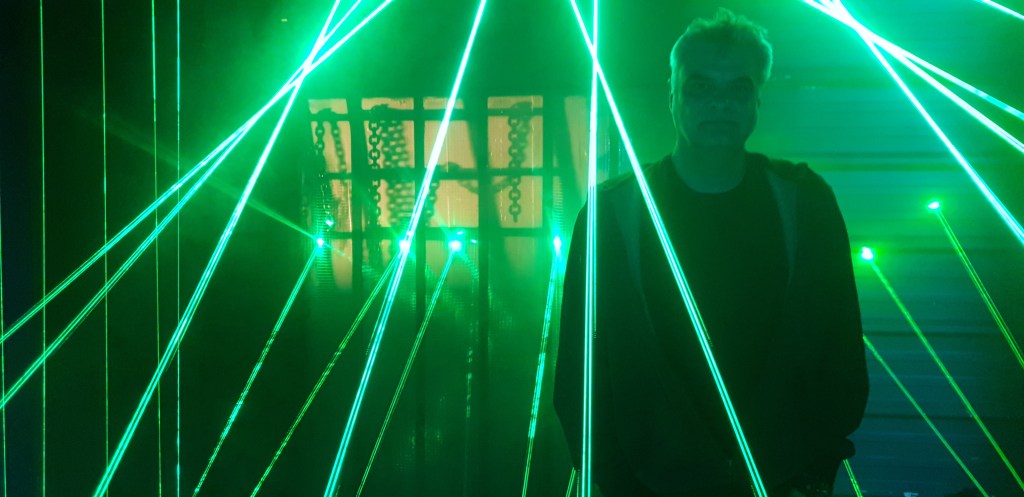
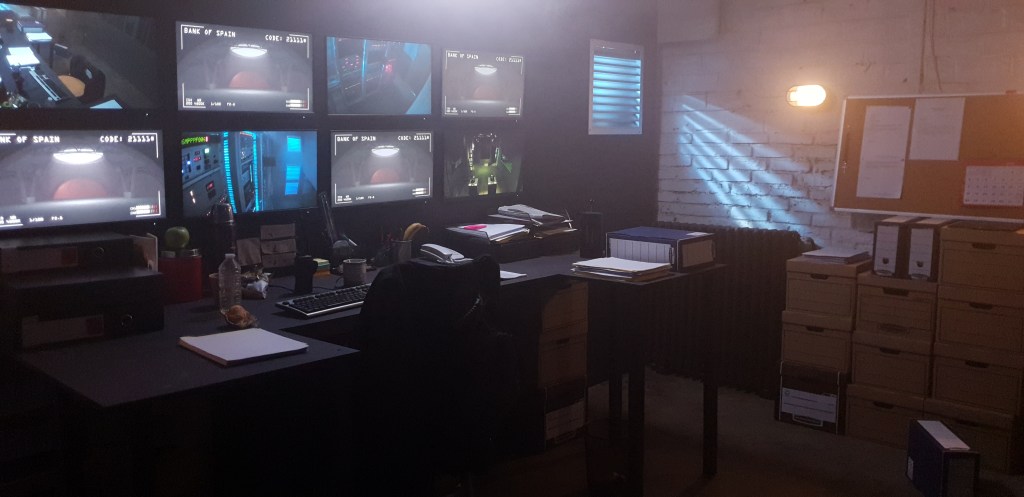
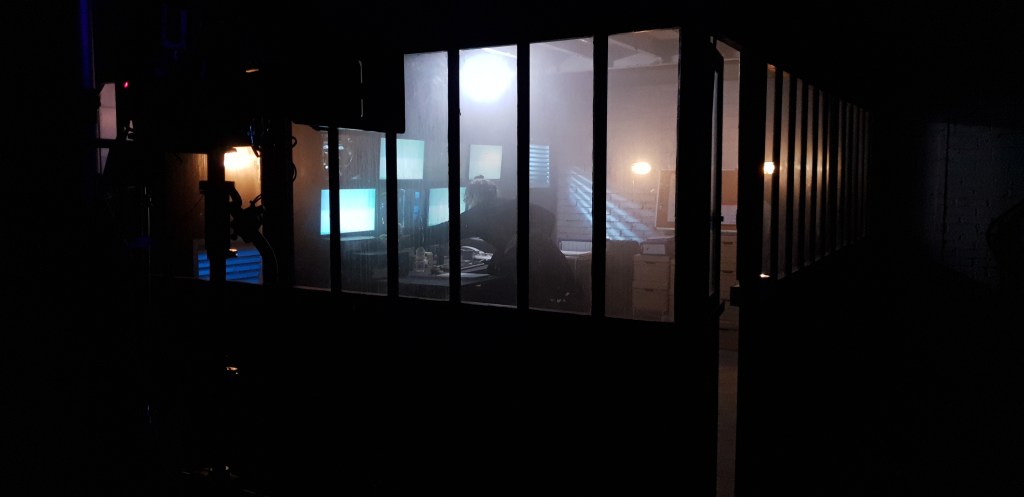
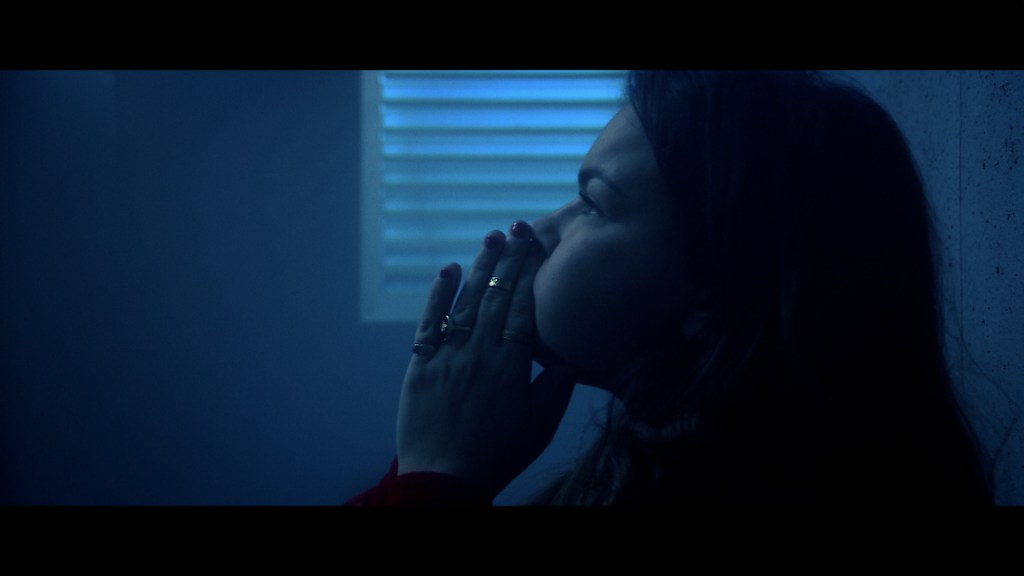
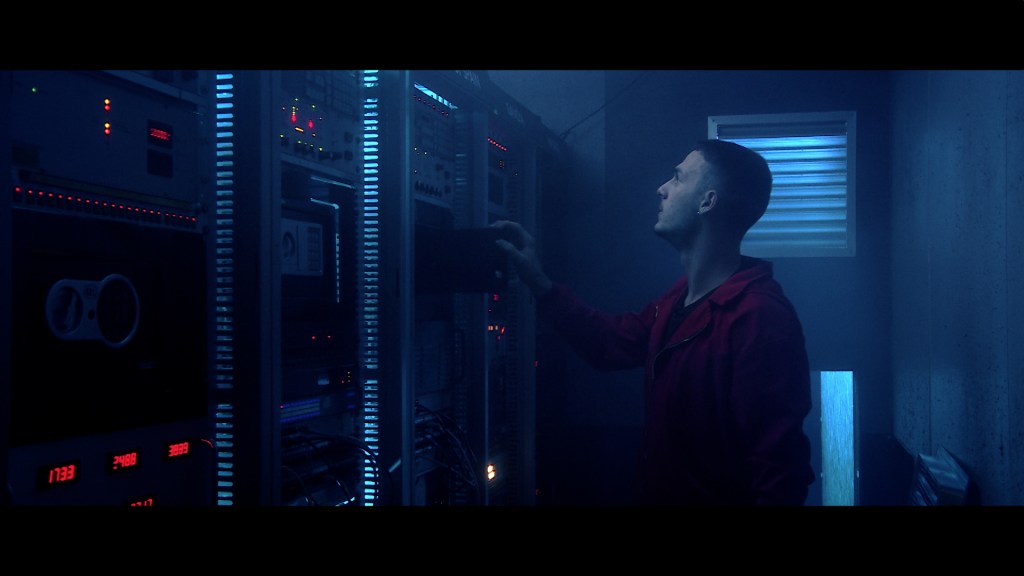
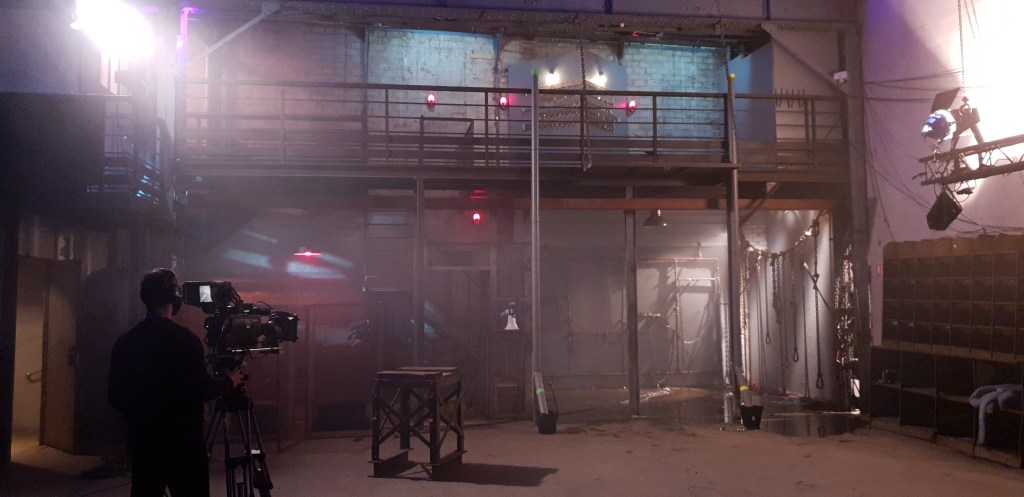
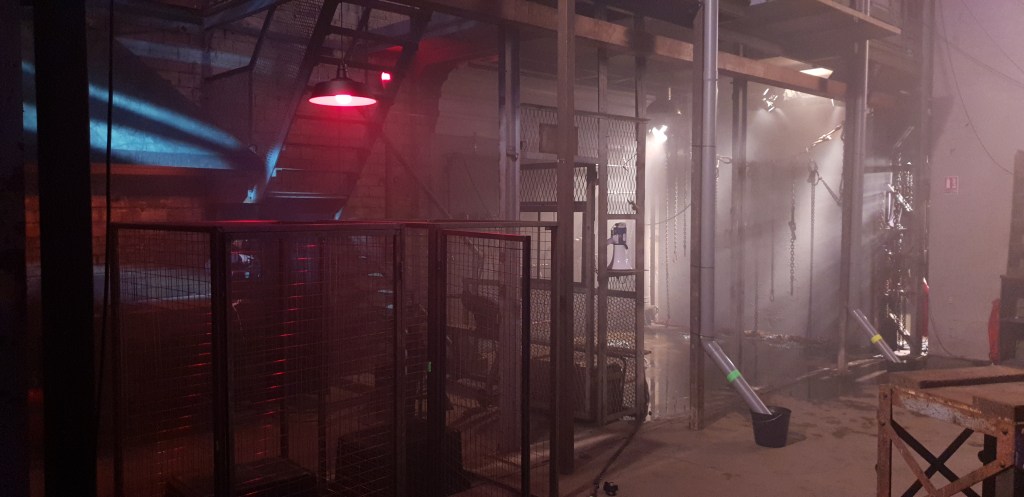
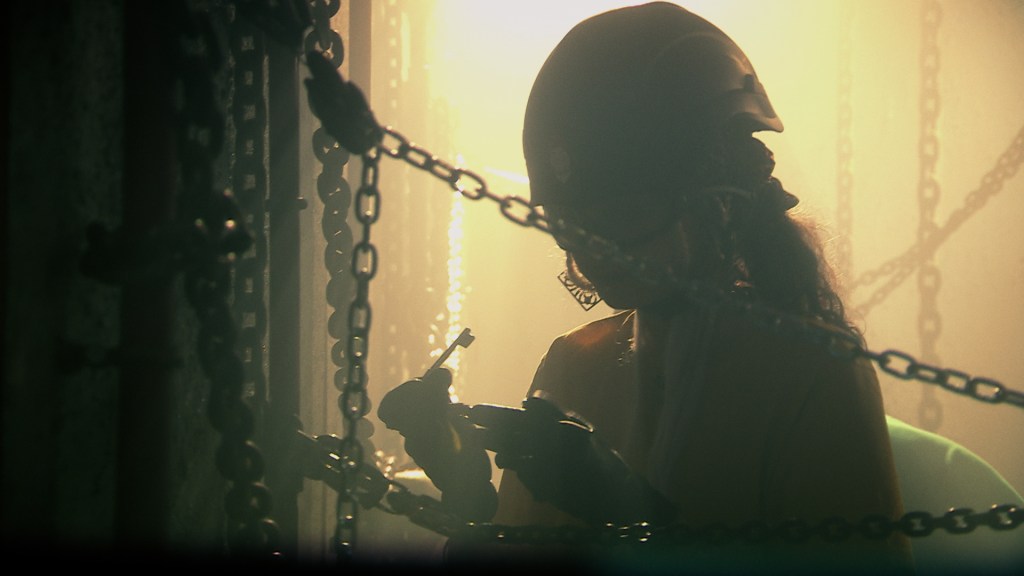
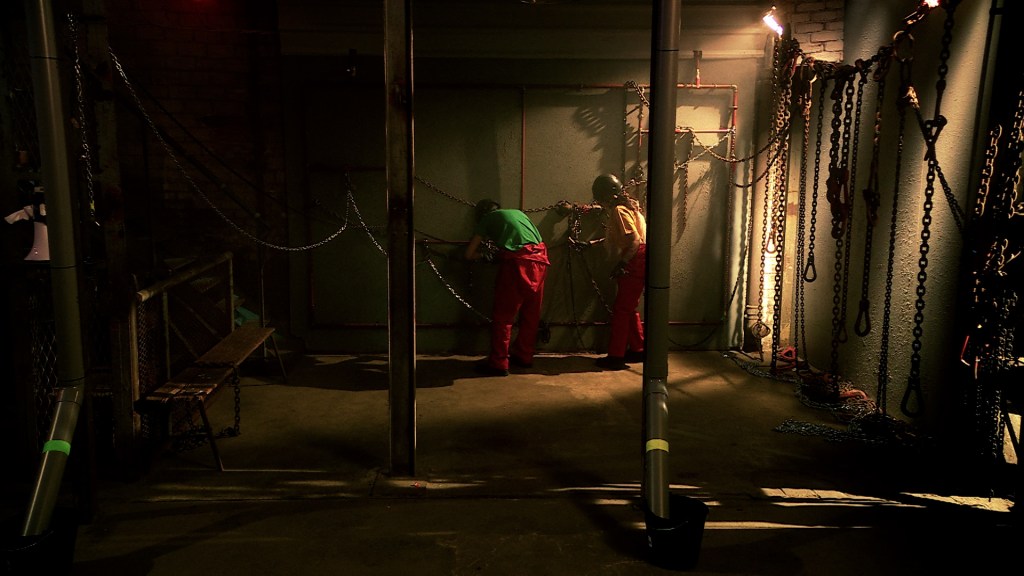
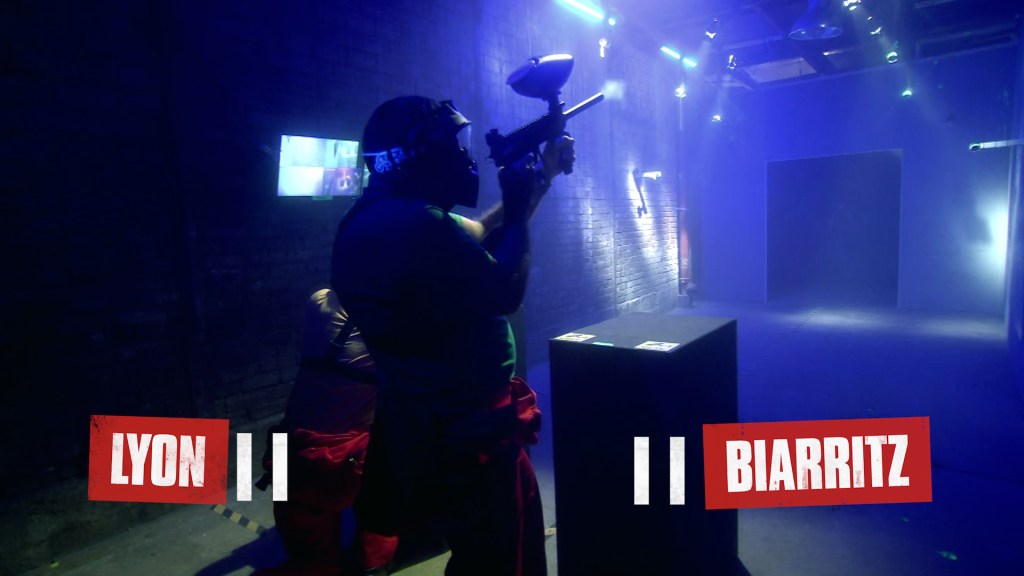
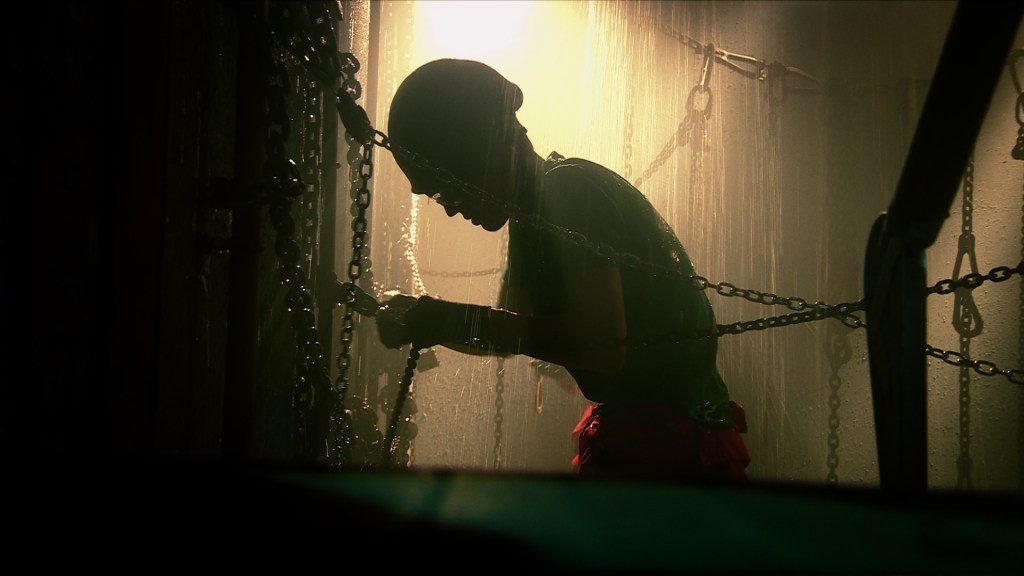
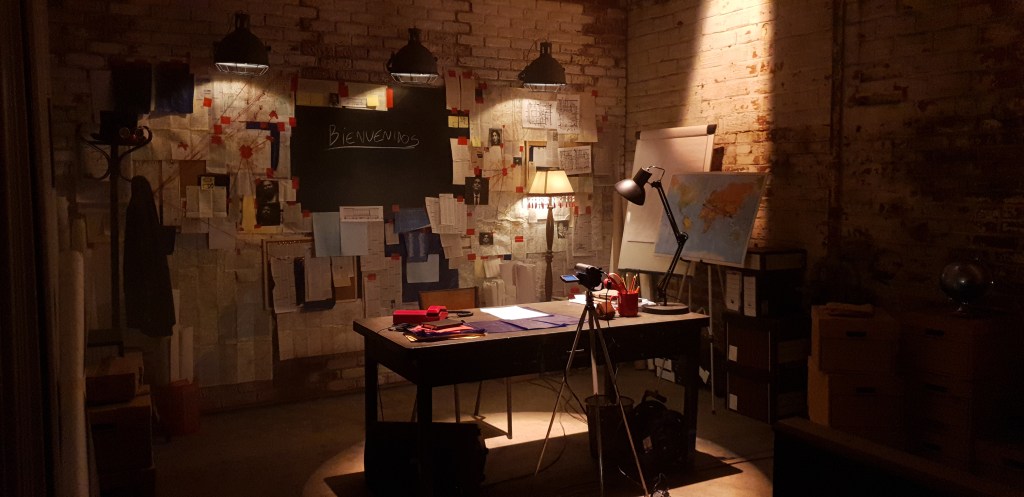
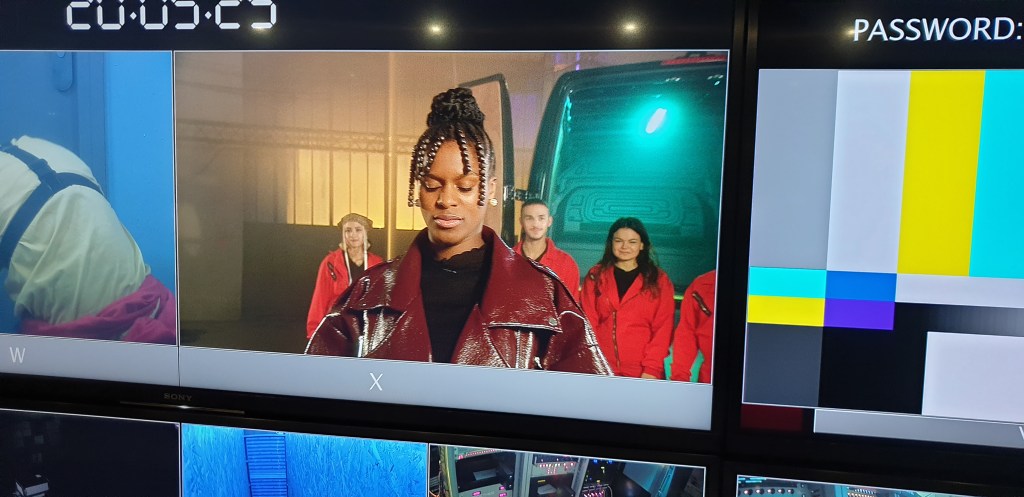
The challenge was to light 6 sets with the highly produced, cinematic Money Heist as a visual reference. The aim was to put 6 finalists through a series of escape room challenges to find the biggest Money Heist fan. ‘Not so tricky’ I hear you say but here is the sting – we had to have 360 degree coverage, the contestants could move to any part of each set, we had to use 2/3rds inch sensor broadcast cameras and mix it live from an OB track. The agency, Amplify, were challenged by Netflix to deliver the edit within 10 days of wrapping the shoot which is why there was a live mix. The obvious, and to be fair, sensible solution would be to dilute the look, keep everything safe and focus on getting the deadlines met. Amplify however do not think like that. They were insistent, much to my joy, that the visual style had to mimic film and not TV entertainment. So how did we go about achieving this?

The key was the ‘state of mind’ that I spoke about earlier. Director, Will Kinder, probably one the most experienced live multicamera directors out there, was clear that all decisions to the approach we took had to fore fill two functions. Firstly he had to have the coverage he needed to deliver a compelling edit and secondly the final programme had to have the look of the original show. If any solutions we found did not meet both of these requirements we needed to find a better solution. His approach of committing to delivering a ‘drama style’ visual look was absolutely key to the success of the project.

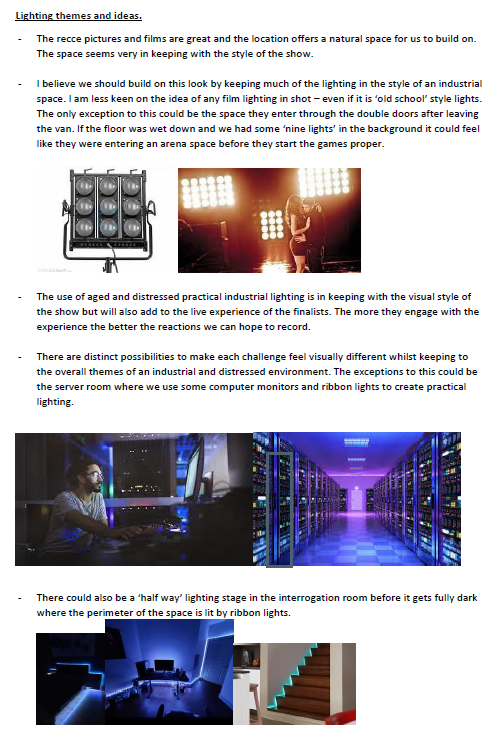
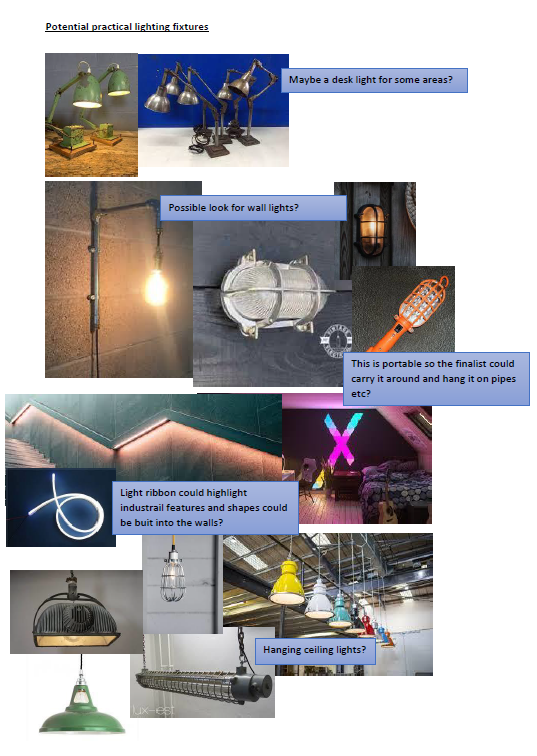
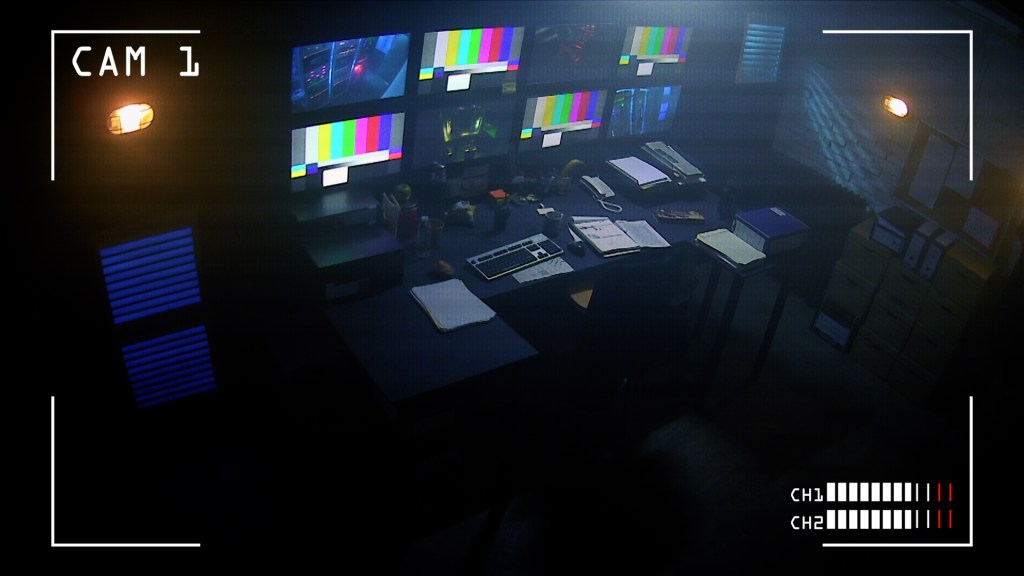
With this in mind we started by hiring a film gaffer, instead of a studio Lighting Director. Serjges, the gaffer has lit features for me and knows how I like my drama set ups to look so approached the project with this mind set. We decided pretty quickly that practical lighting should justify most of the sources and so I worked with the fabulous production designer, Sam from Endpoint, to find practical lamps that both looked right and would give us the quality of light we wanted.

We also built vents into the walls which we pushed light through to create hot background points of interest. We used all of this as a base light and then filled in as and where needed with small units and tubes. We had a server room as one set and used the LED’s from the servers to create a low level of fill. By underlighting the space to way below what would normally be used in gameplay television you could see the effect these lights had as the contestants moved towards them. Finally we added a low level of haze to help spread the light a little. To ensure that we felt the progression of the contestants each set was lit to have a different feel with some live lighting changes happening throughout.

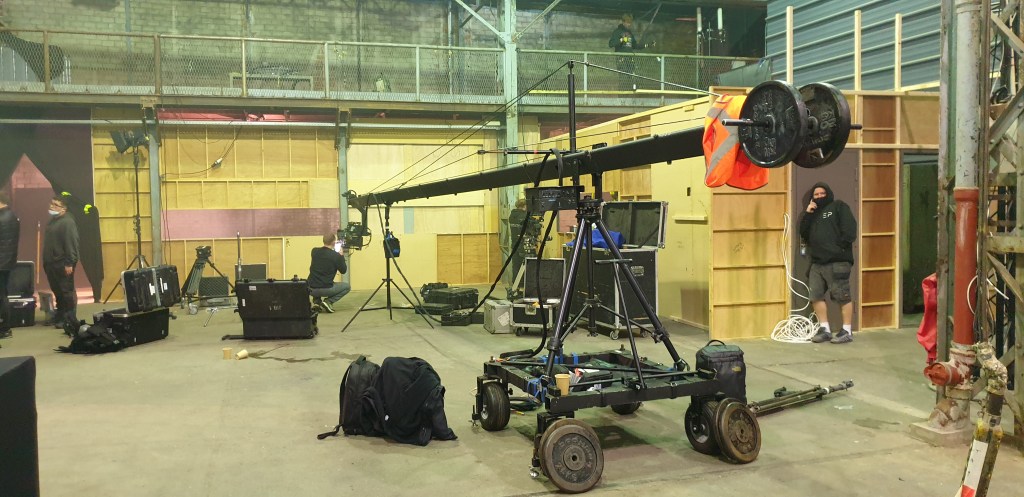
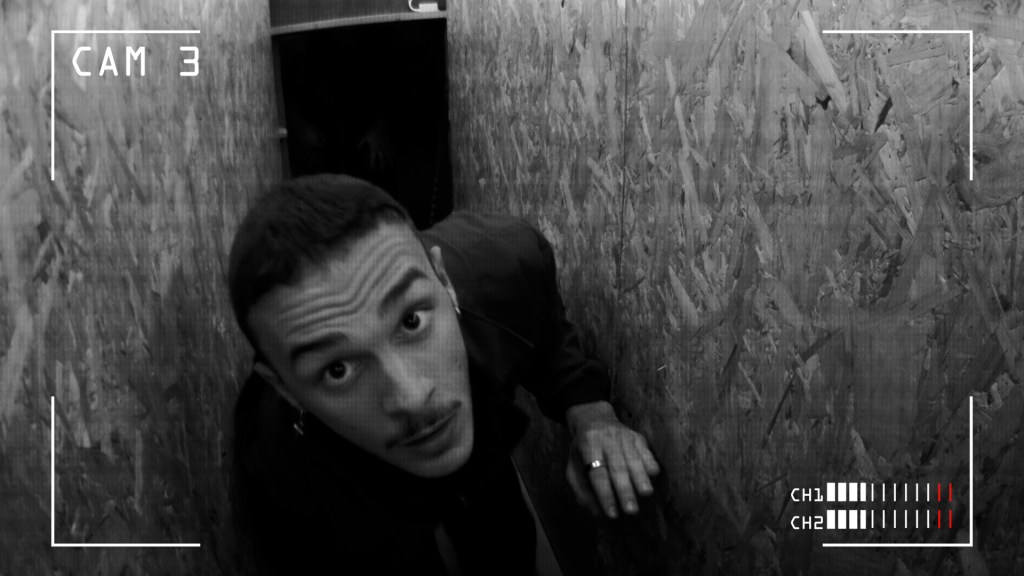
The bigger challenge was to make the small sensor broadcast cameras have a similar feel to the S35 gate of digital cinema cameras? In addition, how would we cover the gameplay when we were in 4 wall sets and didn’t want any cameras to be in shot? We had in budget 4 operated cameras which consisted of 2 handheld, 1 steadicam and 1 on a jimmy jib. These could move from set to set as the game moved forwards. Within the Money Heist format there is use of CCTV style cameras and we adopted this to cover areas that could not be covered with the broadcast cameras. These were given a post effect to separate them off from the main action coverage.

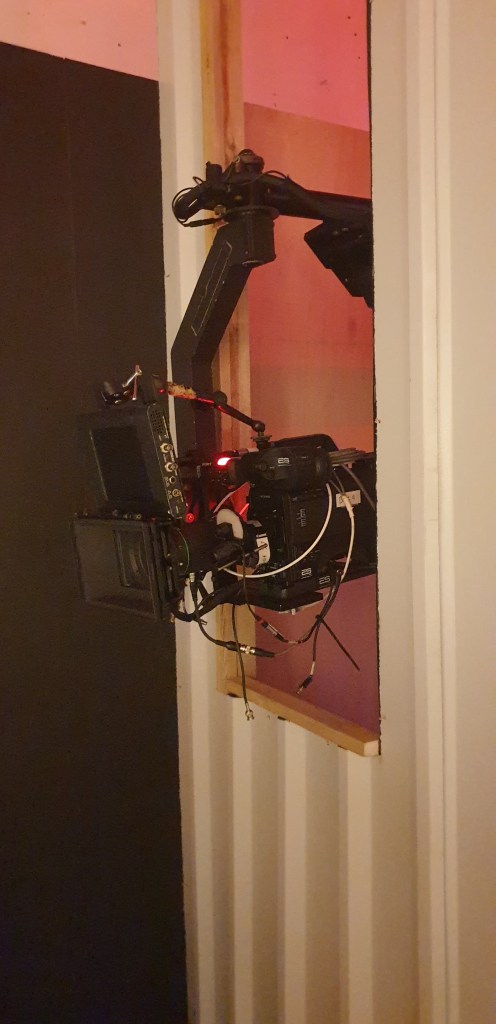
We then cut holes in the sets where we needed access for the operated cameras. All this is logistics and achieves the first aim of getting the coverage, but what about the second one of keeping the look of the show? After much discussion we decided to keep the servo zooms that the operators were so comfortable with. This was great as it meant they could adapt to the changing action quickly and instinctively. Having looked at the feel of the pictures from these cameras and lenses I felt that we needed to knock-back the hardness of them a little. For this I went to my favourite filter company, Format Hitech, and we tested a bunch of filters to achieve this. I found the ¼ Black Supermist gave great results. These filters are terrific as they just effect very specific parts of the image, in this case the highlight areas. The edge was taken off the detail and the practical lights had a softness that brought the pictures very much in line with the original show.

The other key difference is the depth of field. The small sensor camera allows so much more to be in focus as you are tending to use much wider focal length lenses than you would on a S35 sensor. To combat this we agreed to shoot the entire film on a stop of T1.8, the widest open the lenses went and to pull the cameras back as much as possible so that we were using the longer end of the zoom lens. This was a huge challenge for the operators and a real risk for production. We would not be able to change the light levels to create a deeper stop once gameplay had started so if focus could not be kept then it would be potentially disastrous for the show. It is a real testament of the ambition to keep the visuals in line with Money Heist that we went with this strategy. I am deeply indebted to the creative director, Adam Heyhurst, and of course Will Kinder who were responsible for making the decision to take the risk. Whilst I’m at it I want to mention how brilliant the operating team was, they had a real challenge and they rose to it magnificently.

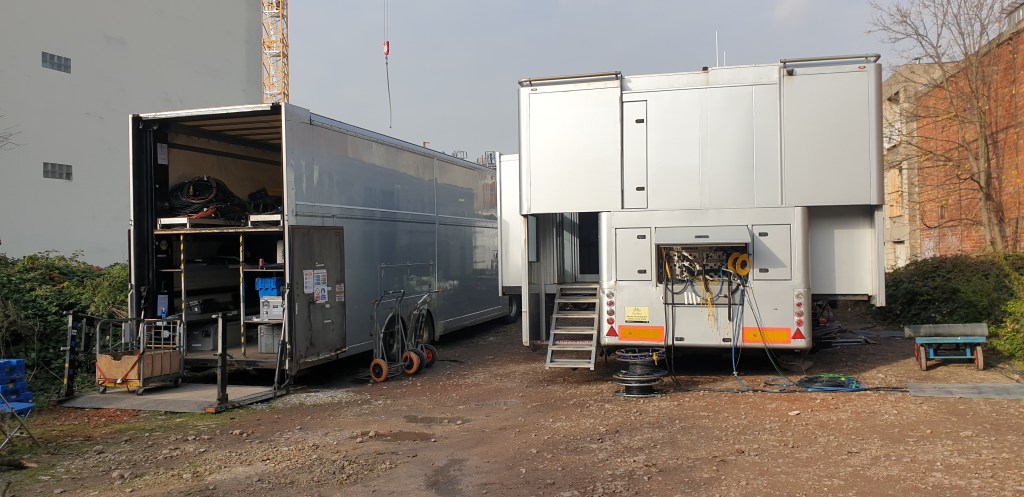
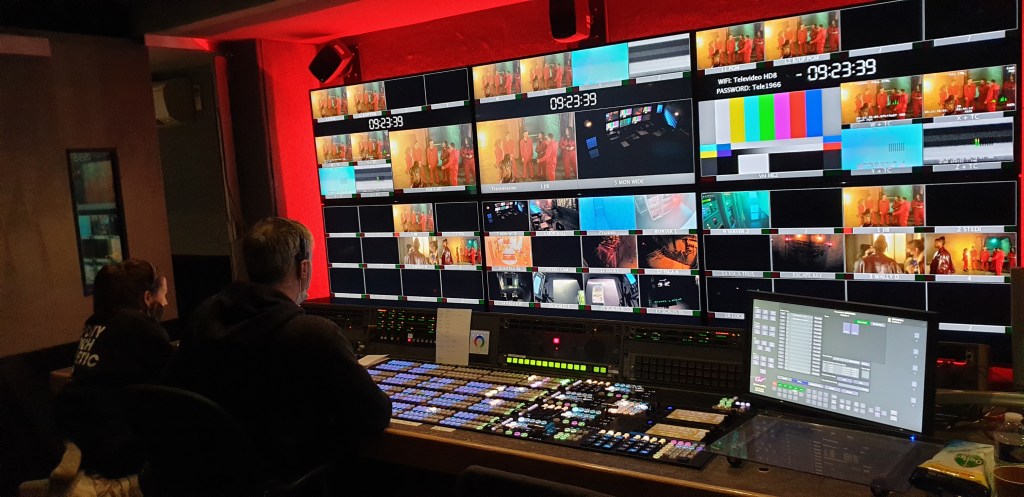
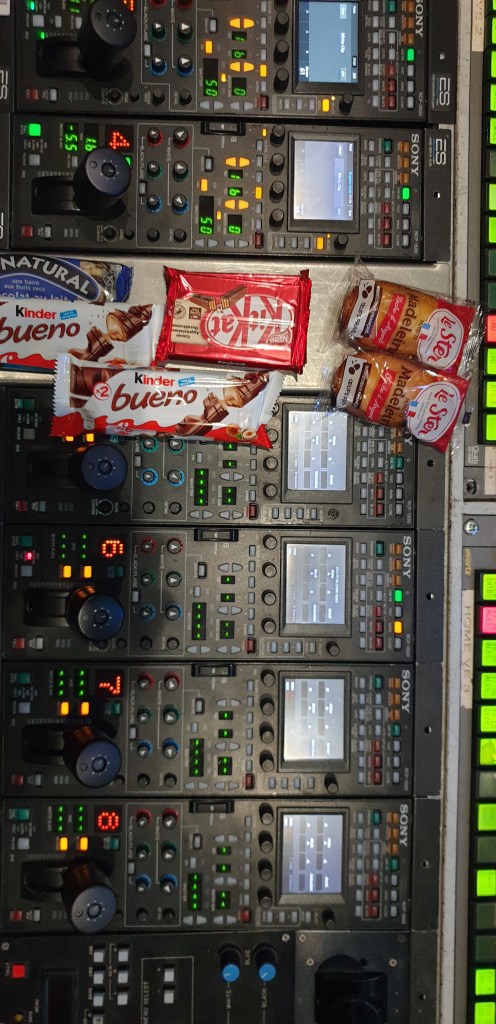
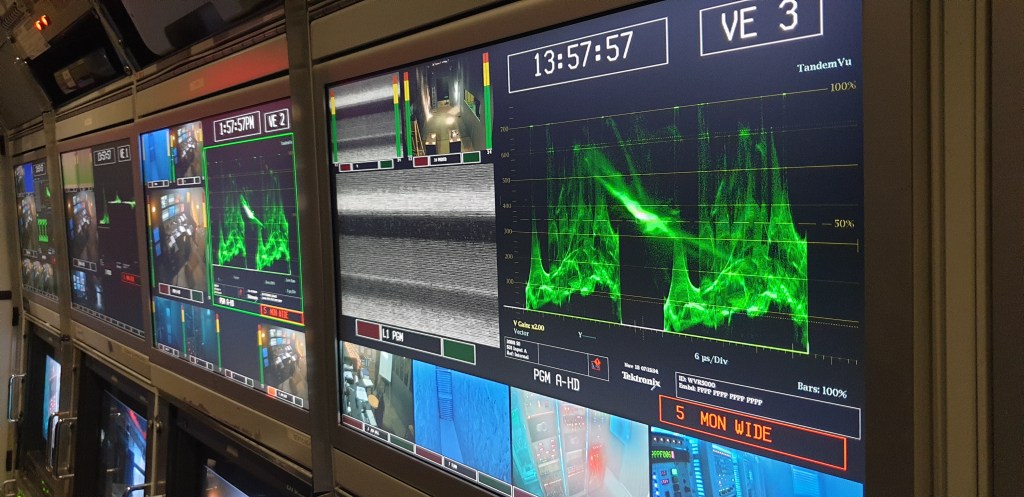
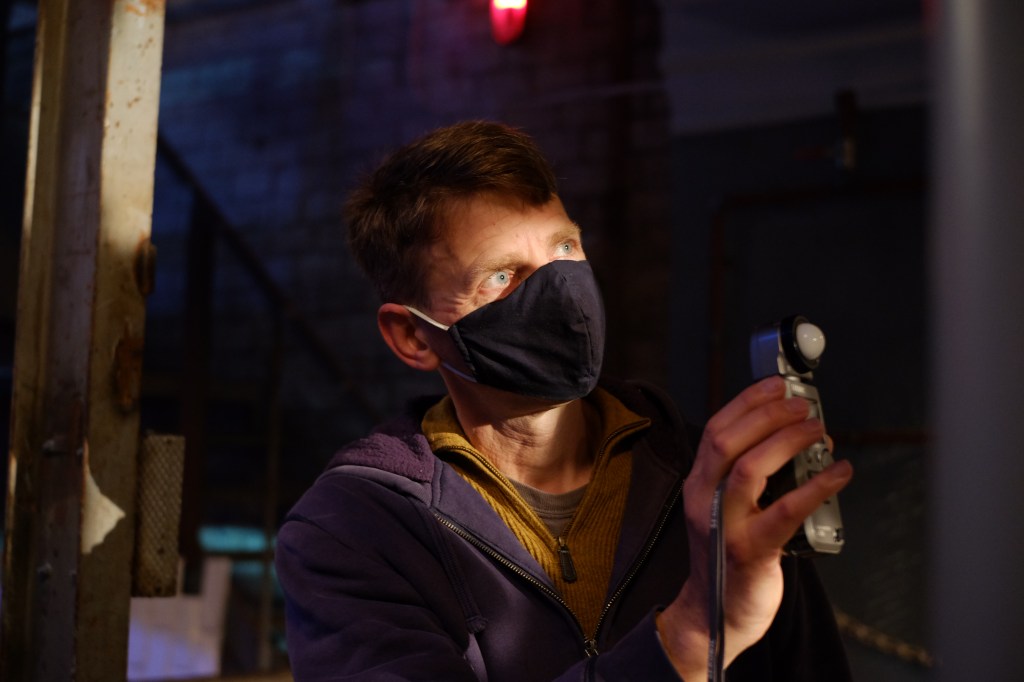
The final part of the process was what happened in the OB truck. Normally everything is adjusted and balanced live to keep the pictures even and bright, so if a competitor goes into a dark area it is brightened in the truck. This time I lit each set using a meter and asked Emily, the vision technician not to adjust the gain levels once the gameplay had started. This allowed us to have the feeling that the competitors were traveling through lighter and darker areas, much as actors do in Money Heist. Colours would also be normalised in the truck at this point, balanced to make the whites white. However I wanted to use the difference in the Kelvin rating of the lamps to create different feels for each set so I lit knowing that I would set the cameras to a Kelvin rating of 4300. Some sources were very warm at 2800 Kelvin and others nearer 7000 Kelvin, so a huge mix. We added green gels to the opening truck scenes which again normally would have been graded out in the truck.

The results were very effective and I think we found an excellent balance between making sure the content was captured whilst the emotion of the Money Heist format was respected. It was so lovely to be working with a team of people who are completely committed to pushing the boundaries and who are all absolutely top of their game. Many thanks to all of my camera and lighting teams who gave it their all.

If you want to see the final result here is a you tube link https://youtu.be/OK8OlWo9aF8


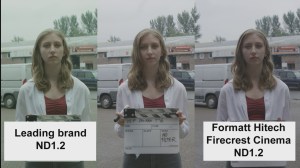
OK so the plan was to spend some time at Formatt Hitech to build a fairly comprehensive library of what you can expect from each type of filter – Full disclosure; I am an ambassador for the cine arm of Formatt Hitech. Of course COVID has not allowed the library to happen to the extent that I would have liked but I did manage to spend a day in their testing room. The specific reason for going there was to test the Firecrest ND range on our RED Gemini as I was impressed with the charts  – but charts are charts and sometimes don’t translate to the screen! In this case they did and I bought a set, you can see the results below.

Side by test with the ND filter we already owned from a different supplier

So while I was there I also had a look at what filters they had on site and my daughter very patiently sat in the chair. Apologies that the examples are only seen on 1 skin colour, in the future I’m hoping to make sure we can see how the filters react to a variety of skin colours.

At the bottom of this page I have put frame-grabs from each filter and a film sequence that shows 5 seconds of each filter in a family. These are not complete as the testing session was opportunistic and we just tested what we had. My last blog ‘Camera filters are so ‘old school’’ talked about how to create a colour wash with a filter that could then be counteracted with a key light of the opposite colour and I wanted to test this out. Lets start with these. Scroll down if you are just interested seeing examples of common diffusion filters and the ND tests.

The idea is to put a colour filter on the camera such as ‘Whiskey’ and then add the opposite colour to your key light. This will leave the subject lit by the key light as natural but there is a colour shift to the remainder of the image. The process and objectives are explained more fully in the earlier blog but ultimately the effect is to create a warm or cool feel to the image whilst keeping the skin tones natural. For the tests I used a RED Gemini camera with Celere prime lenses. The key light was a Falcon eyes 18. The camera and the Falcon eyes were balanced to 5600 kelvin. I fully accept that this is not a scientific test, I just wanted an idea of what was possible.  In the frame grabs below you can see how the strong filter has forced the background towards a whiskey tone. The bottom 2 frames have had the keylight sent towards blue with half and then full CTB gels applied to the lamp. I have not graded anything, purely an in camera REC709 lut applied. 

So I think to correct more accurately we would be looking at somewhere between the half and full CTB although grading out the blue in the final image would send everything a little more warm which could be very nice? At the bottom of this blog will be all the video files of these tests if you want to see moving image.

Below is the same principal but sending the background cool with a Cool blue filter. The key light was then shifted to warmer tones using grades of CTO gel on the lamp. 

And finally a middle warm version using a lighter grade suede filter.

Since I was in the testing room I thought I’d also have a look at the legacy filter called Monochrome red. Formatt Hitech have a huge selection of their legacy filters which over the next few months I hope to explore more. I can formally announce that the monochrome red does exactly what it says on the tin and allows no frequencies but red through! Below is the set up where the key light was forced green with a green lighting gel and the frame grab of what the camera sensor saw.

Here are the films of the above examples


Below are some frame grabs and films that show the effects of different grades of commonly used Formatt Hitech filters. They are just here for reference should anyone need to see how they perform.

SOFT SILVER

SOFT GOLD

SOFT EFFECT

CLEAR SUPERMIST

LOW CONTRAST

FIRECREST ND 


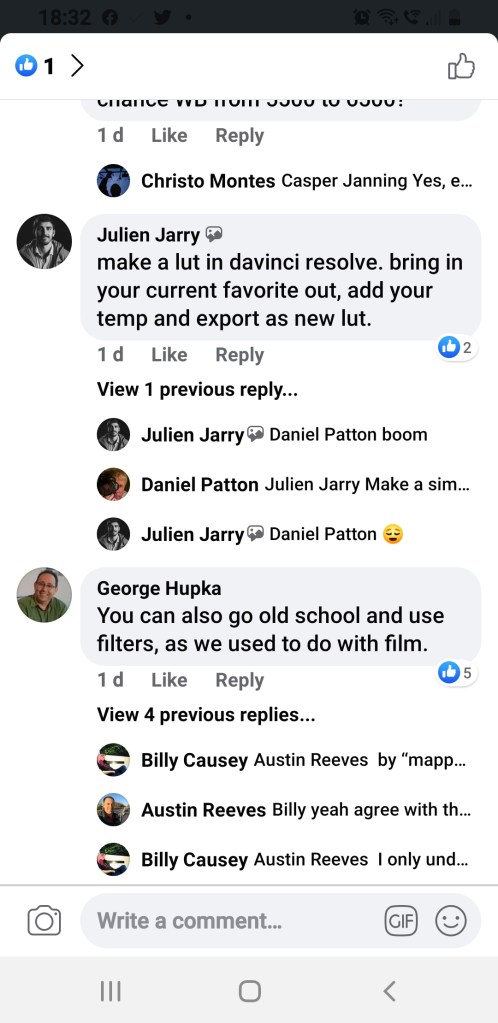
I saw it written the other day but is it true? It got me thinking which is dangerous. Back in the day filters were a given on any film shoot. I remember it feeling risky to shoot tungsten stock outside, with no correction filter, so that we could squeeze the last light out of the day. Nd’s and colour correction managed basic exposure needs, ND’s to keep your stop down, colour correction to balance stocks etc but with digital cameras being so prominent now, this can mostly be done electronically or with built in filter wheels. So, have we just got out of the habit of using camera filters in day-to-day shooting? The ‘old school’ comment that started all this was on a Facebook forum where someone asked how to change a cinelog setting to 6500 Kelvin instead of the preset 5500 Kelvin – don’t glaze over this is the last time I’m going into engineer territory – promise. People responded with ways of tweaking the colour matrix, or building luts to load into your monitors and applying these in post and then some one said “you can also go old school and use filters”

Facebook thread
The old school comment in the general thread

I found myself surprised that this hadn’t occurred to me either, at one time it would have been my first point of call. A really simple solution. So now I’m finding myself on a journey of reminding myself of all the filters I used to enjoy. In this post I’m going to look at why the old ‘I’ll sort it in post’ dialogue  – which to be fair I have been heard to say – is not always the best idea, then where the idea of old school harks from and what other DoPs have done with filters. There’s a great example of colour filter use from Killing Eve – from an earlier season but still pretty contemporary. There will be a partner post coming out, when the COVID 19 lock-down finishes, where I will share some tests that I am doing at Formatt Hitech filters in Wales. They have been making filters for longer than I have been alive – yes that is possible – and I’m going to test some of their newest and oldest to see what can be achieved in-camera.

But why not sort everything in post?

It is true that with care on the shoot there is a lot you can do in the grade but this assumes that there is time and budget for you to make the changes? There is a certain irony that on the larger drama shoots, where there is budget for a good grade, there are always a grand selection of camera filters but on lower budget shoots, where grades are often highly compromised, camera filters are not part of the standard kit. It’s like a double whammy. Also, on quick turnaround shoots a lut is frequently burnt into the rushes and output in that form, so no grade at all. Oddly, the lower the budget the more important it is to have the tools in the kit to do as much as possible in-camera. I had a shoot recently on a short film where budget was very tight. We shot on 1970’s Nikon lenses which – to put it kindly – are unpredictable! These are my lenses and I love them but they are hard to work with. They flare inconsistently, have aberrations that are individual to each focal length and are generally a pain – granted they are a beautiful pain, but still a pain! The directors Theo and Ian from Bousher and Gee who are weird but very wonderful film makers wanted a slight blooming to the highlights. The go to filter for this would be a Supermist but I was understandably nervous about adding these to what are already unpredictable lenses. Another complication was that there were quite a number of effects shots which were digitally enhanced practical effects and I was concerned with how a supermist would fit with the VFX. I knew we wouldn’t have time on set to constantly be pulling filters in and out to match the focal lengths/lighting conditions and so suggested that we should add this ‘blooming’ as a layer in the grade. There is an excellent plug in for Resolve that achieves this look very elegantly.

Unfortunately we discovered in the grade that the plug in is not widely available and should we want to use it we would need to buy the license. That was not going to happen on this short so we found compromises that worked but were not exactly what I would have added had I used the filters originally. Here is the film if you fancy a gander.

I shot a pop promo shortly after this with the same director duo where we wanted a similar blooming to the highlights and of course, this time, the supermists were part of the essential kit. We are all allowed to make mistakes, just not the same one twice!

Here is the promo, Circa Waves’s ‘Sad Happy’. I really love the combination of under lit, back heavy soft flare and the Supermist blooms. Many thanks to Circa Waves for allowing me to use the stills and show the promo.

The final promo for Sad Happy

Old school obviously refers to a term for something that was traditionally used in the past, but why were filters seen as more important historically? Tim Palmer BSC who shot some episodes of Killing Eve – more on this later – says that he aims to shoot on a ‘one-light’ basis. WHAT, he only uses one light I hear you say? No you fools, it refers to how film rushes used to be viewed. You would print up a 400ft roll of negative for viewing the next day and the lab would set the printer lights (ie – how much light to put through the neg to expose the print) from a colour chart which would be the first shot on the roll. They would only set this once at the start of each 400ft roll and so everything on that roll got the same exposure. This means that if the DoP had underexposed part of the roll it would come out very dark and equally very bright for overexposed parts. The aim was to show the director, as close as possible, what their end film would look like. This gave the director confidence and that trust often allowed the DoP more freedom going forwards. So, by working on a one-light basis you are aiming in-camera to make the rushes look as close as possible to the end look. This would take the form not just of exposure but also all the things normally controlled by filters – ie colour balance, diffusion, darkness of skies and colour shifts. I watched ‘The Dualists’ recently which was Ridley Scotts first film (DoP Frank Tidy) and the use of filters was very prominent. Of course, Ridley and indeed his brother Tony, were very much from the commercials world where filters were used with wild abandon at every possible opportunity. Still it was refreshing to see such a dominant look committed to at the time of shooting. There was no losing your nerve later and taking it out, or a studio head insisting it wasn’t commercial. The decision had been made and, short of reshooting, was irreversible.

Back to Killing Eve and Tim Palmer BSC. He was talking on a lockdown webinar about his approach to specific environments in the episodes that he shot from Season 1. It was interesting as he very much used camera filters in conjunction with lighting to achieve the look in-camera. For his sections set in London and Berlin he added a Storm Blue filter which shifts the colour towards cyan. This would be easy to do in post also but on set he then lit the actors with a warmer light (adding ¼ or ½ CTO to the lamps). This took the cyan out of the skin tomes but left the background and shadow areas shifting to the cyan end of the spectrum. As I always bang on about – it’s the relationship of light and colour to each other rather than the quantity of light or strength of colour that is the key. What he added with the filter he selectively took out with light. Not only would this depth separation of colour been really time consuming and difficult to achieve in the grade but it also shows a commitment to a well thought out plan.

He also used an Antique Suede filter to create a picture postcard seaside look to some of the UK country scenes. He wanted to create an idea of what a tourist might see the British countryside to look like. Again, he lit to push this look further. The Antique Suede filter created a warm base to the picture and then he lit the skin-tones with more warmth, again using ¼ or ½ CTO. It’s this creating of layers of colour tones that the mix of lighting and filters can achieve, in my opinion, more elegantly than just the grade can.

Tune in for the next part to this where I will explore this at the Formatt Hitech filters base in a more practical set of tests.

When I first started out I was shooting for news and current affairs shows in what was the only aspect ratio for international TV which was 4:3 – yes, you’re correct, I am indeed old, although I prefer to think of it as experienced and can still climb stairs two at a time which is my scientifically proven benchmark to youth. Gradually with the jump from Beta to Digibeta came the arrival of 16:9 and boy was I excited. But why was that so exciting? What is it about an aspect ratio that can make you feel different? 4:3 has some great characteristics and recently I’ve watched some terrific new films in that format – ‘Cold War’ for one, if you’ve not seen it stop reading and find it, watch it and come back. It’s tremendous and the 4:3 aspect ratio (or Academy as it’s known) feels absolutely right. It, of course, has its history in cinema as the first format used by film makers but I had grown up on the 1.85:1 ratio which was tantalisingly close to the 1.78:1 that is 16:9. So all of a sudden I was shooting something that looked more like the cinema of the day. For me, it was like being allowed to speak another language – one that I could only listen to previously. And film language is a language – we use frame size, focus, colour, framing and of course aspect ratio to help us tell the visual side of the stories. Audiences know this vocabulary and instinctively use their learned reading of these tools to tap into what we are trying to express. I recently shot a series of films for British Airways (Directed beautifully by Theo Gelernter). These were a series of six films and told the story of 100 years of BA heritage. Between the six films we jumped between 3 different aspect ratios to help tell that story. The aspect ratio helped set each of the films emotionally and we added to that by using 3 sets of lenses of different ages and changing lighting styles.

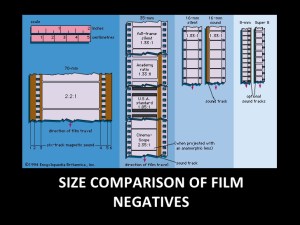
For us, today, aspect ratio is another part of film language but historically it was decided for you by the shape of the negative. The more of the negative you use the more space there is for the picture information and hence the better the quality. The most negative was used with the aspect ratio of 1.33:1. Don’t forget film stocks were no where near what they are now in terms of resolution and colour so every bit of negative counted.


The amount of the negative being used is a large consideration for picture quality

Anamorphic was then designed to Oscar winning approval giving the longer Cinemascope frame whilst still using the whole negative – albeit with the addition in both origination and projection of squeeze/de-squeeze glass. There were lots of variations of this which included a push to use 65mm negative and this resulted in aspect ratios of anything between 2.2:1 and 2.76:1. We saw a great use of Panavision’s Ultra 70 at 2.76:1 from Robert Richardson in Tarantino’s ‘The Hateful Eight’.

Film stocks improved over time which lead to S35 which just extracted the centre from a standard 35mm negative. This made life easy with equipment being much smaller and, very importantly, cinemas world-wide not needing new projectors or lenses. And weirdly this is the key to the freedom we have today with aspect ratios – Digital projection and the huge gamut of distribution available to us now.

Historically distribution only meant theatre release and that was tied to the projection gates available, not just locally but throughout the whole world.  The first film that I shot as second unit DoP was shot on film and originally framed in 1.66:1. This was chosen by the first unit DoP as there were a lot of two-handers which suited the slightly taller frame. It had a theatrical release but nearly all theatres couldn’t project 1.66:1 so the distribution framing became the much commoner ratio of 1.85:1. With the emergence of digital projection we can now distribute in any framing we choose.  We even see aspect ratios changing mid-film – especially IMAX where many directors like to shoot set piece scenes in IMAX 65mm cutting back to 35mm for the less dynamic sections.

However distribution is much more than just cinemas nowadays. If it’s a commercial then people will potentially see it in the cinema and television of course, but more likely also on tablets, phones and computers. Within the world of phones we then also have platforms like Facebook which favour the 1:1 and 9:16 formats. Networks such as Netflix also are keen on 2:1 which is thinner than the standard 16:9 TV screen so you get some black bars top and bottom but not as much as the widescreen 2.35:1 format – a nod to the epic cinema format but better value for money as you have less black?!

Personally I am very happy to shoot to whichever aspect ratio works best for the content – the challenge comes when one film needs to meet all aspect ratios. This is not necessarily new – in my youth I saw many a pan and scanned 1.85:1 film on video in 4:3 but the severity of the extraction is greater now. I recently completed, with Joe Shaw directing, a set of films for Tesco Mobile which needed delivery in 16:9,9:16 and 1×1. These were performance led vignettes of family life so could not be shot 3 times with appropriate framing for each delivery. In addition, the location was great as it gave all the options for different spaces needed but there were elements in each room that were not on-brand and so needed to be framed out. We ended up shooting in 6K on a RED Dragon and extracting the 9:16 and 1×1 from the 16:9 frame.

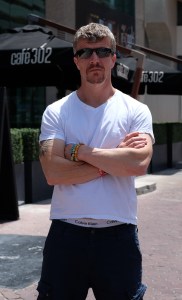
Well that sounds easy, and from a practical level it is, but there are compromises that aren’t immediately obvious. Firstly we will have to use wider lenses or be further away from the subject to achieve the same vertical frame size in 16:9 when compared to shooting in 9:16. If you look at the examples below where the picture on the right was extracted from a 16:9 frame and the one on the left was originated in 9:16. They both used the same lens (35mm on an APSC sensor) and the same stop of T2 for night and T4 for daytime. The difference is the distance to subject which is closer in the 9:16 example. You can see there is a change in depth of field with the drop off of focus being greater in the image on the left which was shot specifically for 9:16. Just look at the detail in the zebra crossing or the awning to see what I mean.

With the current trend of shallow depth of field this is something to be considered when talking with the director. The other main consideration is that the area to light and dress is much bigger. This will add time/lamps/crew/props to the budget which can be vexing for the producer! It’s fine if it is agreed that the only format will be 9:16 as you can just ignore everything outside of that area but I have never been on a shoot where the client has not said that although they don’t think they will use it, they might so can we just make sure…It’s very easy to say but it has a considerable effect on schedule and equipment costs.

It’s a real luxury to have this freedom of aspect ratios and the range of distribution formats means that your films are more likely to be seen by a broader range of people which is great. It can be a double edged sword also though as you can lose control of one of the keys tools a DoP has, that of framing.


What’s the ‘just’ all about? This perception that the value a film can be ascertained by how much money has been spent on it is bewildering to me. You hear it all the time though, my friends tell me “I’m starting a film in a couple of weeks, just another low budget one though” or people sometimes ask me “What’s happening with that little film you were doing?” (when I said bewildering, I also meant sometimes bloody annoying). I’m not saying there are no differences in films of different budgets, or in the way that as a DoP you need to approach them, just that the smaller budget films can be fantastic, or crap, in just the same way that big budget films can be so let’s not be judge and jury before the shoot even starts.

I cut my teeth, as what was called then a lighting cameraman, in the world of documentary film-making. This, I think, gave me a heightened awareness of budget restrictions and the value of spending budget that still stays with me today. It was always starting from the point of “will the story be told better if we spend this bit of the budget” as opposed to will the shots be better, will they look more impressive? When I started shooting commercials I had to constantly remind myself that 1. Low budget has a completely different meaning to the low budget of the world of documentary and 2. More impressive shots hold greater value and if a commercial is told in a more impressive way it is likely that the story is being served by this even if the story is a small scale human story. So I get that we need different budgets, I just question whether one is always better than the other. I remember a time when I was shooting a promo with Lord David Attenborough for the BBC. It was to be used to promote international sales of one of the first Planet Earth series. We really stretched the budget out, getting deals, minimising crew and kit to put as much value as possible on screen. We were in a studio, it was dressed nicely, had 2 film cameras going on track and some on-set catering but in our opinion we had done this low budget. It was whilst we were eating the on-set catering that I heard David saying to a colleague how they could have made a whole episode for what this must have cost. It’s just a good example of perception of budget. I know what we made was good value for money and the sales that it brought in helped fund future documentaries but it must have seemed to him as excessive. In the same way the budgets I work with on the films I shoot (usually about £300K) must seem impossibly micro to a Hollywood team but huge to some of the indie film-makers in the UK.

Whilst I have shot on a range of budgets as second unit DoP I must state that all five features I’ve shot as first unit have been low budget. What are the cons of this? Well obviously we get paid less but for me this is not really an issue as I’m fortunate enough to earn well when I’m on commercials. The biggest issue is always time. Any testing is done in my own time and normally we shoot for between 18-21 shoot days which is never enough. It means that you have to shoot very precisely which is great when it all works but desperate when the plan stumbles. Any number of issues can occur which can include poor decision making by me, or the blocking drastically changes, the location doesn’t behave as we expected, the weather does a ‘U’ turn etc… It’s these moments where low budget really sucks as the only time you have is for plan A, once plan A is set and in motion that’s it regardless of whether you see a better option as the scene develops. Sometimes the temptation to change is so great that you do it but that always leads to compromise later (as the 1st AD never fails to remind me). There just is no time to pick up dropped scenes. People often ask if it’s the lack of equipment and skilled team members that makes the difference and I have to say I have not found that at all. My teams in the camera, lighting and grip departments have always been terrific as so many people love making films and some will come with me from the commercials whilst others will be stepping up. Equipment is greatly reduced but, with occasional exceptions, I find we can stay true to the story with what we have – I should point out that I’m fortunate enough to have a RED kit which has been fantastic and film-makers today are incredibly lucky to have so many affordable tools at their fingertips. Again the commercials satiates that urge to use all the latest kit which can be fun and appropriate for those shoots but mostly not necessary for the feature stories that I seem to tell.

There certainly was a time where I saw my perfect career development as heading towards the big budget films but as I get older I realise that for me this is no longer high on the agenda (just as well as I can’t see the next Bond, Marvel or Star Wars coming my way). I would certainly enjoy and indeed relish the chance to have bigger budgets to work with, and should the opportunity come along I will grab it with both greedy hands, however if the choice is big budget with less interesting script or small budget with intriguing script I will stay with my limited kit and time and make the script that grabs me the most.

I was going to put some scenes from the features I’ve shot but as I was going through I realised that you can pick scenes from pretty much any film that look good and prove how you can successfully shoot on a low budget. Individual scenes are fairly easy to ‘win’, it’s the consistency that is so much harder. Making a film that has a consistent look and a consistent quality is the real challenge of low budget. With that in mind I have put 2 full shorts that I wrote, directed and shot below and a no-budget pop promo which was directed by Chris Crow but shot by me.

The first on was a film I made in 2000. It was originally conceived to prove to producers that they could trust me with 35mm film as I was struggling to step up from 16mm but as these things tend to go, it grew into a narrative piece. Total budget was £1800 which was self-funded. It was shot on 35mm short ends over 2 days. Looking back I can see errors in the script and I obviously didn’t have a very good grasp of ethnicity but I’m not sure I would shoot it very much differently if we had a lot more cash.

I shot this second one on impulse for the Nikon Film festival challenge (it had to be under 140 seconds) and there is an earlier blog (going to the dark side) on this site if you need to know more. We used a 5Dmkiii and my rehoused Nikon lenses. Crew was limited to 3 – myself shooting and directing, James my son on sound and Nic Cornwall (an excellent director whose house we used so no pressure there) as art director. Total budget was under £200. I think this is a good example of how lucky we are to have so many affordable tools at our disposal. Of course as this was shot in HD on a 5D it is not going to hold up well on the big screen but its main market is for viewing on phones and computers so not sure it’s a huge issue. Again, looking at it now I’m not sure how much I would do differently with more money other than improve the quality of capture with more pixels, colour depth and bit rate!

This last one is just a great example of what a director like Chris Crow can do with no money. We shot it hand held on a 5D and 7D (Chris took charge of the 7D and me on the 5D) for a zero budget in a morning. We used a canon 16-35mm T2.8 prime, a lensbaby and lens whacked with some old Canon FD primes that I’ve got. I love it and think it suits the track absolutely perfectly. If anybody wants to check out the band they are ‘Folk Grinder’ and the track is ‘My Lover’

When people talk about ‘looks’ it generally goes down one of two routes, either period based in the sense of  ‘I want that 70’s look’ or lens based as in ‘give me that Cooke look’. The first of these is a complex request that involves all departments that come together to create a colour pallet, costume range, production design, make up, lighting style, framing etc. The combination of these add up to the sum of setting the action in ‘a period in time’. The second is of course much easier to achieve – you hire in a set of Cookes, and boom, your ‘Cooke look’ is achieved. The issue is that the ‘Cooke look’ is a subjective thing. Sure the lenses tend to have attributes that give common ground – for instance with Cooke – people would associate maybe warmth or a more forgiving sharpness but they are also a victim to association. In this case Cooke is often associated with comedies, feel good films, human stories etc so for those who don’t test the lenses the ‘Cooke look’ becomes partially about genre. I’m talking mainly here about a good proportion of producers, some directors and most audiences, not about DoP’s who spend days testing. The Cooke look ends up being a combination of the lens attributes and the colour pallet, costume range, production design, make up, lighting style, framing etc (sounding familiar?) that those genres are known for. So the point is that in my head the lens choice should be the final part of the discussion of ‘the look’, the icing on the cake to complete the ‘look’. It does have an effect and as a DoP it feels hugely important – some lenses flare more easily, some are faster so will give a very narrow depth of field, some are older and have more aberrations or character, some have higher contrast, some flatter… It plays a part but, and I know I’m opening myself up to being ritually ridiculed here, it is a smaller part compared to the combination of all the departments coming together to achieve the ‘look’.

I own a set of Celere lenses that are building a sense of what they look like but are not recognised as having a recognisable look outside of the group who use them. I use them because to me they look pleasing and suit the body of my work. I don’t shoot everything on them but probably about 75% of the films I shoot. If you want to know more about my choices on those lenses there is another blog entry on this page called ‘Never discuss, politics, religion or lenses’ but if you just want to see a variety of short-form projects all shot with these lenses then click on the film below. All shots on this film used the Celeres and mostly orginated on a RED Dragon. I have tried to pick a range of work – some greenscreen, some motion control, some location, some low budget, some high budget. I have left it at a higher bit rate than I would normally for the net for those who want to see the nuances so you might need an element of patience! Hope you enjoy.

Well with VR you can put your head wherever you want but how does this set of limitless possibilities reflect on the role of DoP? And with everything in shot, do you need a DoP at all? Surely our role as DoP is to take an extract from the construct in front of us that best suits the need of the story? I always love seeing the detritus of the set that is needed to create an environment – rain bars, lamp stands, fans, props people, boom mics…. And then looking at the manicured end frame which appears set in a life-like real world.

But VR is much more akin to documentary in the sense that we need to show the whole space, to let things appear to happen in an unrestricted way. We want people to be able to explore that space as they choose, no lines of action to cross, no lens choices to consider, no T stop to match, no geography to establish… so why use a DoP? I did find myself pondering this very question during prep on my last VR shoot and you’ll be pleased to hear that I found an answer, more of which later.

By linking VR to documentary and stripping out many of the choices that us DoPs need to make it is tempting to think that VR has no rules, this I have to tell you is a long way from the truth. There are lots of rules it’s just that they are constantly changing. VR is so new a form that it is developing phenomenally quickly and the rules of acceptable practice change at the same pace. I remember on my first VR shoot saying to the director, Chris Vincze, “You’ve done more VR than me so if it looks like I’m doing something stupid do tell me, I don’t really know what I’m doing!”, to my great relief he laughed and said “It’s VR, nobody knows what they are doing, we do it and hope that it works!” This was 18mths ago, at the time of writing, and things are different now, we know a lot more about what we are doing but the original rules of a) don’t move the camera as the audience will feel sick, b) you must use the whole 360 degrees and c) don’t allow the action to come closer to 1.5m to the camera rig are all seen as things you should break if the viewing experience is to be interesting.

The first time I really started thinking about what my role was in these films was when we were shooting a large scale VR experience for o2 music venues. The director was again the very talented Chris Vincze and the production company was Happy Finish. Chris knows a lot about VR, Happy Finish are one of the market leaders in VR with a highly experienced internal team, what could I add? I think it was unusual for Happy Finish to have an external DoP come in, a request by Chris, but by the end I do believe that we all benefited from the experience. What Chris and myself brought to the project was our experience of TV commercials, the quality of image and detail that is expected at this level. The internal VR Dop’s, Elliot and Jamie were really great at understanding the technology, how that would translate to the final VR world, how to solve stitch line problems but they did not have so much experience in creating environments with the tools that we use in drama and commercials. We broke many rules on that shoot including using haze, heavy smoke, intentional flaring and long twisty camera moves.

We lit the spaces to deliberately include light and shade, brand colours and atmosphere. It was painstaking and my excellent gaffer, Tim O Connell, spent his days meticulously hiding lights and making others practical. It worked very well and everybody was delighted with the results, in fact the material is being used by Nokia on their showreel (we used a Nokia OZO camera).

I’ve just finished another VR shoot, this time with MPC who are top of the game. I can’t talk about what this was or the end result as I had to sign one of those pesky NDA things but it cemented my understanding of what an experienced DoP can bring. Again Chris directed, you can probably sense a pattern by now, and this time it was a mixture of VR and green-screen. My favoured way of working now is to have a team who deal with all the camera aspect including set up, syncing, playback and media organisation (the DIT on these jobs needs to be very much on the ball). These are enormously complex setups and to have a team dedicated to this means that I am free to concentrate on the details of the image – in much the same way I would with a commercial or a drama. And this I think is one of the main areas of my responsibility – keeping the stress of making the technology work away from the director whilst having time to still discuss the shot development, lighting and cast placement.

On this shoot  we tested for a couple of days to find the best rigs and camera settings  as there was a range of environments that we needed to capture, finally settling on a 5 x ‘Z Cam’ rig for smaller spaces and a 5 x A7Sii rig for the larger spaces. After testing I said to Chris that I realised my job was to make sure we weren’t just getting the pictures we needed but that we were getting them in the highest quality possible. He replied, “yes, and to make it look nice” and that is the crux. If you are having to deal with the camera build and the monitoring system you just don’t have enough time to concentrate on finessing the detail in the shot. The crew we had on this shoot were excellent and extremely experienced in VR. They work as DoPs in VR constantly but the advantage of bringing in someone like me, who is from a different arena,  is that I can bring the experience of that arena with me, as well as being able to focus on all the things that can get lost due to restrictions of time on the day. I think it’s a win win for everyone – apart from maybe the accountant!